.jpg)
Just Add a Guy With a Beard
Gentle Monster would never make these. But they should. The frames were done in an afternoon. Jaren Dorman's wall was everything around them.

The last time Jaren Dorman was on this blog, people kept mistaking his personal work for Puma's advanced concepts team.
This time, everything you're about to see reads like a finished eyewear campaign. Location scout, cast model, wardrobe, art director, a photographer with a fisheye and strong opinions.
None of those people exist. It's one designer, one canvas, and a guy he found on the internet.
"I hit a massive creative wall with these glasses and I tried something unconventional."
Here's how it came together and where the wall actually was.
The glasses came first
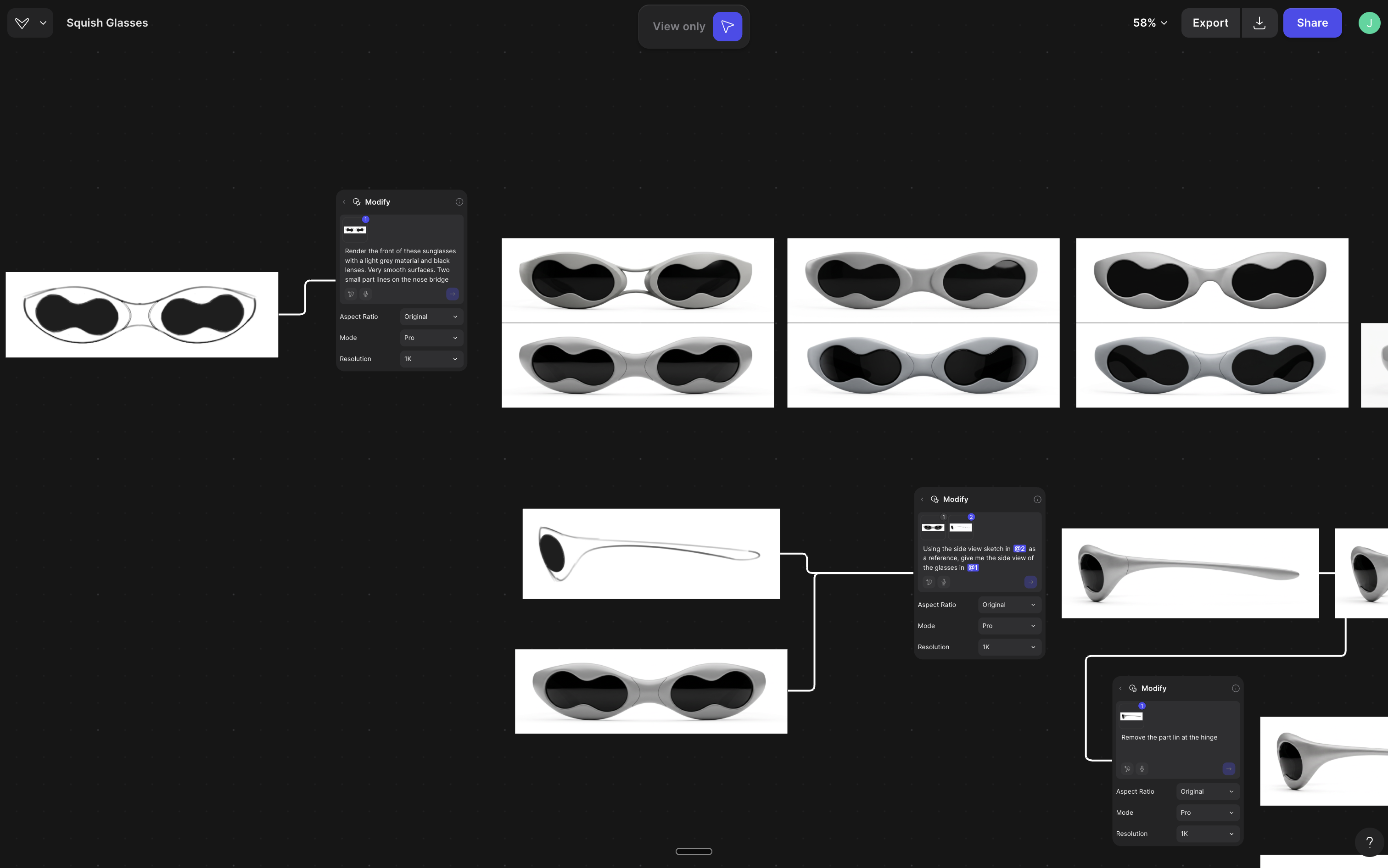
Squish Glasses as a form study with one rule. The lenses look like drops of liquid caught mid-wobble, and the frame doesn't hold them so much as flow around them. Everything soft. Nothing pinched.
Jaren sketched the front view and wrote the render instruction like a spec:
"Render the front of these sunglasses with a light grey material and black lenses. Very smooth surfaces. Two small part lines on the nose bridge."
Worth noticing what's in that sentence. Material. Finish. Part lines. That's not "make it pretty." That's a designer talking to the tool the way he'd mark up a surface model.
The side view came the same way, one sketch referenced against another:
"Using the side view sketch in@2as a reference, give me the side view of the glasses in@1." Then a cleanup pass most people would never notice: "Remove the part lin at the hinge."
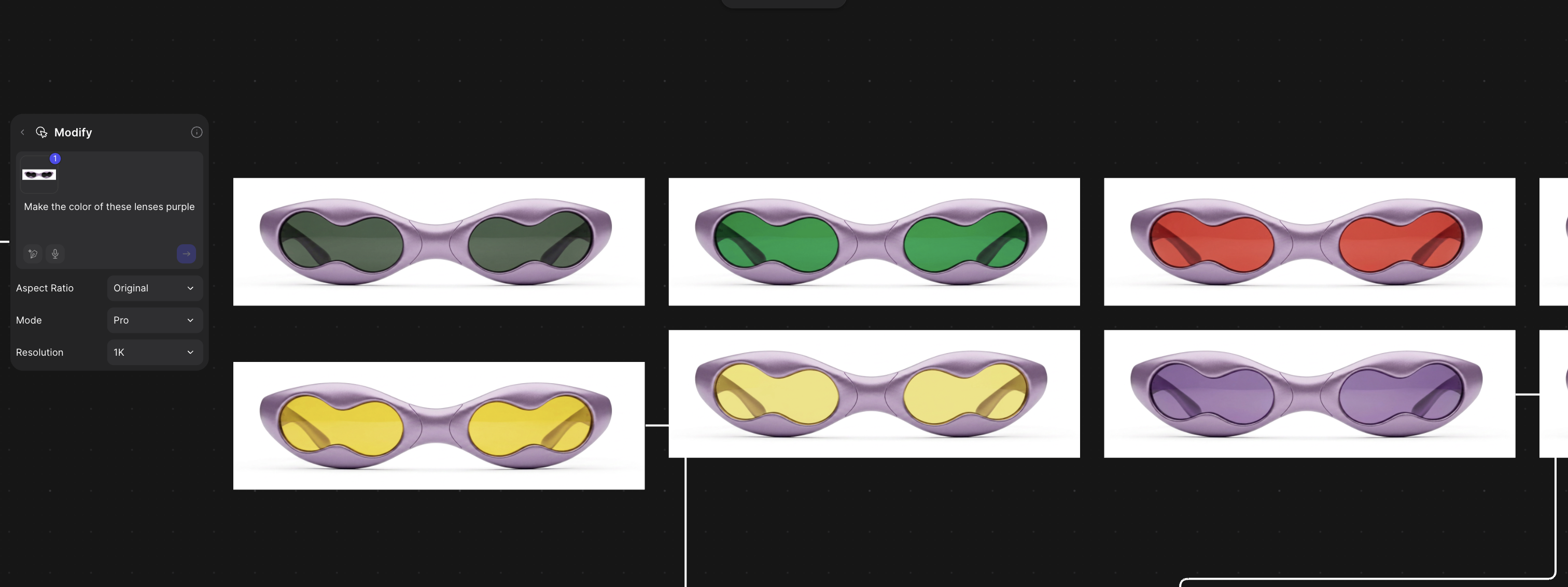
Front resolved. Side resolved. Then color.
%20(1).png)
One sentence per colorway until the combination locked: lavender frames, warm amber lenses. Candy hardware.
At this point the product was done. In the old workflow, this is where you'd celebrate.
Jaren stalled instead.
The wall
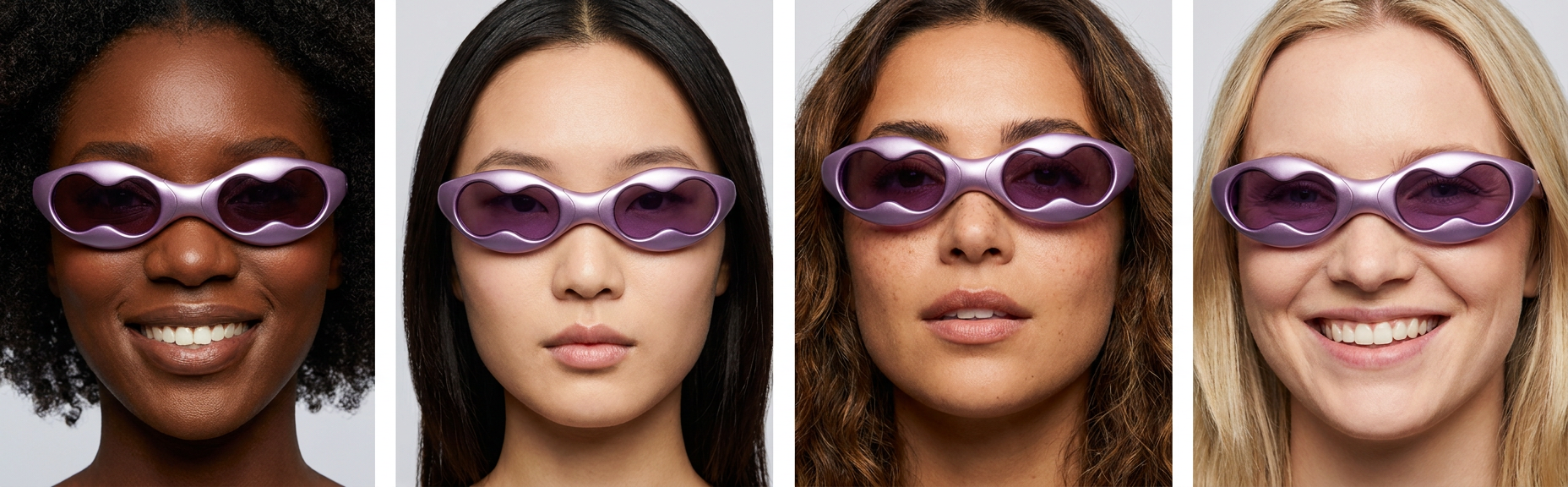
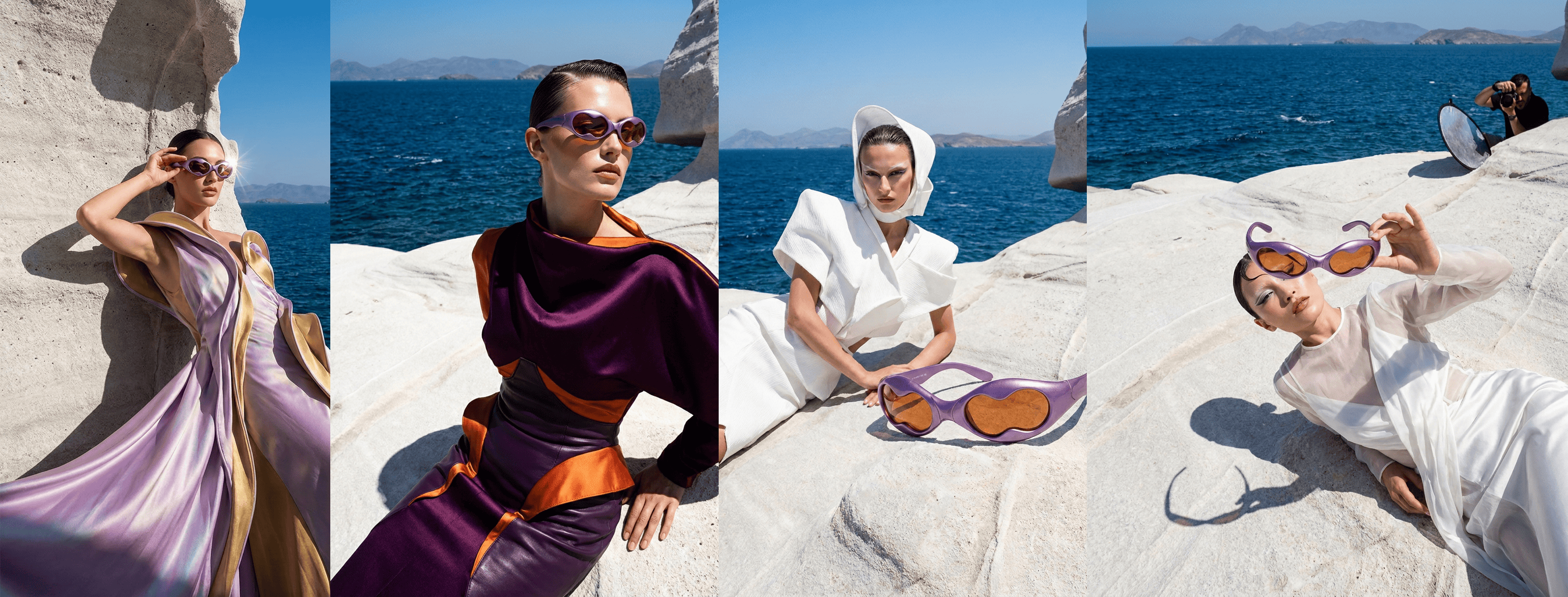
Every designer knows this exact frustration, and almost nobody budgets for it. The object is right and the world around it is wrong. Eyewear is the hardest version of the problem, because glasses barely exist without a face. A shoe on a white background is still a shoe. Sunglasses on a white background are an accessory waiting for a personality.
The wall wasn't the product. It was the casting
Then he found the guy
"I was digging around the internet and I found this guy. Something about this guy's vibe that I just really liked and it fit perfect with my glasses. I also just love the unexpected nature of it."
.png)
Silver hair. Deep tan. The unhurried posture of a man who retired from something interesting. Not remotely who an eyewear brand would cast for bulbous lavender frames, which is the entire point.
Good casting works like good CMF: two things that shouldn't agree, forced to share a frame. The glasses are playful and young. The man is neither. Put them together and you can't look away.
The recast itself is worth slowing down on, because it used to be the single most expensive change you could make to a campaign.
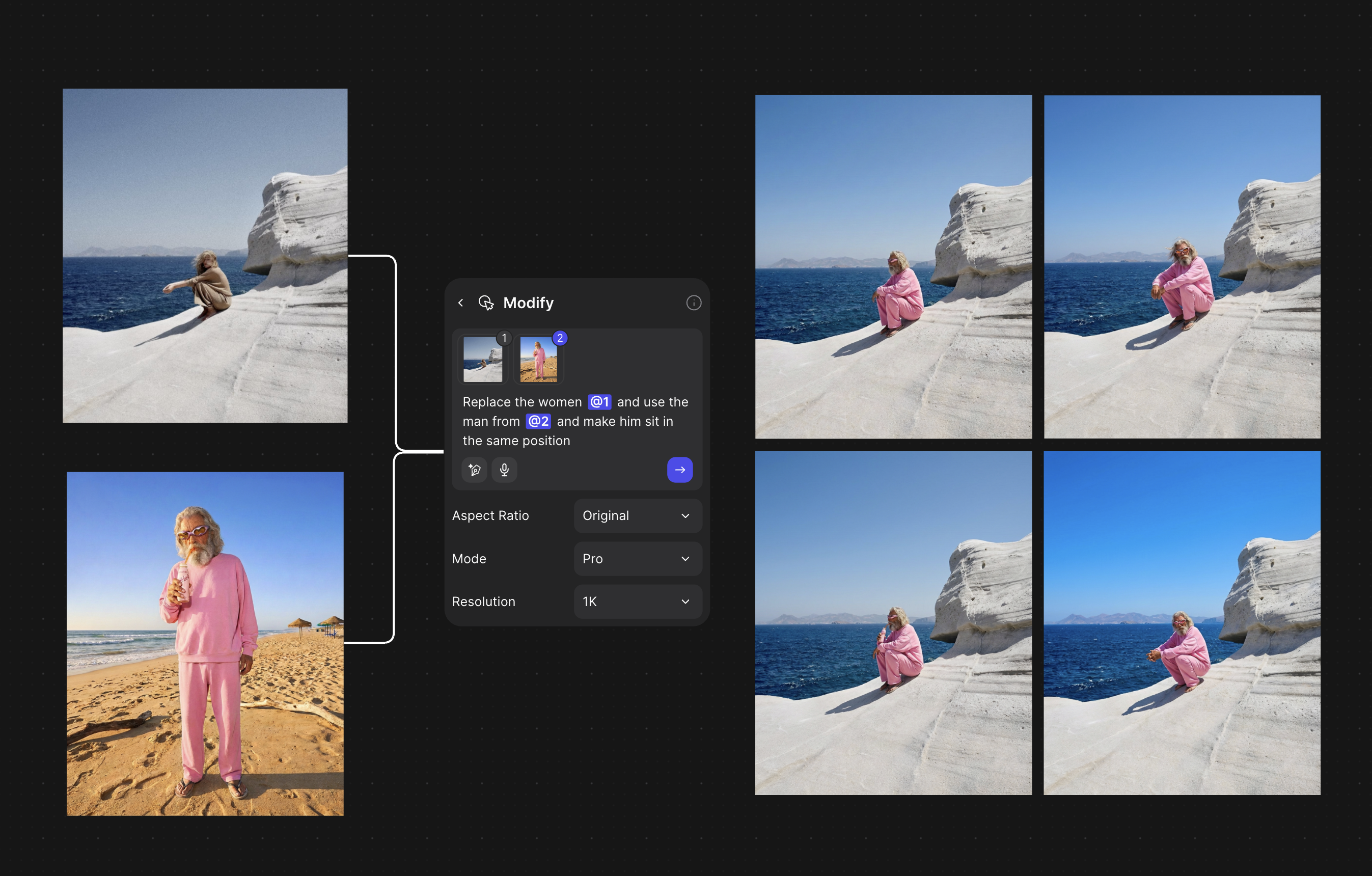
Jaren already had a placeholder scene: a figure crouched on white coastal rock, ocean behind. He brought the beach photo in as a second reference and wrote the swap like a casting memo:
"Replace the women@1and use the man from@2and make him sit in the same position."
Same crouch. Same light. Same rock. New lead. One sentence.
Building a character, not booking a model
The man in the final frames is a long way from the reference photo. That distance is the work of this next stretch of the file, and it's my favorite part of the whole project.
"So I started iterating on this person and I'm like, how can I make them look even more relaxed? And I thought, let's just give them long hair and a beard."
This is where the project quietly stops being product design and starts being character design.
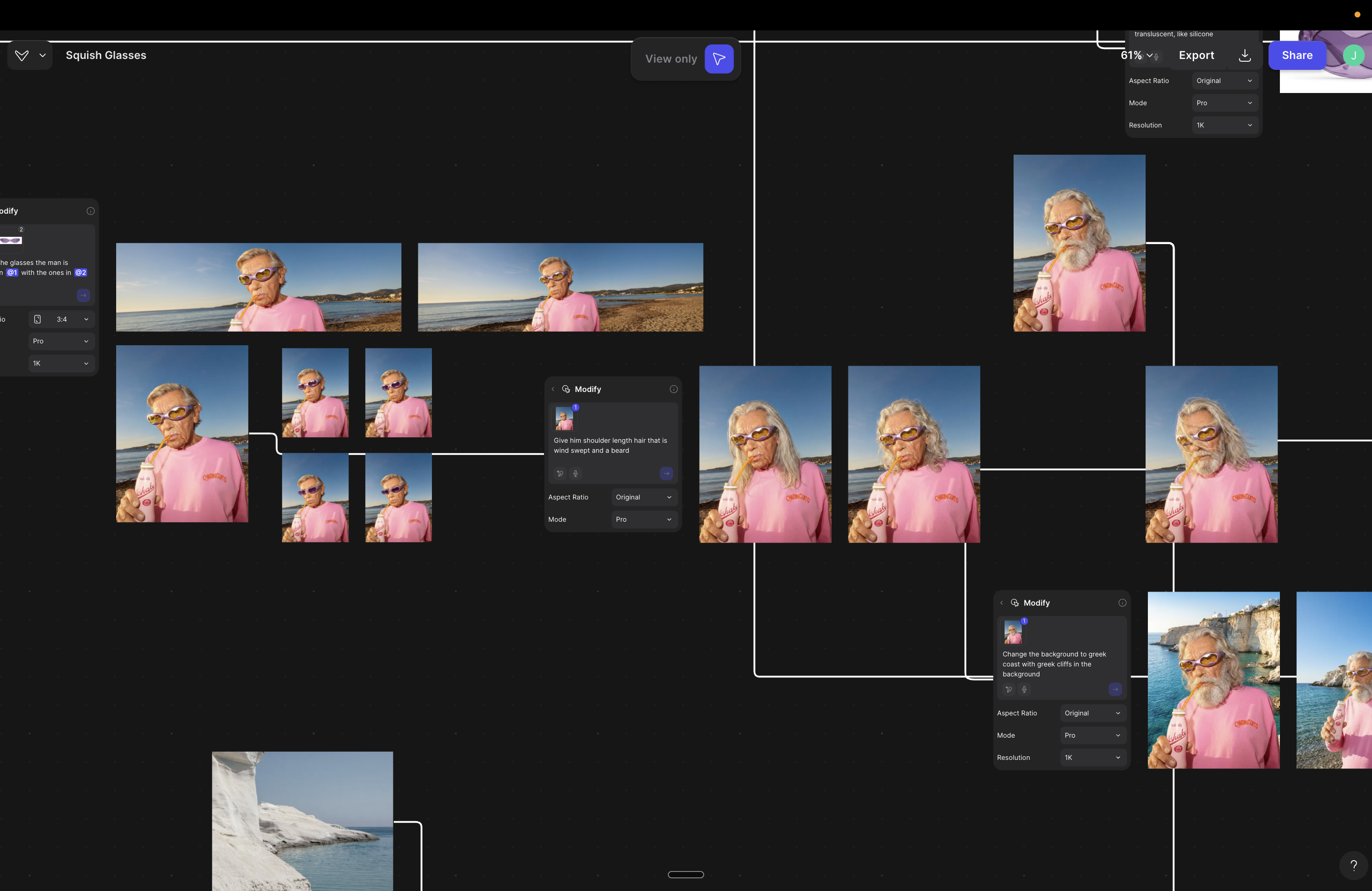
Film productions do this all the time: wardrobe tests, hair tests, expression references. Product campaigns almost never do, because on a real shoot every variation is another hour of studio time. Here, Jaren ran the full production ritual on a person who doesn't exist. Long hair. Beard. A purple sweater test. A white linen look.
"I even gave him different clothes to see what it would look like, but ultimately I just really loved the pink sweater."
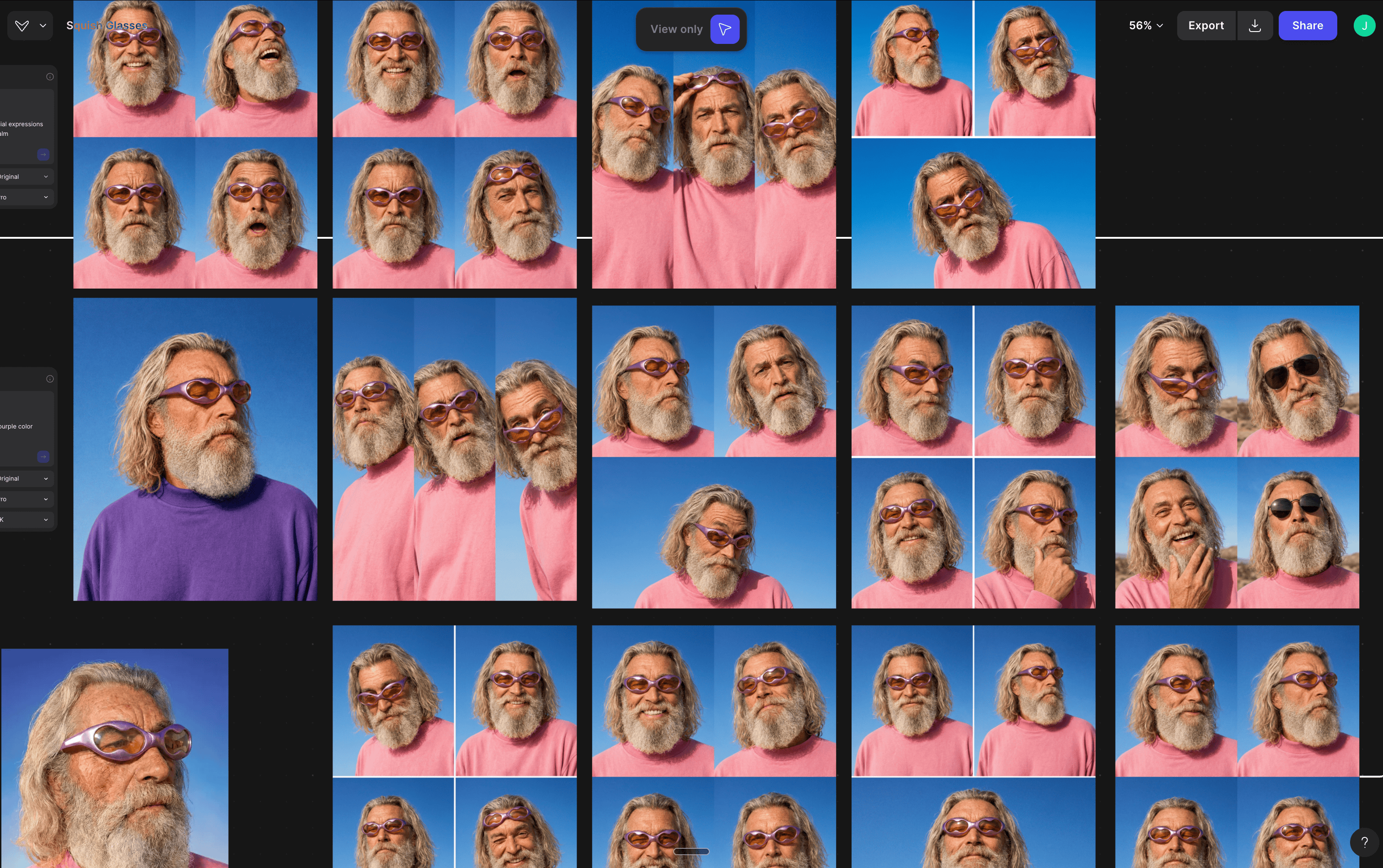
And then, pages of facial expressions. Squinting into the sun. Laughing. Glasses pushed up into the hair. Glasses slid down the nose. Skeptical. Delighted. Mid-sentence.
"I was playing around with different facial expressions and just trying to get an understanding of this guy, this character."
Read that sentence again. "Getting an understanding" of someone is what a novelist says, or a character animator. The expression sheets aren't output. They're alternatives with a question attached: who is this guy? By the end of them, Jaren knew him well enough to direct him.
Building the world
.gif)
.png)
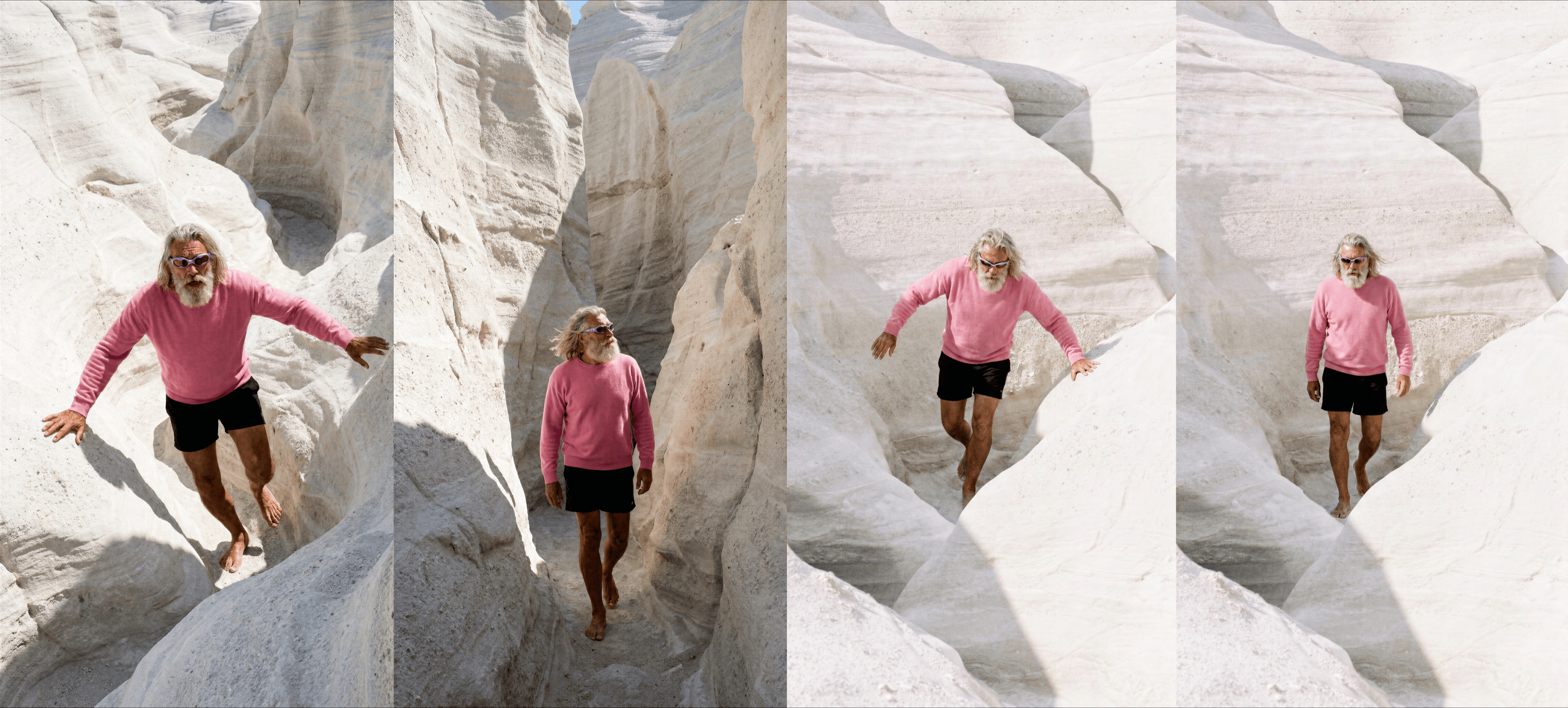
The location got the same treatment as the cast: white volcanic rock, wind-smoothed into soft lobes and curves. A landscape that looks like it got the same design brief as the frames. Jaren placed his character with the now-familiar two-reference move:
Cast, wardrobe, location. All that's left is the photographer.
The camera squishes too
.png)
Here's the decision that turns a folder of nice images into a campaign.
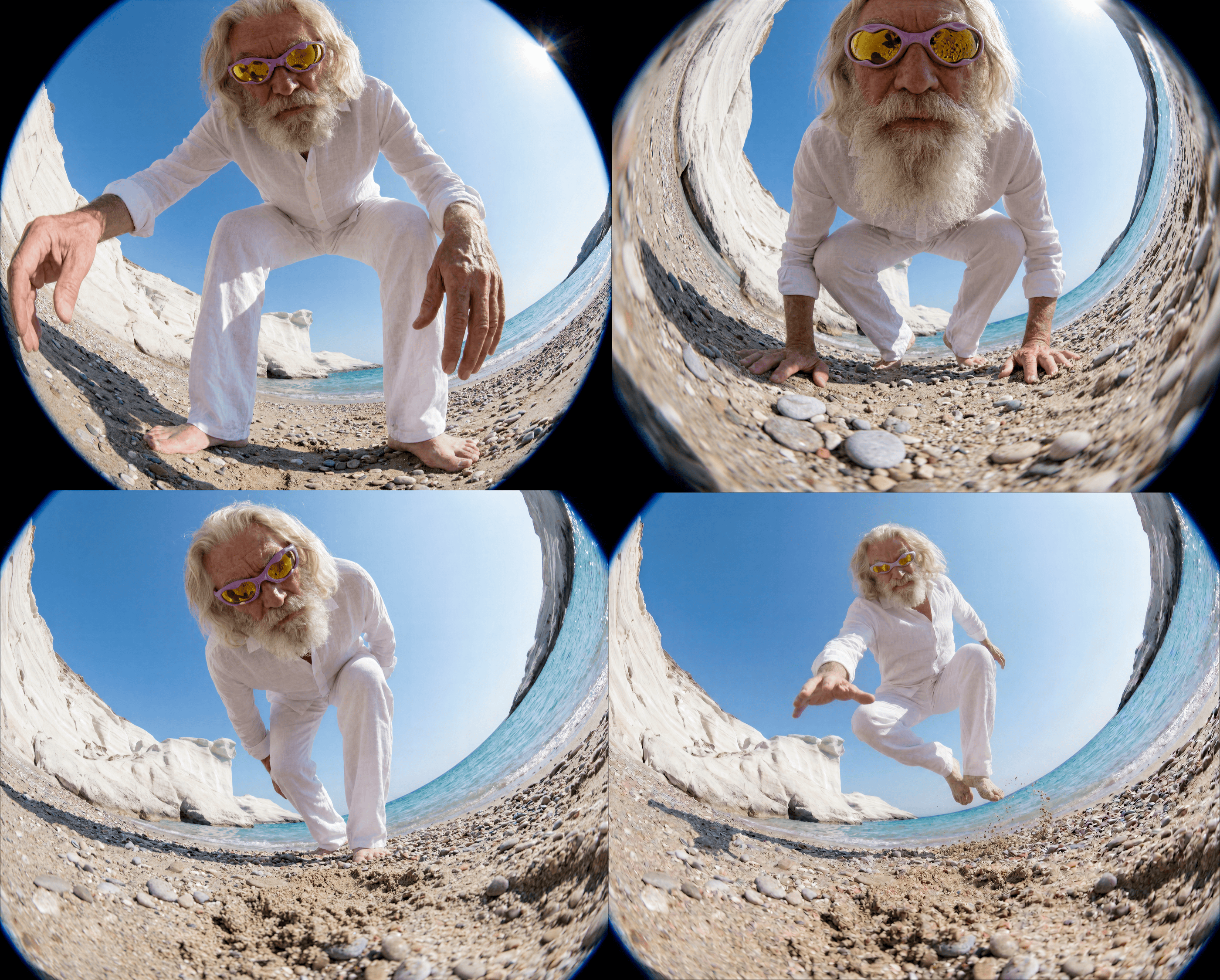
The glasses squish. So Jaren made the photography squish with them.
"Give me an ant view of this man looking down at the viewer, distorted lens edges."
"Give me a version of this with warped lens on the edges."
Every frame bends the way the product does. Fisheye horizons. Curved rock. Edges that melt like the frames. The camera has the same design language as the object it's selling.
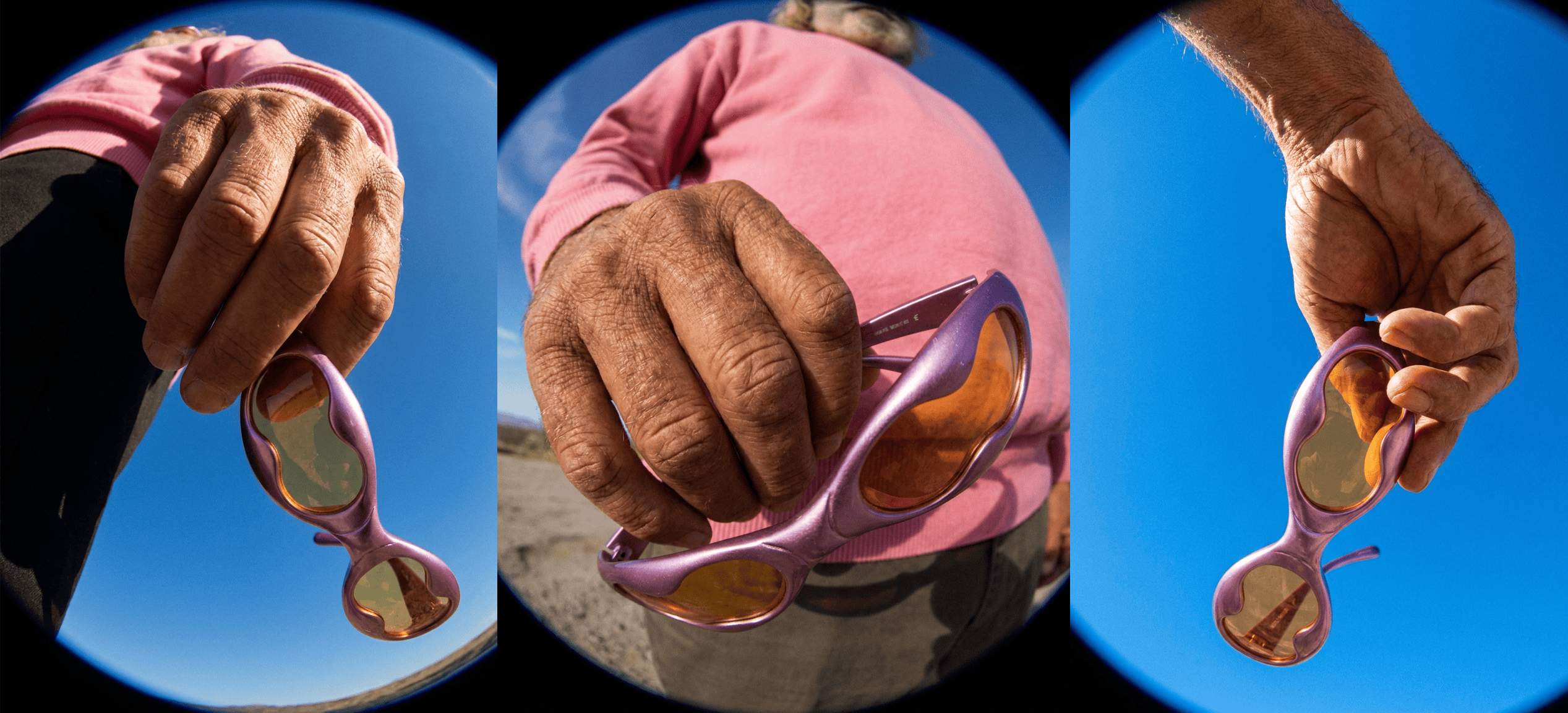
The detail shots got the same lens:
"Give me a closeup of this guy holding the his glasses down at his side. Only hand and glasses in view. Ant view with distorted curved lens image."
And then the most literal shot in the set:
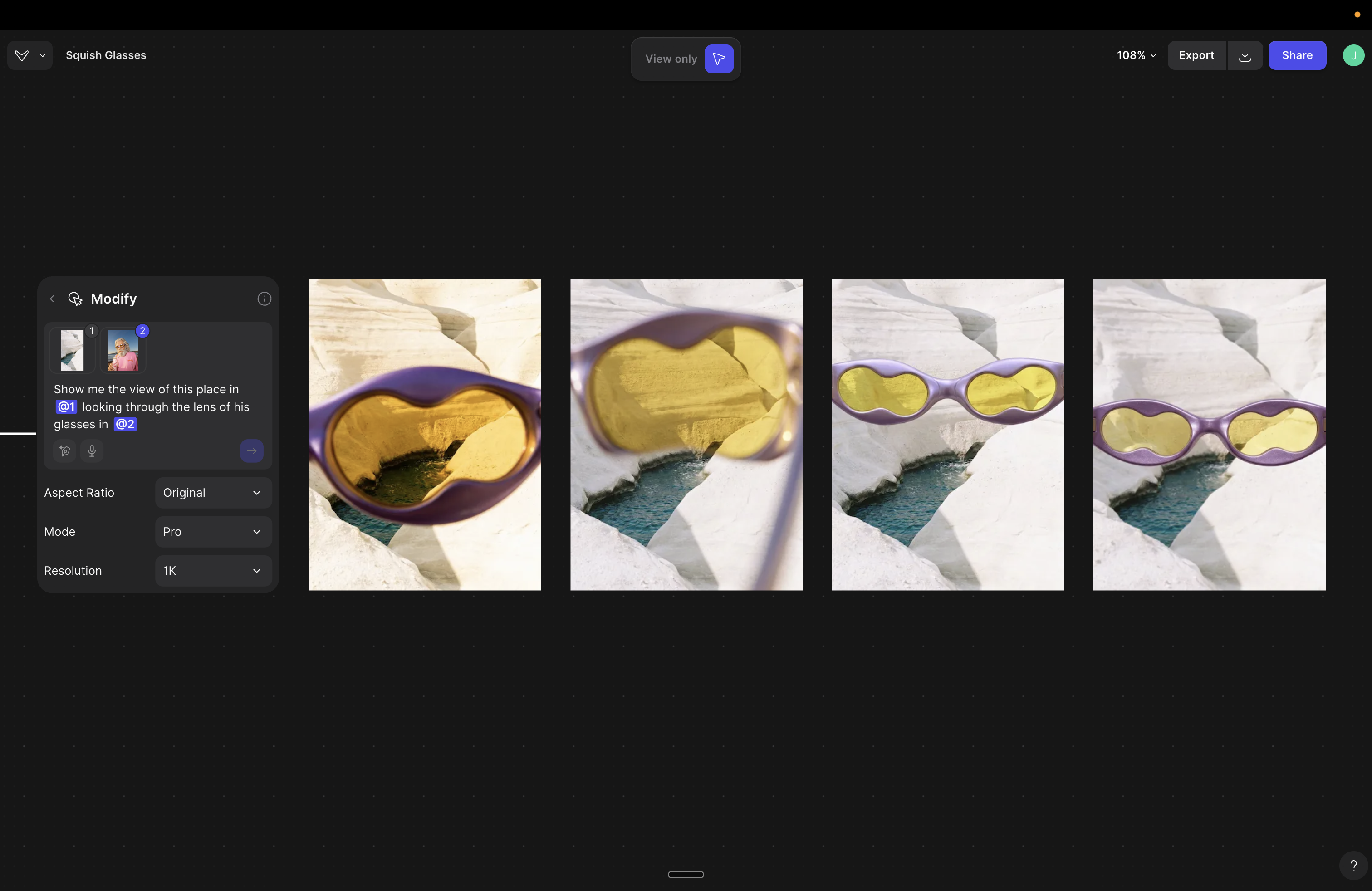
"Show me the view of this place in@1looking through the lens of his glasses in@2."
You're not looking at the glasses anymore. You're wearing them.
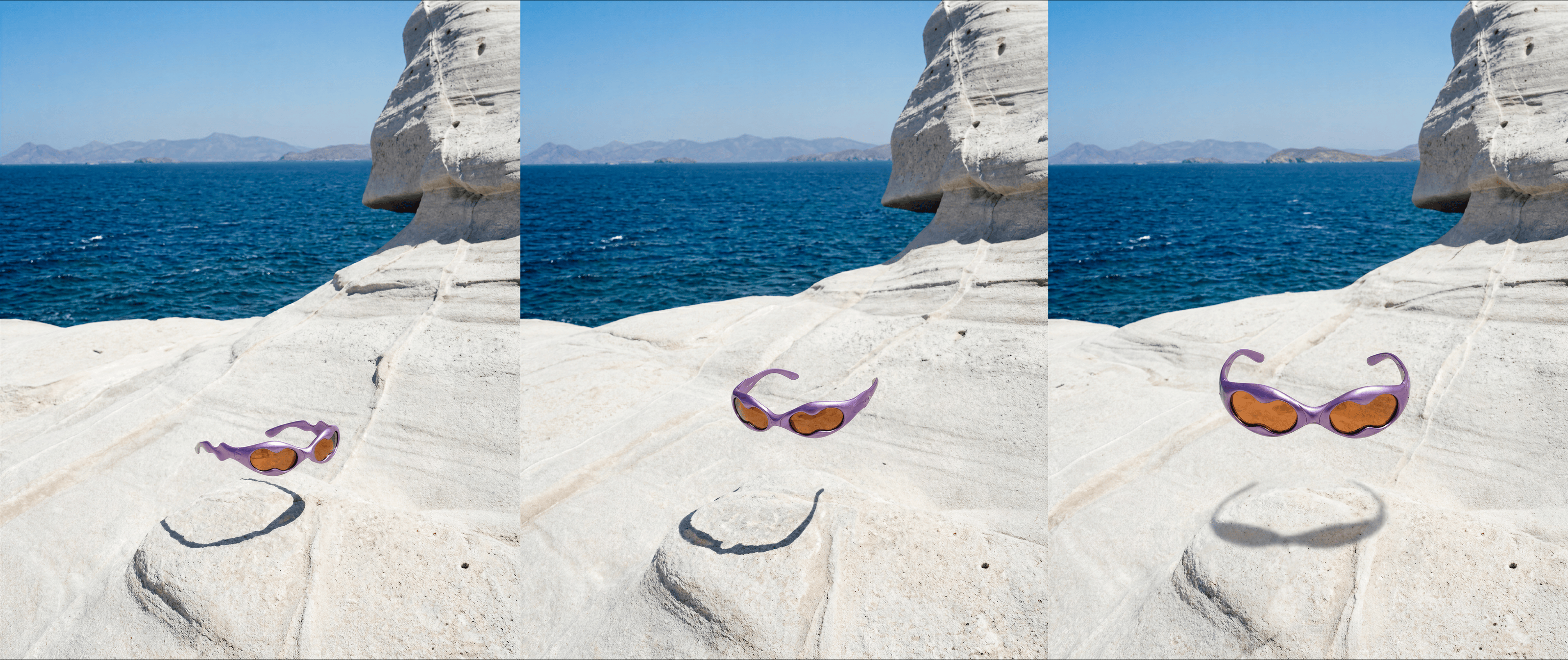
The set rounds out exactly like a real campaign would: product stills on the rock, the glasses throwing a soft shadow, waiting for a price tag.
The form told the camera what to be. The glasses didn't just get a campaign. They art-directed it.
Seven decisions, one file
.png)
Count the decisions in this canvas. A form language. A material and its part lines. A colorway. A cast. A wardrobe. A location. A camera. In a normal pipeline those belong to seven different rooms, three vendors, and a quarter of the calendar, and the people in the first room rarely find out what the last room did to their design.
Jaren made all of them in one file, and he made every one the same way: by looking at the real thing instead of debating a description of it. The colorway grid, the wardrobe tests, the expression sheets. None of that is filler. It's alternatives, generated so a decision could be made and the rest let go. The tool put the options on the table.
Every call was his.
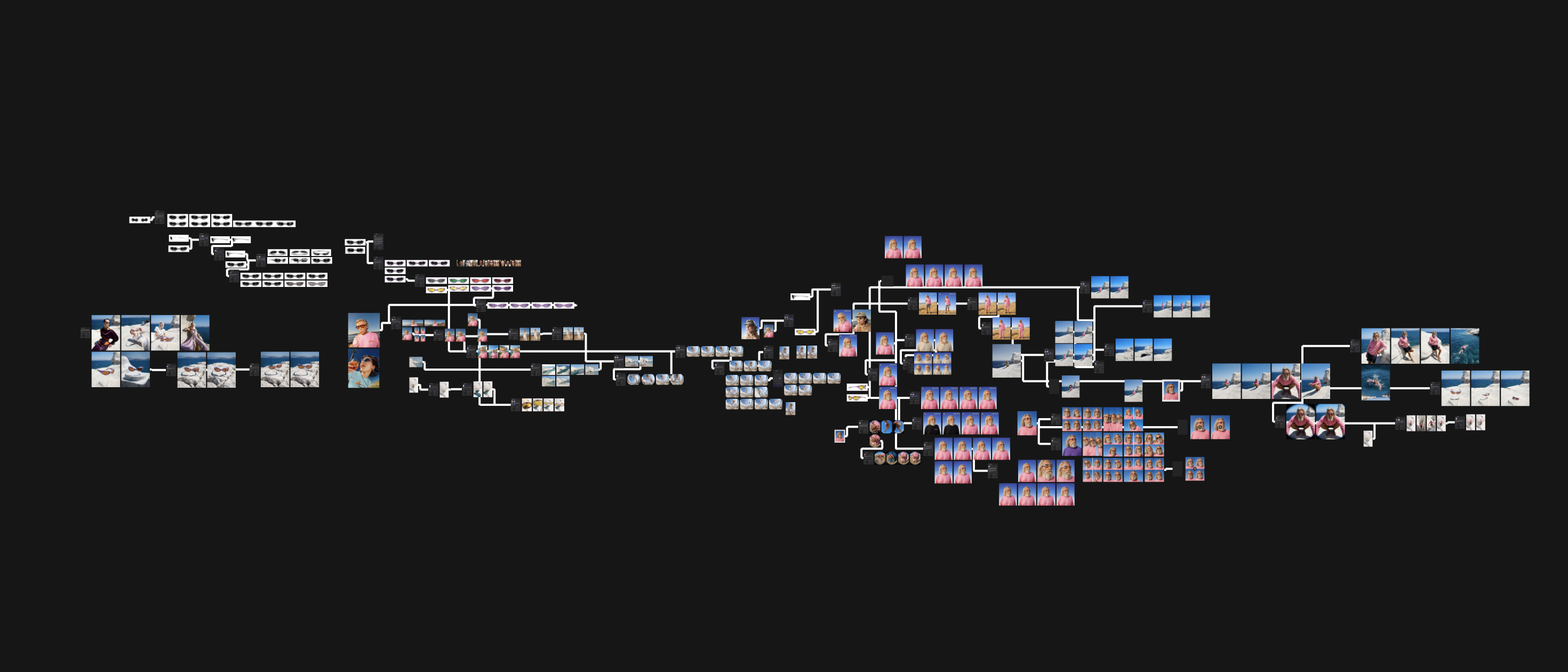
The file keeps the receipts, too. Every final frame traces back through the recast, the sweater test, the hinge cleanup, all the way to the first sketch. And nothing was locked until everything was seen: the expression tests could have sent him back to the lens color, the location could have killed the pink sweater. Every downstream decision could still reach upstream. No traditional pipeline lets you do that.
None of this made Jaren render faster. It made him decide faster. The wall was never a rendering problem. It was a stack of unmade decisions: casting, wardrobe, world. All of them waiting for something to look at. He made them where they lived.
Real is the new render.
And if you get stuck
"So if you ever hit a creative wall, just try throwing in a guy with a beard."
We can't promise the beard is load-bearing. But the move underneath it is: when the product stalls, stop iterating the object and start iterating everything around it. The wall is usually not where you think it is. Most of the time it's a decision you can't see yet.
Explore the Vizcom workbench: open the file →
Follow Jaren: @jarendorman for more concept and process work.
More from Jaren: Not Faster Renders. Faster Decisions.
Try Vizcom at vizcom.com.
This is our favorite kind of work. The finished product wasn't the finish line, and the designer knew it. Thanks for sharing the file, Jaren.
Explore
Explore more blog posts & resources to get inspired
.webp)
Hatch Duo is a design studio based in San Jose built around a simple premise: great products hatch when two forces meet, your insight and their execution. Hatch's focus sits squarely in consumer packaged goods. For their latest collaboration with Vizcom, industrial designer Alec Comido wanted to see what he could design in one hour.
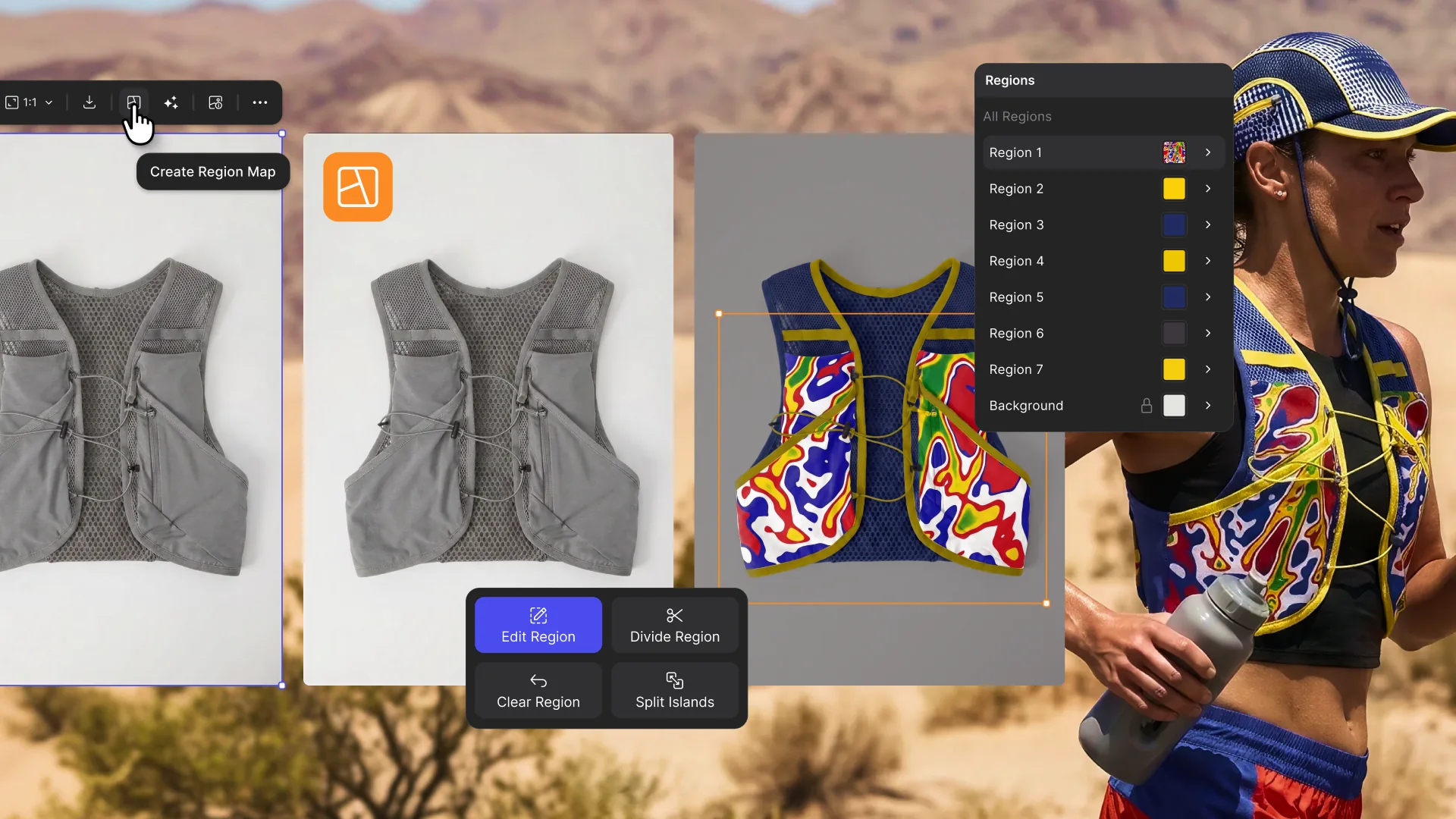
Explore color and material variations part-by-part without leaving Vizcom.
Frequently asked questions
Yes of course! Our starter plan is completely free, no credit card required. This is a great plan to explore vizcom with.
We accept all major credit and debit cards.
Admins (paid) – can edit files, manage workspace settings, billing, teams, and invite members. Editors (paid) – can edit files but not manage settings, billing, or teams. Viewers (free) – can only view files in read-only mode.
Team billing is handled centrally by the Admin. All paid seats, whether Admins or Editors, are included in a single invoice under the same billing cycle, while Viewers remain free and do not affect the cost.
Yes, you can. An Admin can update the plan in the billing settings, and the switch will take effect on the next billing cycle at the annual rate.
Yes, you own everything you create in Vizcom. For free users, while Vizcom may use generated images to improve its services, it does not claim ownership of your designs, concepts, or original ideas—you keep full rights to them. For paid users, your images and designs remain entirely private and are only used to deliver the service. Every design, concept, and image you create or upload is fully yours and kept confidential.
Vizcom does not use your data to train AI models if you’re on a paid plan. Everything you create stays private and is only used to provide the service. Free users may have their generated images included to help improve Vizcom’s services, but even then, Vizcom does not claim ownership of your designs, concepts, or original ideas—you retain full rights.