Vizcom × Zellerfeld Global Mule Design Challenge
430 submissions. 30 finalists. 3 designs headed off to be printed. Here's how a global community of designers reimagined the mule.

Reimagine the mule
The challenge’s brief was deceptively simple: reimagine the mule. Designers had two weeks to rethink the familiar slip-on silhouette, pull inspiration, push bold ideas and unexpected forms while keeping one foot grounded in real-world producibility. Every design had to be created in Vizcom, be 3D printable, and follow Zellerfeld's production constraints.
The response blew past expectations: 430 submissions poured in from designers around the world.
The history of the mule
The mule is one of fashion's oldest silhouettes. The name traces back to Ancient Rome's mulleus calceus — a red or purple shoe worn by the highest-ranking judges.
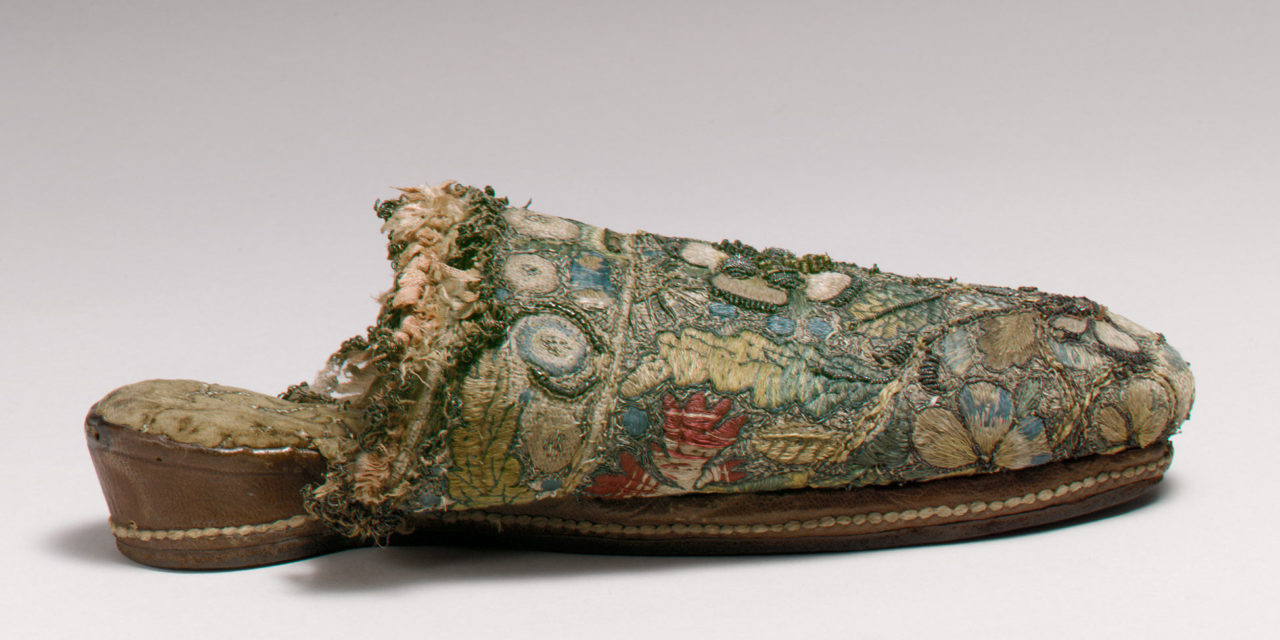
Source: A brief history of the mule
The mule's biggest modern revival came in the 90s, when it became the defining shoe of the decade with peep-toes and pointed kitten-heel styles. Gucci's fur-trimmed Princetown reignited the silhouette in 2016. The rise of GORPcore brought mules into streetwear and outdoor culture too, with brands like Reebok, New Balance, and Bape releasing backless silhouettes that blurred the line between trail shoe and house slipper.
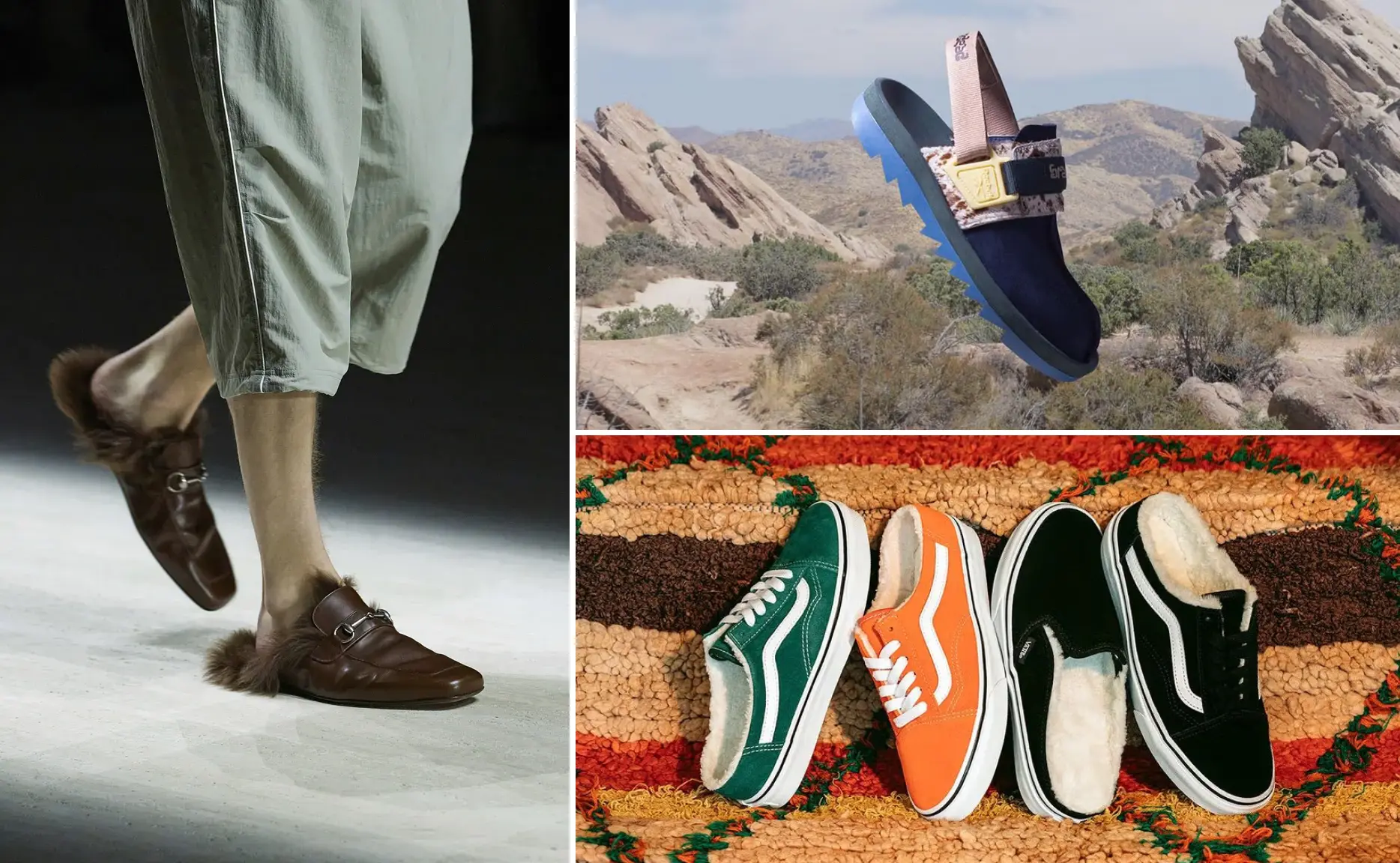
This evolution is exactly what makes the mule such a compelling design brief: a form everyone knows, continuously reinterpreted across centuries and subcultures.
The Vizcom x Zellerfeld challenge asked designers to write the next chapter: what happens when one of fashion's oldest silhouettes meets 3D printing, one of its newest manufacturing technologies?
Meet the Top 3
From the Top 30 finalists, our judging panel of industry footwear designers selected three concepts to be printed by Zellerfeld.
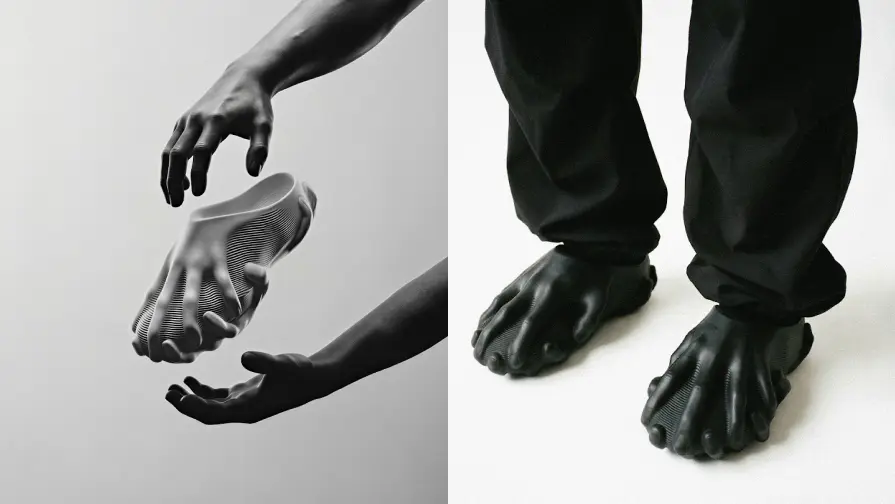
1. Digits by Kolbe Correia
A form of human hands creates a structure around the foot. The insole pattern resembles a fingerprint, and similar ridges fill in the rest of the form. For a while, AI was scrutinized for an inability to represent hands: this design showcases AI's advancements since then through a form most achievable with 3D printing.
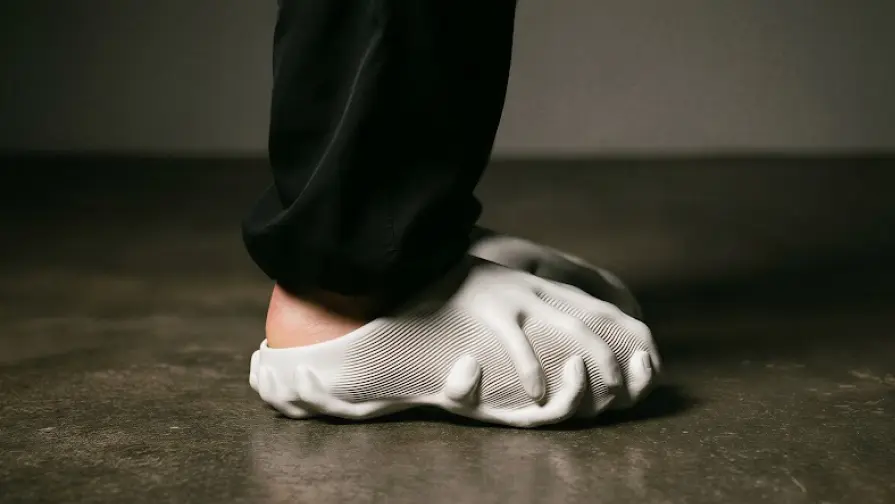
DIGITS was conceptually sharp and clever. Correia drew influence from marble statues and "Thing" from the Addams Family. The fingerprint-as-insole detail is the kind of idea that rewards a second look.
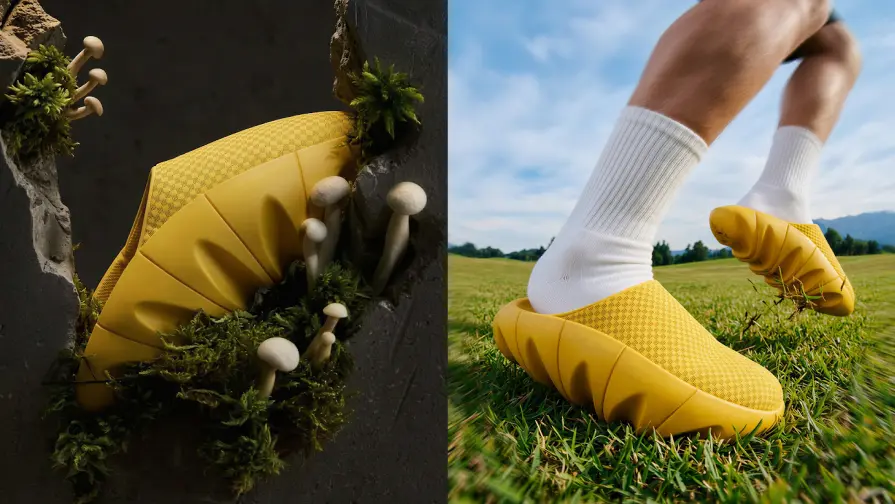
2. CATAPILL by Prithviraj Taware
CATAPILL is a biomimetic mule inspired by the anatomy and movement of a caterpillar. The segmented outsole translates the insect's rhythmic contraction and gripping prolegs into soft, flowing ribs and cavities that suggest flexibility, cushioning, and traction. Inflated organic volumes replace rigid mechanical lines, creating a playful yet functional form that expresses motion and comfort through shape.
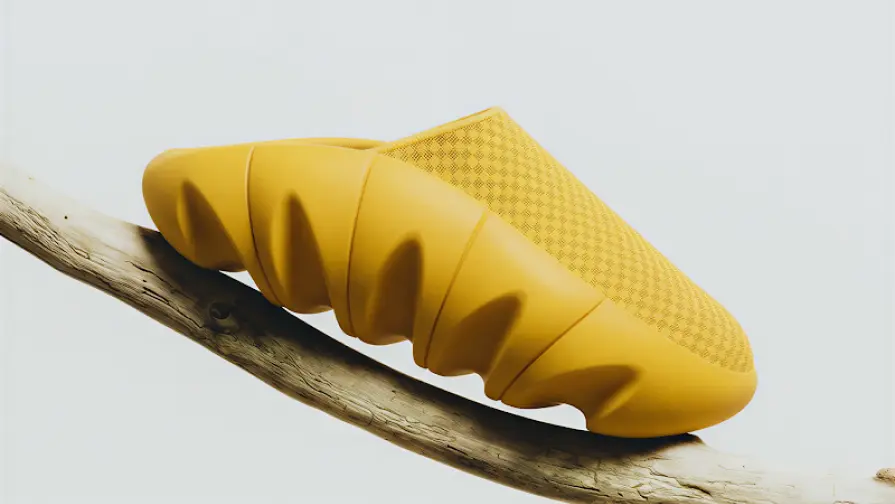
Taware studied how a caterpillar's body expands and contracts as it crawls, then translated that rhythm into ribs and cavities that imply real mechanical performance. The result feels alive, like footwear that moves with you.
3. The Saman by Andrew Moya and Juan Rujana
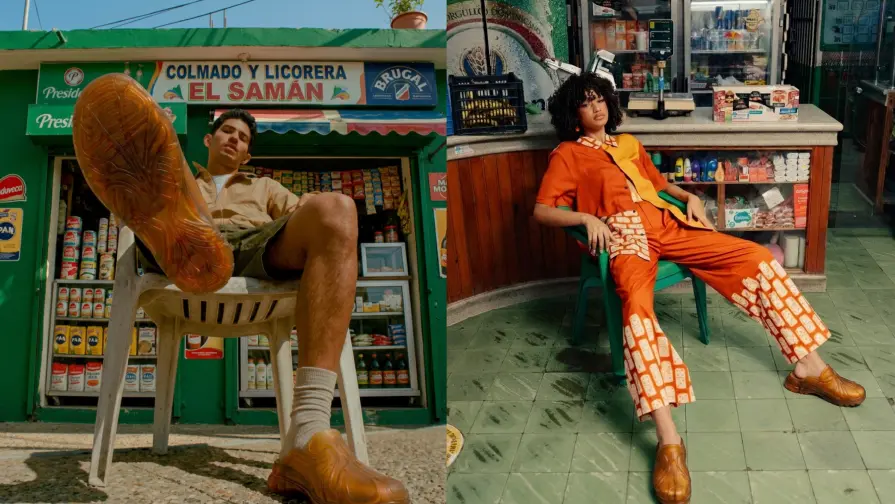
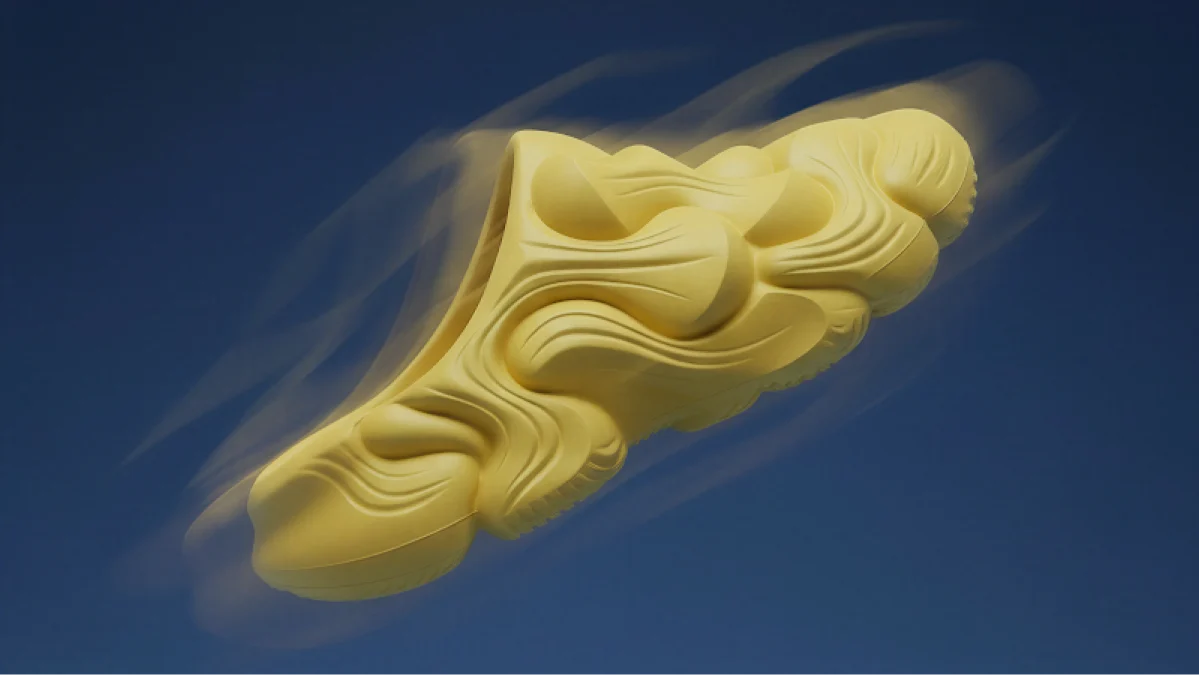
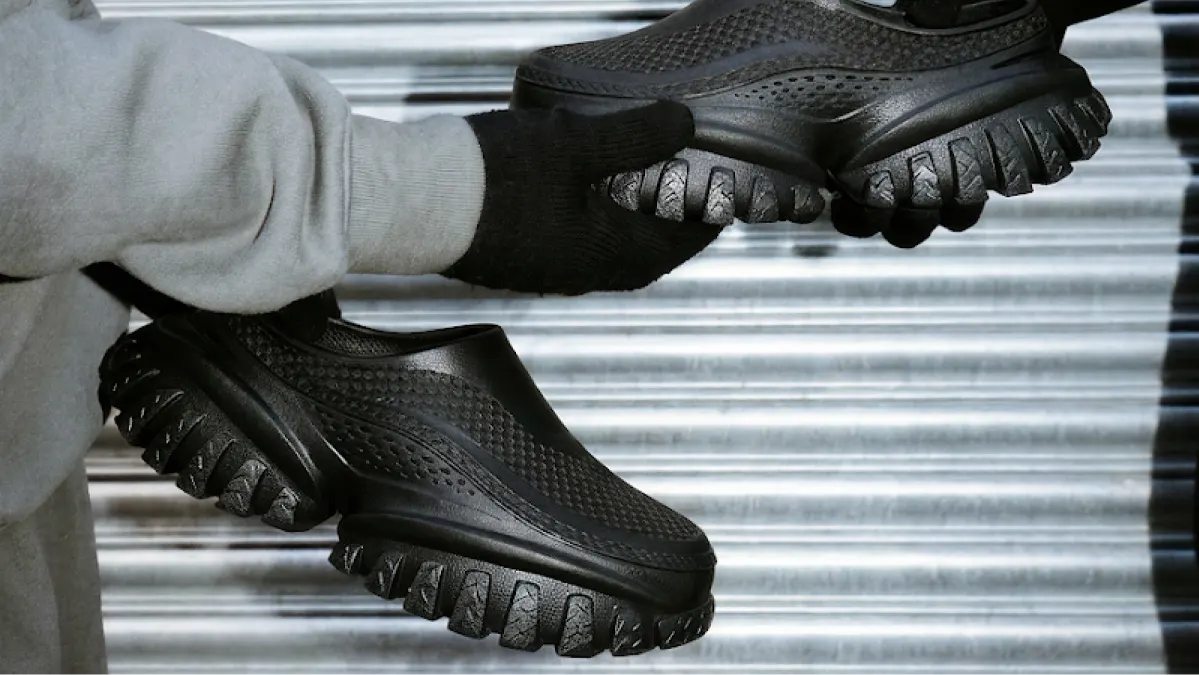
The Saman is an amber mule with organic tree root forms spreading along the upper with a Tumi-shaped tongue, drawing directly from pre-Columbian artifacts and motifs. Named after the Saman tree, a beloved gathering space in Central and South America — this elevated mule is built for long-wear and traditional gatherings.
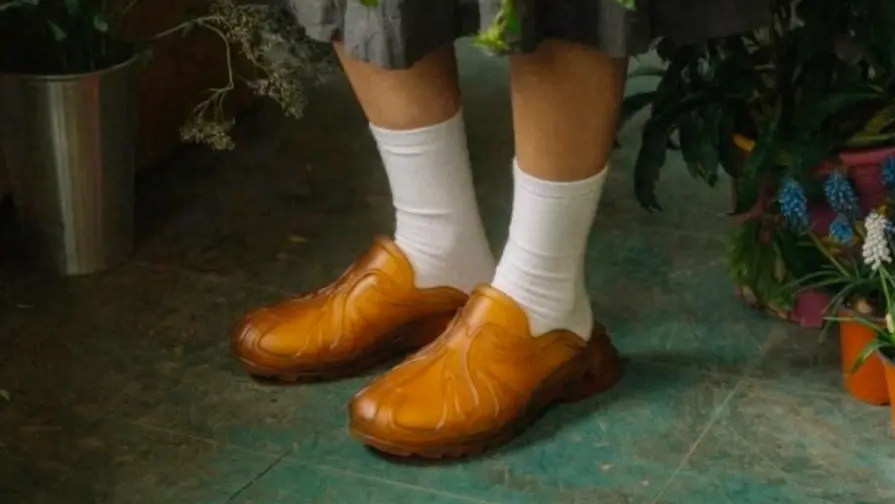
Moya and Rujana brought deep cultural specificity to a global competition. The amber colorway is reminiscent of tumbaga, the copper-gold alloy crafted by pre-Columbian civilizations. Fossilized seashells and tree roots inform the silhouette. This isn't a shoe that borrows from culture as decoration — it's rooted in it, literally and figuratively.
The Judging Panel
To narrow down over 430 global submissions, we assembled a panel of industry icons and leaders: Daniel Bailey (MRBAILEY™), footwear designer and founder of CONCEPT(K); Joey Khamis, founder of Khamis Studio, who has designed for Columbia Sportswear, and Reebok; Jordan, CEO of Vizcom; and Cornelius, CEO of Zellerfeld.
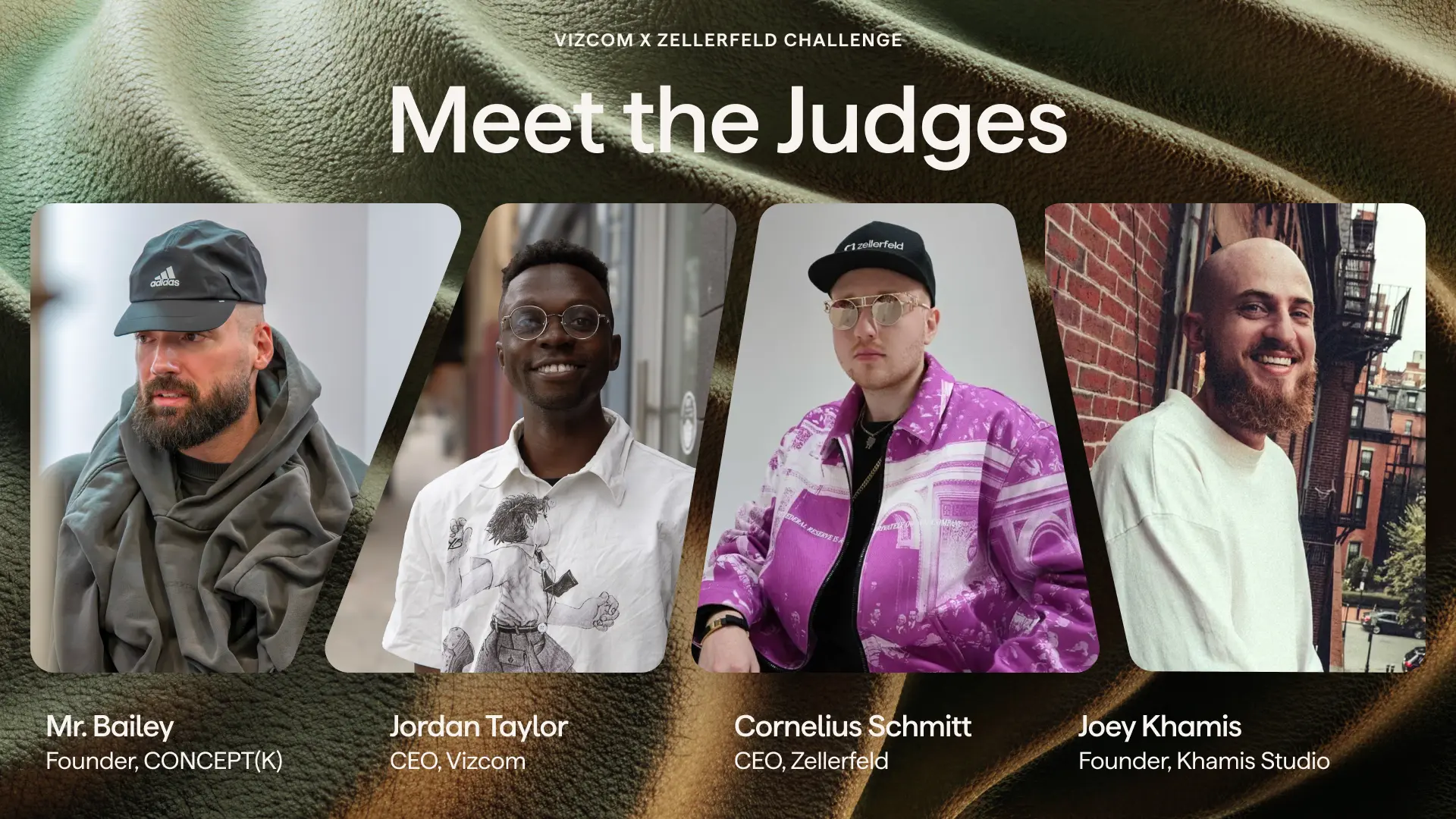
The judges evaluated the Top 30 submissions across creativity, originality, design quality, feasibility, process, and brief alignment.
The Top 30
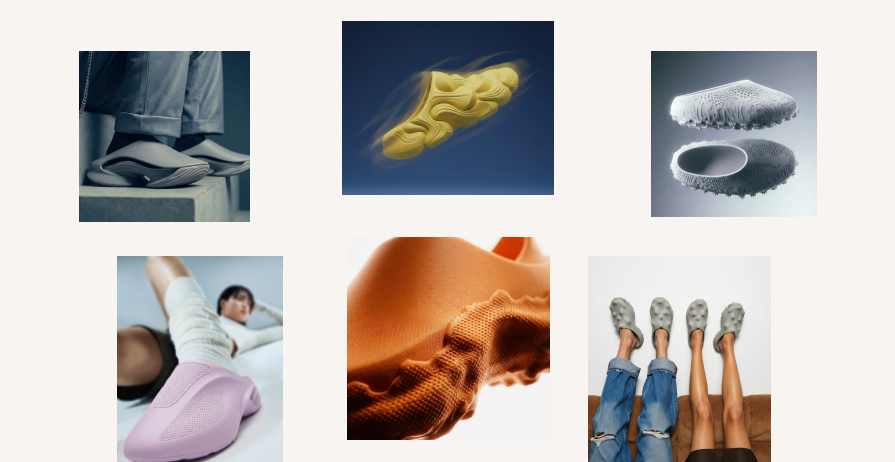
The full Top 30 finalists represent a range of creative direction: from nature-inspired organics to futuristic low-poly forms. Honorable mentions to Mudbud, Coral, Flo, Calf Mule, Balae, and Fugu: standout submissions that impressed across creativity, process, and originality, and made the final selection incredibly tough.
Key Design Themes
Across the submissions, several recurring themes emerged:
Nature & biomimicry
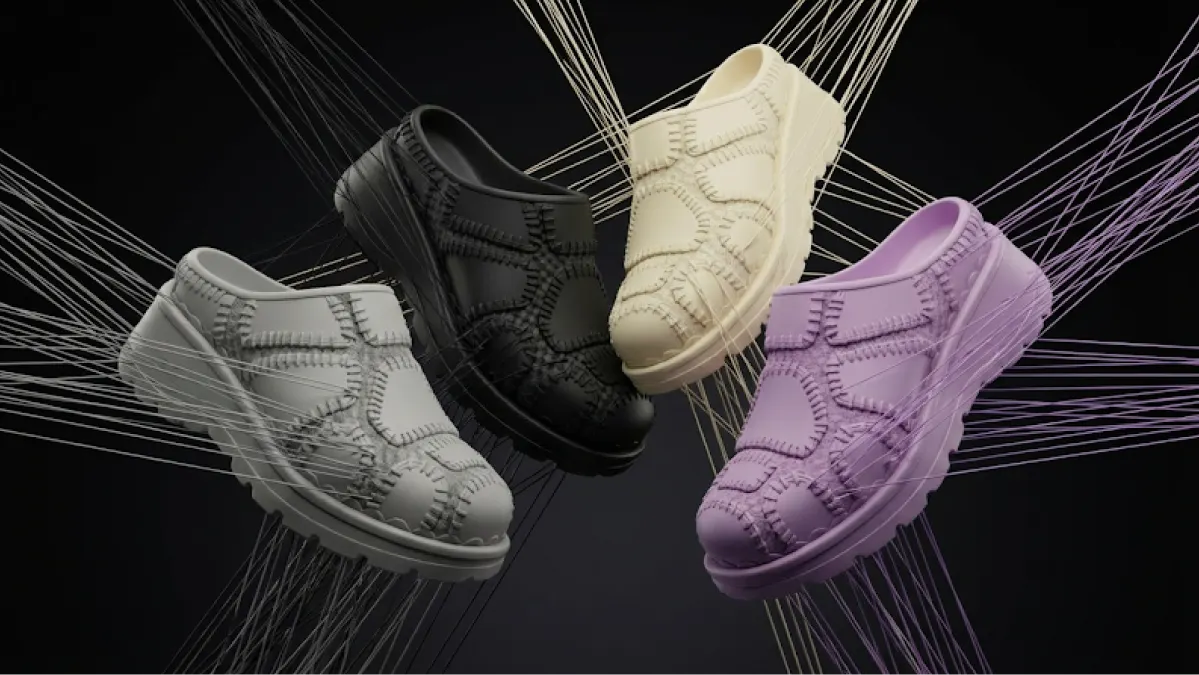
From rattlesnake-inspired forms (SHED) to coral reef textures (Coral) and beetle shell geometries (BEETLE Mule), designers consistently looked to the natural world for both form and function. Biomimicry wasn't just aesthetic — it drove structural innovation.
Sustainability & circularity
Many entries grappled with the lifecycle of a shoe. PATCHED UP confronted fast fashion head-on. Others explored how 3D printing's single-material constraint could be reframed as a sustainability advantage: one material means easier recycling, no glue, no mixed waste streams.
Sensory design
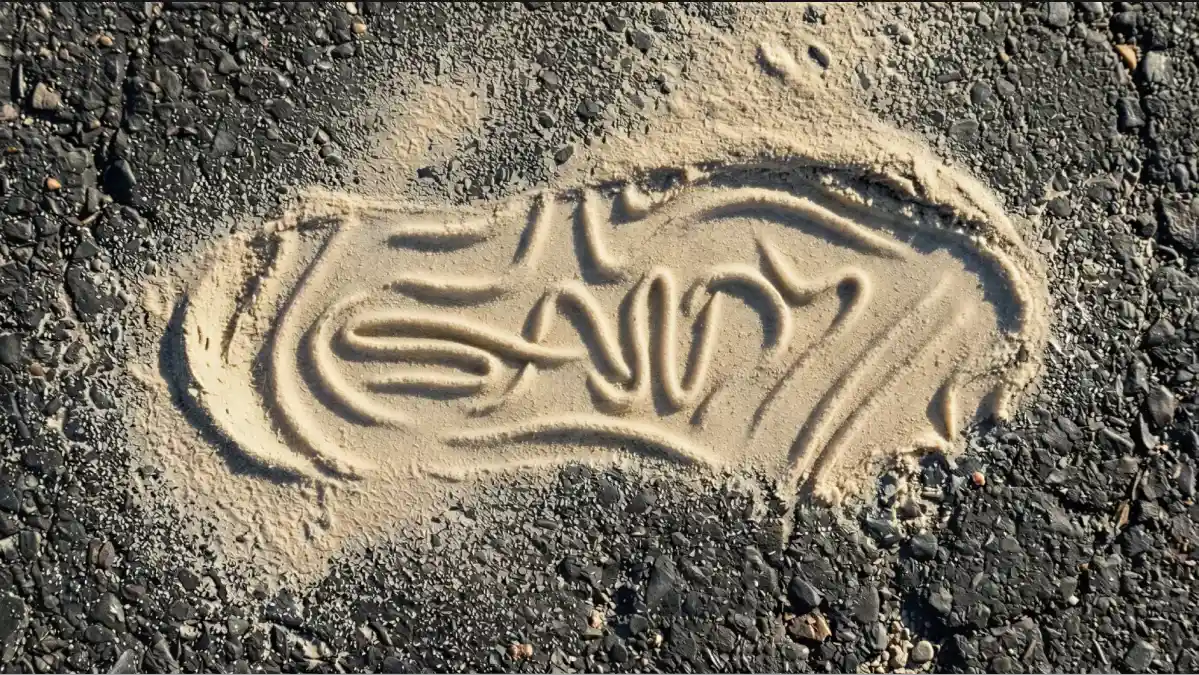
Sandy's beach-feel footbed was a standout example of how designers were thinking beyond how a shoe looks, but rather how it feels. Mules, as a category rooted in ease and comfort, proved to be the perfect canvas for this kind of exploration.
Cultural & personal narrative
Several finalists drew from deeply personal or culturally specific references. The Saman draws from pre-Columbian artifacts and Central American gathering traditions. La Chouf is rooted in Marseille street culture. The best designs carried meaning rooted in the designer's own experience.
How Vizcom Powered the Process
We put together a Learn Template to help our community design their first mule from scratch, but what blew us away was how far designers pushed beyond it, finding new applications of Vizcom. Here's how designers used the platform across the challenge.
Concept Exploration
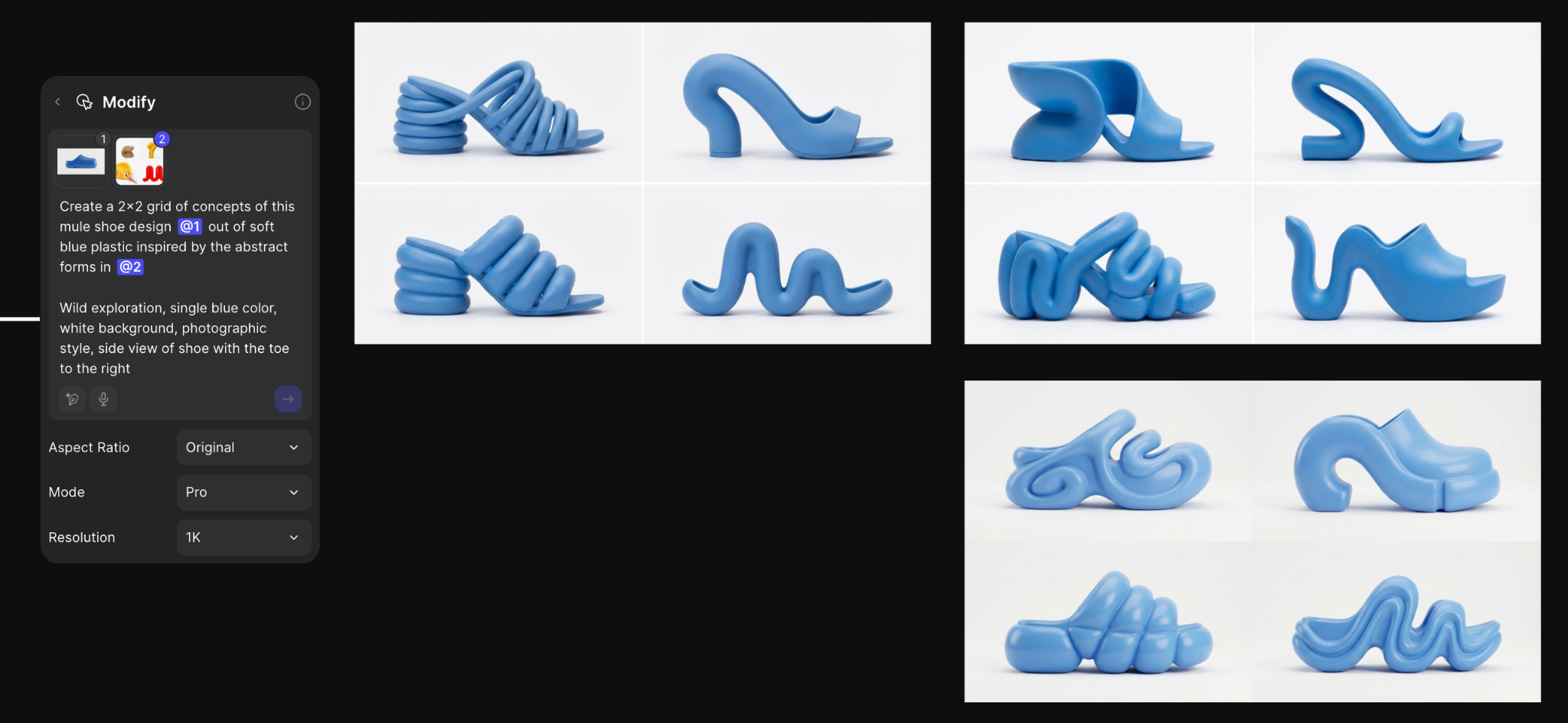
Our rendering tools allowed designers to turn sketches into renders in minutes, then rapidly branching from there. Designers referenced shoe lasts, applied textures, tested tread patterns, generated colorway variations, and created new views of their concepts. In a two-week window, designers explored dozens of directions in Vizcom.
Art Direction and visualization
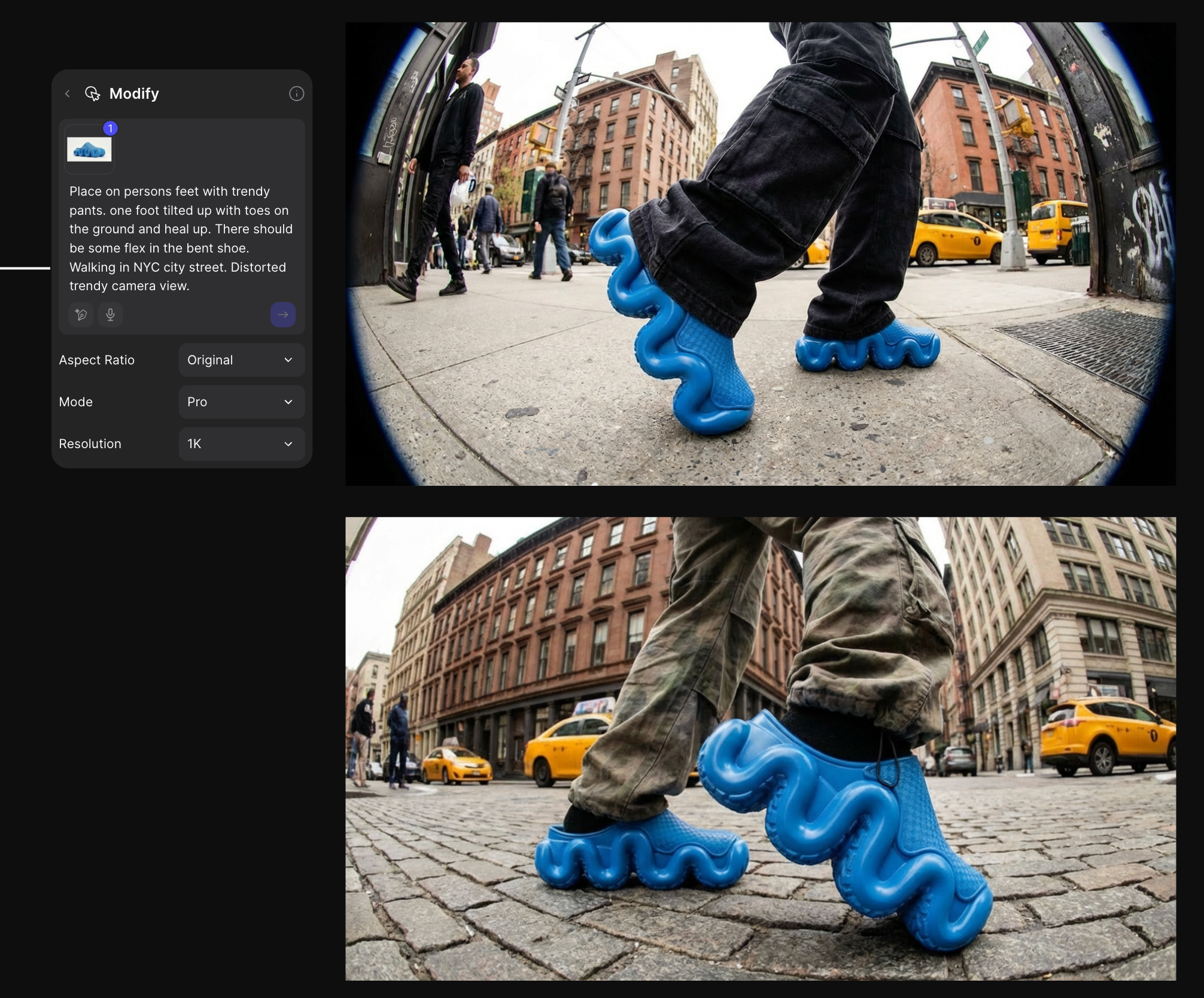
Once concepts were locked, designers used Vizcom to bring them to life beyond the sketch, placing their mules in editorial-quality contexts, styled on-foot, and set against rich environments.
Several designers took it further with animations, producing in context shots of their own designs. It was exciting to see designers actively thinking about how they’d bring their mule to market.
Generating 3D Meshes
A submission requirement was that each project file include a 3D model generated within the Vizcom. Designers used the Make 3D feature to turn their 2D concepts into 3D meshes. This allowed them to visualize a 360 degree view of their mule design, bridging the gap between ideation and Zellerfeld’s production process. The model acted as a great starting point for designers to export and bring into 3D modelling softwares.
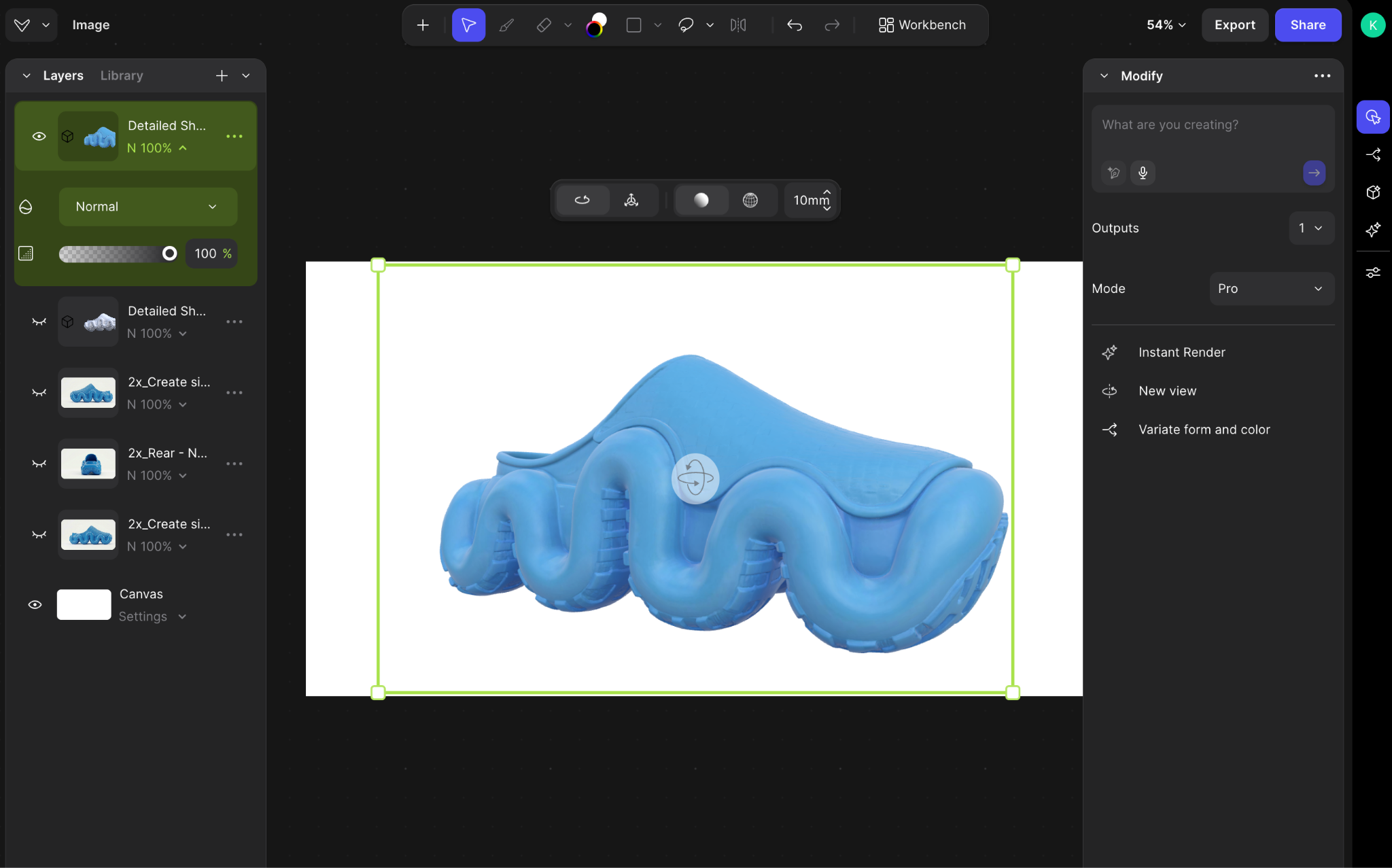
The challenge highlighted Vizcom’s role in closing the gap between concept and manufacturing. Designers used the platform to visualize how their shoe would look in context (on-foot renders, environmental shots) while also generating the 3D assets needed for production. The workflow moved from sketch → render → 3D → production, all within a single ecosystem.
What's Next
The Top 3 designs are now in the production phase with Zellerfeld, with manufactured samples expected to ship in the coming weeks. The Vizcom and Zellerfeld team will be working directly with the winners to produce spotlight content documenting the journey from digital concept to physical product.
To everyone who submitted, thank you. 430+ designers showed up, pushed their creativity, and made this challenge so special.
This was the first Vizcom × Zellerfeld challenge — but it won't be the last. Sign up for updates to get notified when the next challenge drops.
Explore
Explore more blog posts & resources to get inspired
430 submissions. 30 finalists. 3 designs headed off to be printed. Here's how a global community of designers reimagined the mule.
Kai Bettermann took the oldest clock there is, built the sun into it, and found out with a ring light before he found out with a render.
.jpg)
-cover.jpg)
Frequently asked questions
Yes of course! Our starter plan is completely free, no credit card required. This is a great plan to explore vizcom with.
We accept all major credit and debit cards.
Admins (paid) – can edit files, manage workspace settings, billing, teams, and invite members. Editors (paid) – can edit files but not manage settings, billing, or teams. Viewers (free) – can only view files in read-only mode.
Team billing is handled centrally by the Admin. All paid seats, whether Admins or Editors, are included in a single invoice under the same billing cycle, while Viewers remain free and do not affect the cost.
Yes, you can. An Admin can update the plan in the billing settings, and the switch will take effect on the next billing cycle at the annual rate.
Yes, you own everything you create in Vizcom. For free users, while Vizcom may use generated images to improve its services, it does not claim ownership of your designs, concepts, or original ideas—you keep full rights to them. For paid users, your images and designs remain entirely private and are only used to deliver the service. Every design, concept, and image you create or upload is fully yours and kept confidential.
Vizcom does not use your data to train AI models if you’re on a paid plan. Everything you create stays private and is only used to provide the service. Free users may have their generated images included to help improve Vizcom’s services, but even then, Vizcom does not claim ownership of your designs, concepts, or original ideas—you retain full rights.