%20(1).png)
Make It Real: Fabracers, Ádám Miklósi's Collectible Derby Cars
Industrial designer Ádám Miklósi designed Fabracers: three collectible derby cars built from aluminum extrusions and solid wood—using Vizcom to visualize and refine before fabricating the physical prototypes.

The inspiration: pinewood derby cars
Between client projects, award-winning industrial designer Ádám Miklósi found himself drawn to a simple creative prompt: design a pinewood derby car. But rather than reach for traditional toy car aesthetics, he saw an opportunity to explore something closer to his heart, industrial components as expressive design elements. With extruded aluminum profiles scattered around his Budapest studio, the vision crystallized: minimal derby cars built from honest materials, celebrating modularity and the joy of making something step by step, without urgency.
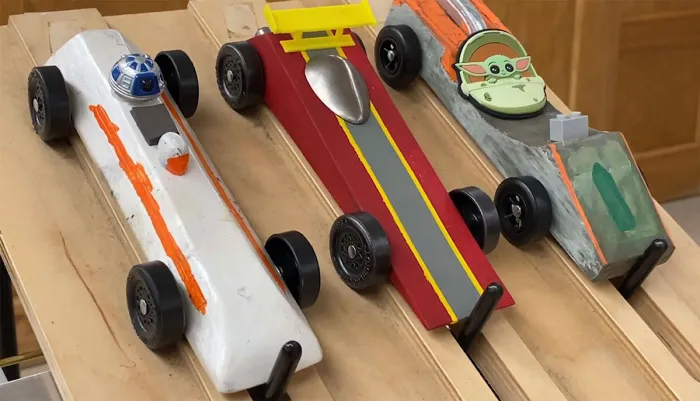
Source: https://scoutlife.org/hobbies-projects/projects/2952/fast-pinewood-derby-car/
"These are not toys in the conventional sense, but small collectible objects—studies in modularity, material honesty, and the joy of making."
For Ádám, the Fabracers exist at the intersection of collectible object, maker project, and design study. The intended audience includes makers who appreciate modular systems, derby car collectors seeking something beyond traditional pinewood designs, and anyone drawn to minimal, well-crafted objects that celebrate industrial materials and fabrication.
Three cars, three narratives
The Fabracers collection comprises three distinct models, each exploring a different automotive narrative through the same minimal system of extruded aluminum profiles, solid wooden wheels, and tactile details.
Roadster 01 is a minimal collectible built from extruded aluminum profile, cork cockpit, and solid birch wheels. It channels vintage roadster elegance with clean lines and a sense of speed frozen in industrial form: celebrating the quiet pleasure of engineered simplicity.
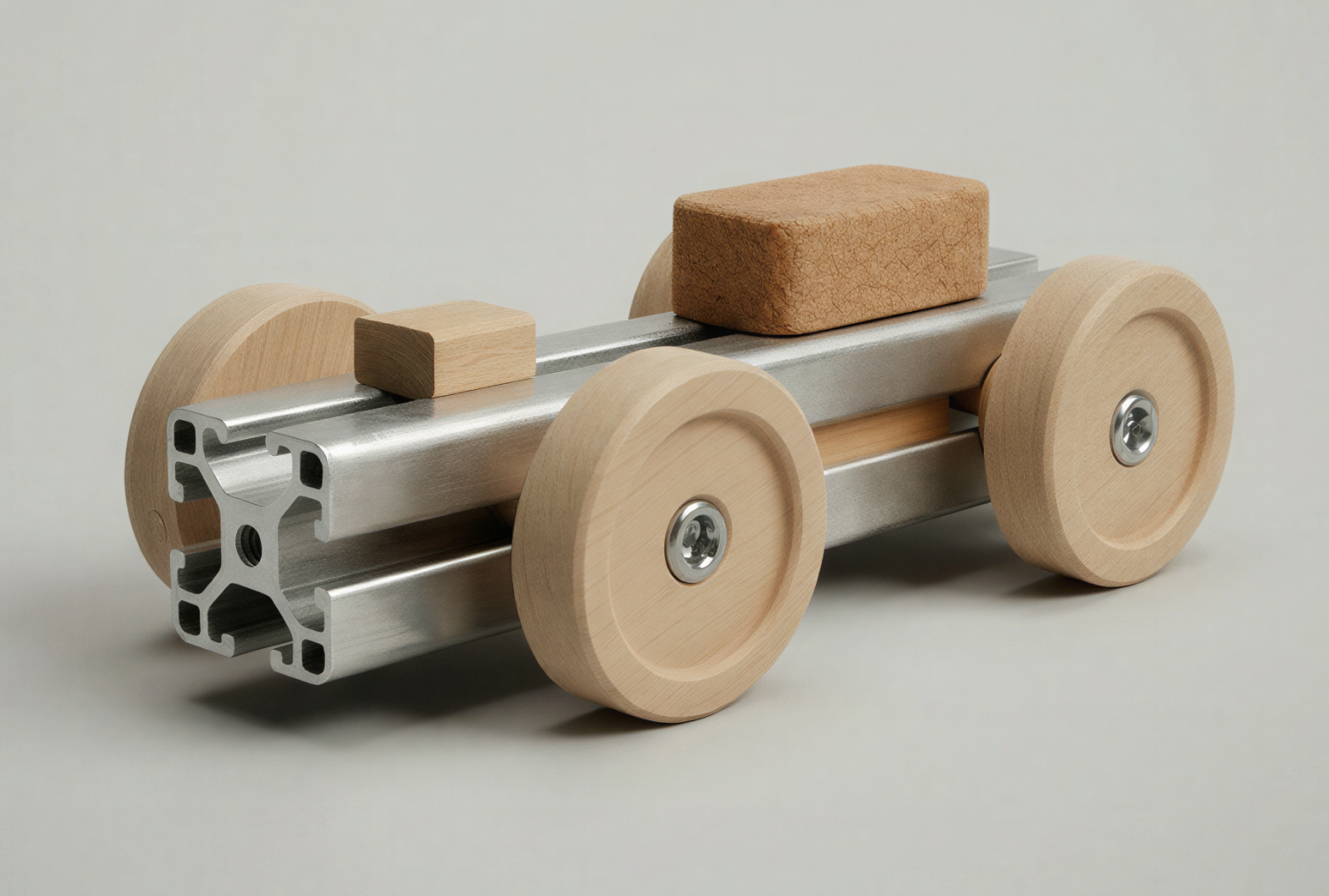
Monoposto 01 reduces the single-seat race car form to its essentials. With an extruded aluminum chassis, solid wooden wheels, and minimal cork detailing, it captures the focused spirit of vintage motorsport: a study in how much can be communicated through reduction.
.png)
Expedition 01 recalls early 20th-century automotive expeditions, when cars were instruments of exploration rather than speed. Inspired by Ádám's reading of László Almásy's With Motorcar to the Sudan (1934)), where the explorer took his car on expeditions across deserts and unknown territories.
.png)
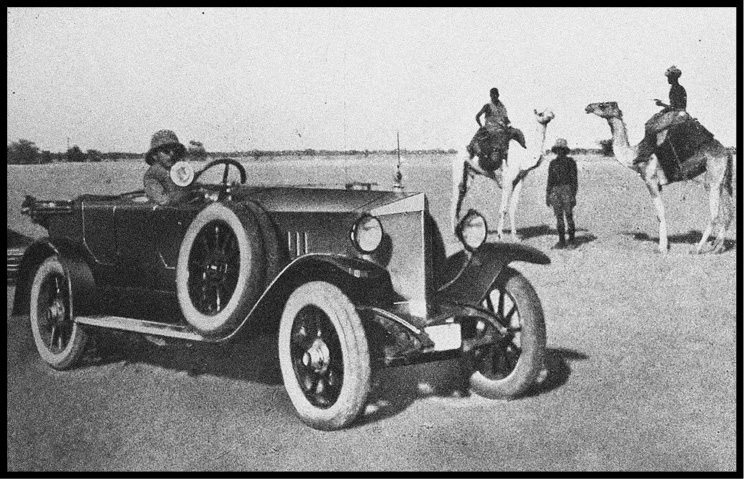
Source: https://europebetweeneastandwest.wordpress.com/2025/07/15/from-the-swiss-alps-to-alexandria-a-winters-journey-count-laszlo-almasy-8a/
Each car is designed to roll, honoring the derby car's essential purpose while existing as collectible objects for makers who appreciate modularity, fabrication, and material honesty. The cars are also built around standard aluminum extrusions combined with cork cockpits and solid birch wheels. The materials are honest and tactile, allowing users to see exactly how each piece functions and fits together.
Material choices: industrial honesty
The material palette was driven by Ádám's ongoing exploration of extruded aluminum profiles, not merely as hidden engineering components, but as visible, expressive design elements. He had several profiles at home from previous experiments, and they became the natural starting point.
Aluminum extrusions provide structural integrity while revealing their modular logic. Solid birch wheels ground the design in warmth and craftsmanship, while cork cockpits add a tactile, vintage detail. Functionally, the wheels actually roll, these may be collectibles, but they honor the derby car's essential purpose.
Aesthetically, Ádám aimed for something minimal yet pleasing, drawing inspiration from vintage roadsters. The result is a design language that balances industrial precision with playful character.
Vizcom workflow: from CAD to visual clarity
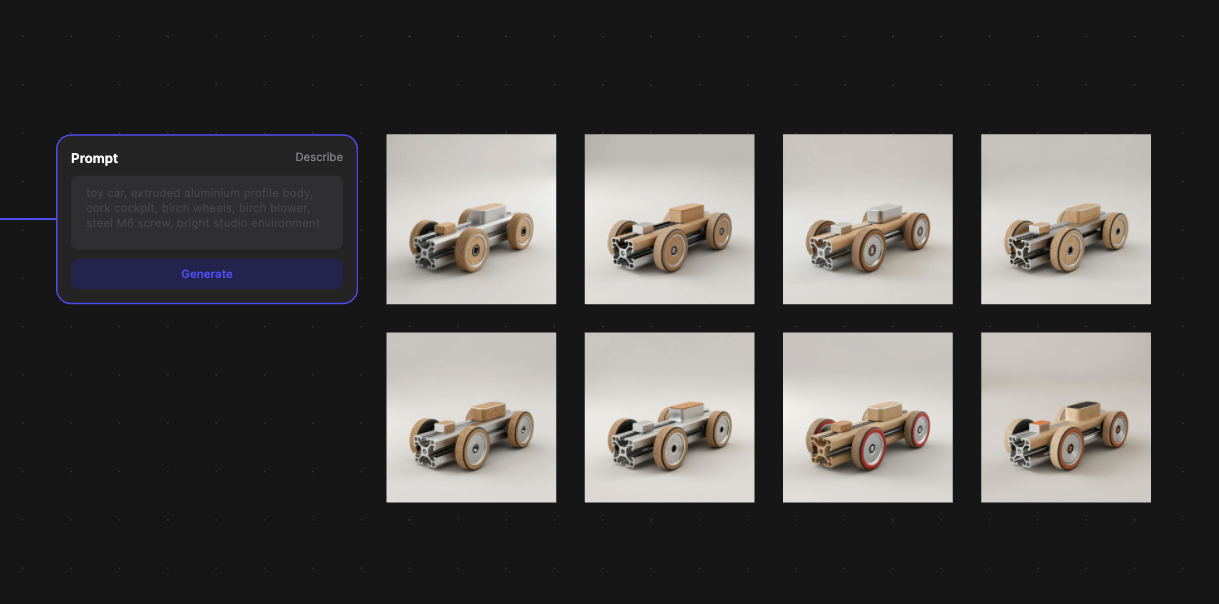
Ádám's process began with a CAD mockup built in Rhino. From there, he created a line drawing from the desired perspective: a clean foundation for exploration. This is where Vizcom entered the workflow.
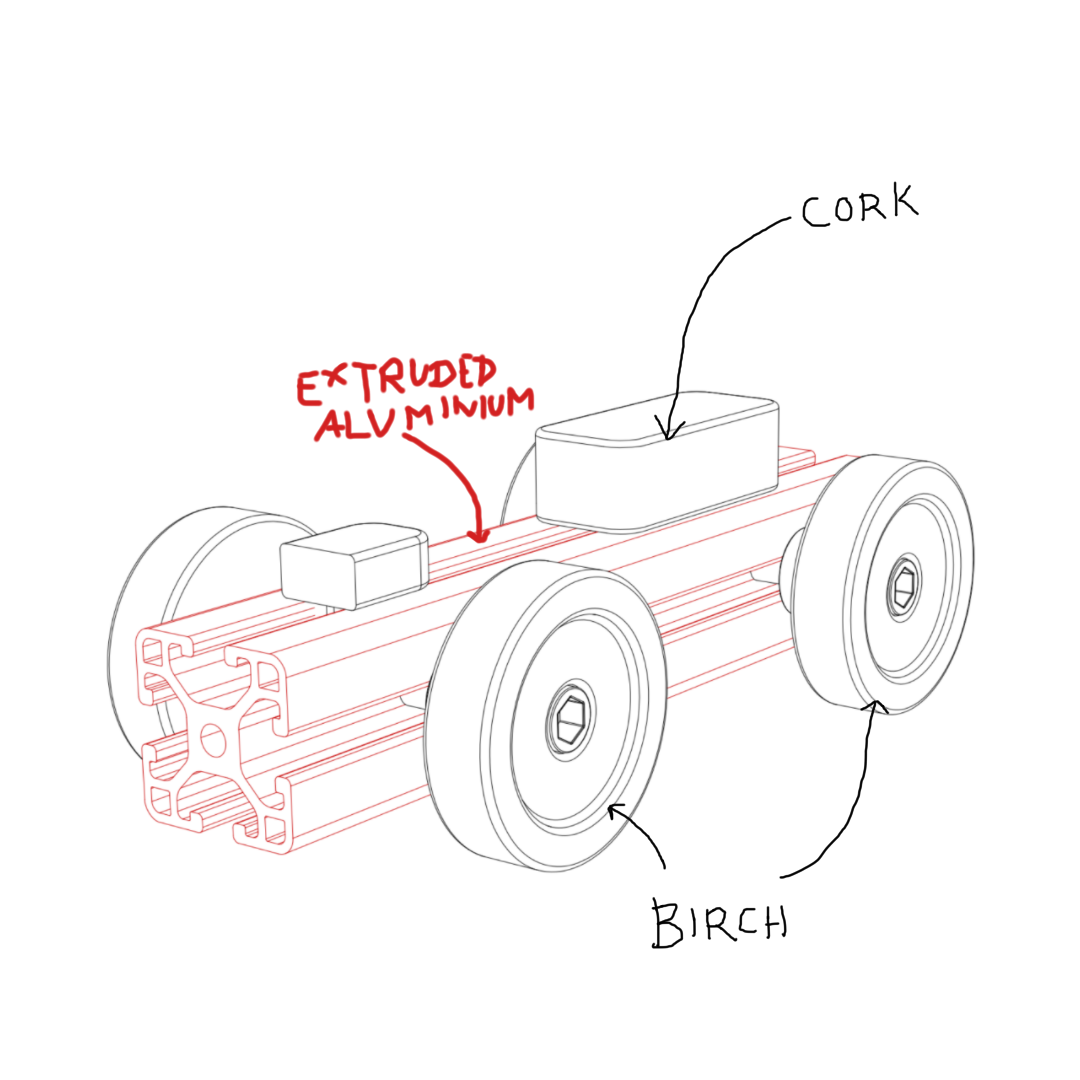
He used Instant Render to quickly set materials, indicating them with keywords directly on the drawing. To establish the desired aesthetic, he added a reference image from Pinterest that captured the vintage roadster spirit he was pursuing. After a few iterations, the renders matched his vision.
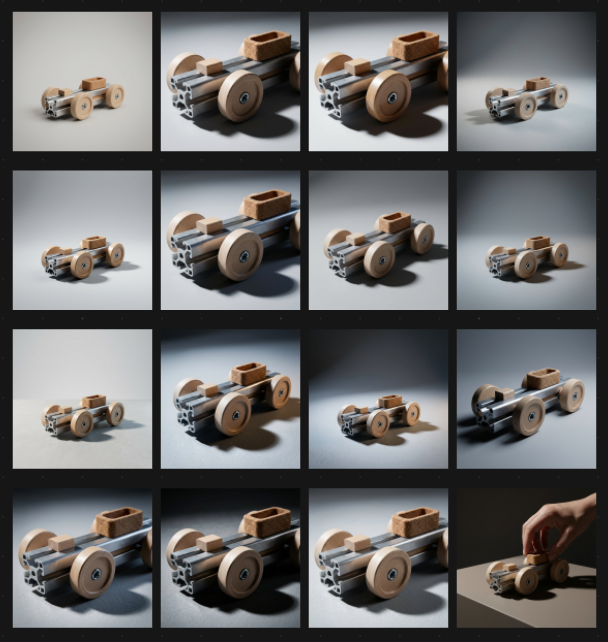
Next, he leveraged the Modify tool to generate alternative views of the cars, exploring different angles and perspectives. Finally, he created animations to bring the static designs to life, demonstrating how the cars would look from multiple viewpoints.
"I had a very clear vision I wanted to achieve. I'm happy Vizcom made it possible."
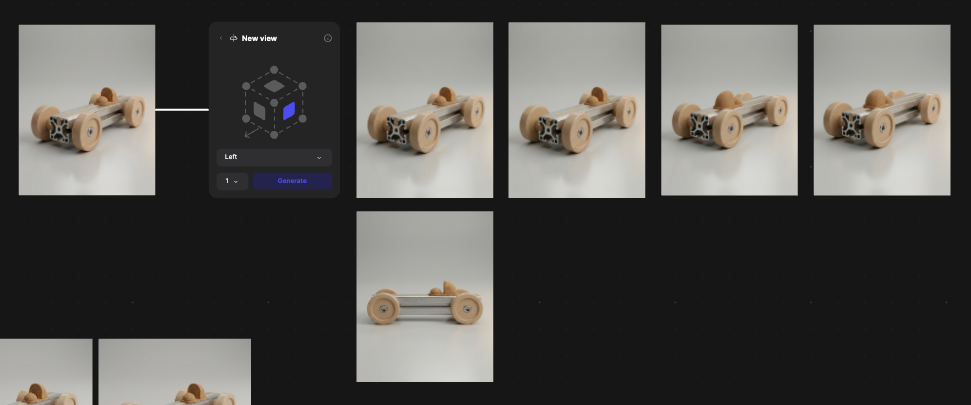
For this project, Vizcom served a specific purpose: translating Ádám's precise vision into high-quality visuals that could guide physical fabrication. The renders became a blueprint, something to replicate in the real world.
From pixels to aluminum: making it real
With renders in hand, Ádám moved to fabrication. The high-quality visuals from Vizcom provided clear direction for assembling the physical prototypes, no guesswork about proportions, material combinations, or how the aluminum profiles would interact with wooden wheels and cork details.
The beauty of working with modular, off-the-shelf components meant the path from digital to physical was relatively direct. Standard aluminum extrusions could be cut to length, wheels could be turned from solid wood, and cork elements could be shaped and fitted. The renders ensured every piece would come together as envisioned.
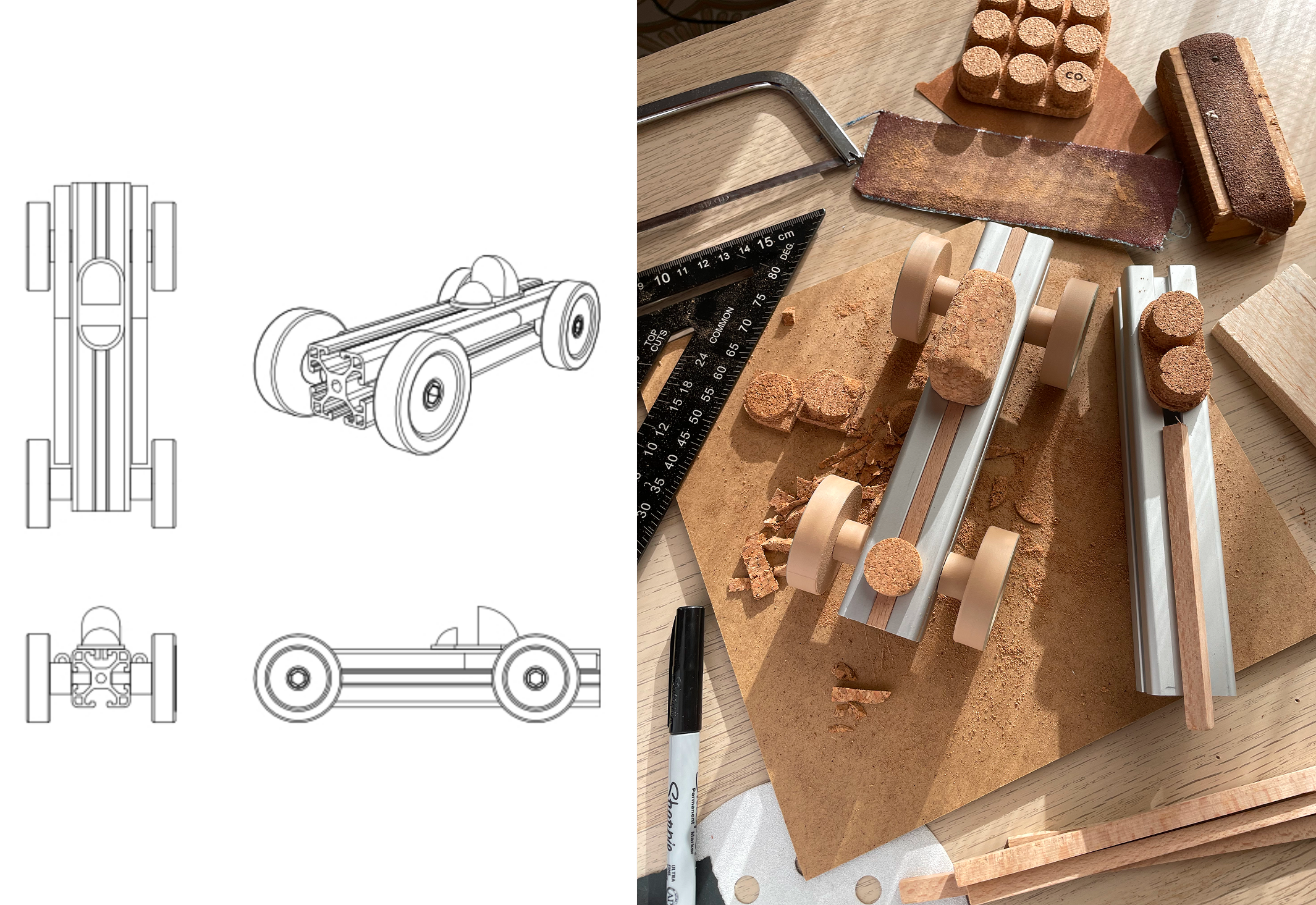
Vizcom accelerated the visualization phase, giving Ádám confidence to commit to materials and fabrication without building multiple physical prototypes. The renders became a reliable bridge between digital precision and hands-on making.
Finding the right moment for AI
With over a decade of experience, three Red Dot Awards, and two iF Design Awards, Ádám brings a disciplined approach to design and sees the digital and physical design evolving hand in hand. His advice to other designers is simple but crucial: find the right time to use AI in your design process. For Fabracers, that moment was pre-production: to rapidly visualize materials and refine the aesthetic before building. AI accelerated the middle phase between conception and fabrication, but didn't replace the foundational design thinking or the hands-on making.
The joy of personal exploration
Fabracers emerged slowly, in small breaks between Ádám's client work. The project became unexpectedly close to his heart, proving that side projects can yield designs that feel authentic and joyful. Sometimes the best work emerges when you give yourself the space to explore your ideas on your own terms: testing materials, refining details, and following curiosity wherever it leads.
Design: Ádám Miklósi — adammiklosi.com and @adammiklosi_design
Location: Budapest, Hungary
Specialization: Industrial Design
Visualization: Vizcom
Materials: Extruded aluminum profiles (item), solid birch wheels, cork cockpits
Models: Roadster 01, Monoposto 01, Expedition 01
Want to bring your own ideas from screen to reality?
Try Vizcom for Yourself →
Follow us on Instagram, X, and LinkedIn for tips and inspiration.
Have feedback? DM us or drop a note in our Discord — we're listening.
Explore
Explore more blog posts & resources to get inspired

430 submissions. 30 finalists. 3 designs headed off to be printed. Here's how a global community of designers reimagined the mule.
Kai Bettermann took the oldest clock there is, built the sun into it, and found out with a ring light before he found out with a render.
.jpg)
-cover.jpg)
Frequently asked questions
Yes of course! Our starter plan is completely free, no credit card required. This is a great plan to explore vizcom with.
We accept all major credit and debit cards.
Admins (paid) – can edit files, manage workspace settings, billing, teams, and invite members. Editors (paid) – can edit files but not manage settings, billing, or teams. Viewers (free) – can only view files in read-only mode.
Team billing is handled centrally by the Admin. All paid seats, whether Admins or Editors, are included in a single invoice under the same billing cycle, while Viewers remain free and do not affect the cost.
Yes, you can. An Admin can update the plan in the billing settings, and the switch will take effect on the next billing cycle at the annual rate.
Yes, you own everything you create in Vizcom. For free users, while Vizcom may use generated images to improve its services, it does not claim ownership of your designs, concepts, or original ideas—you keep full rights to them. For paid users, your images and designs remain entirely private and are only used to deliver the service. Every design, concept, and image you create or upload is fully yours and kept confidential.
Vizcom does not use your data to train AI models if you’re on a paid plan. Everything you create stays private and is only used to provide the service. Free users may have their generated images included to help improve Vizcom’s services, but even then, Vizcom does not claim ownership of your designs, concepts, or original ideas—you retain full rights.