
What Is Conceptual Rendering? A Guide for Designers
Conceptual rendering creates quick visualizations to evaluate sketches before detailed CAD work, prioritizing speed and clarity over polish to help designers make better decisions. AI-powered tools like Vizcom compress rendering time from hours to seconds, enabling designers to explore 50-100+ variations instead of just 20-40.

Conceptual rendering is the process of creating quick visualizations that let you evaluate whether a sketch is worth developing before you commit to detailed CAD modeling or photorealistic presentation images.
Behind every finished product are dozens, sometimes hundreds, of these working visualizations that never make it to the final presentation. These renders prioritize speed and clarity over polish because they exist to help you make decisions.
What Does a Conceptual Render Entail?
A conceptual render is a quick visualization with enough fidelity to evaluate proportions, form language, and basic material intent. These aren't the polished images but working files; the visual equivalent of thinking out loud.
Conceptual renders help you check if:
- A sketch that looked promising actually holds together when you can see it with basic lighting and materials applied
- The proportions feel right
- The form language reads clearly
- The transition between surfaces works the way you imagined
These images help design teams have productive conversations during reviews without getting distracted by whether the chrome finish is camera-ready.
Compared to photorealistic renders that take hours, a conceptual render takes minutes. Tools like Vizcom are built for this kind of speed, letting designers sketch live, upload references, and see visualizations in seconds without switching between applications.
Conceptual vs. Photorealistic Renders
Here’s a breakdown of the main differences between conceptual and photorealistic renders, and how to best use each:
Why Is Conceptual Rendering Important in Early Design?
Conceptual rendering is important because you make your most expensive decisions during early design, often without realizing it. Concept design and selection is estimated to affect up to 70% of a product's life cycle cost.
Conceptual rendering helps teams and stakeholders visualize ideas before committing to details like specific materials or manufacturing processes:
- Communicates vision by presenting form, functionality, and spatial relationships in a format that's easier to evaluate than flat sketches
- Facilitates faster feedback cycles because adjustments happen while changes are still cheap
- Aligns teams and clients around a shared understanding of direction before detailed development begins
- Makes abstract ideas tangible, helping non-designers grasp concepts that would otherwise require technical expertise to interpret
What Makes a Good Conceptual Render?
A good conceptual render communicates design intent clearly without over-investing in premature polish.
Clear form language allows your visual vocabulary to be intentional and coherent. The forms you show should communicate the design direction you're exploring, not confuse viewers with contradictory or ambiguous signals.
Honest proportions build trust in your design thinking and form the foundation that other design decisions build upon. When proportions feel wrong in a conceptual render, it undermines confidence in the entire direction.
Basic material intent shows enough differentiation to understand the design concept without requiring photorealistic accuracy. Materials should read accurately enough for evaluation purposes. Pursuing perfect material accuracy in conceptual renders wastes time on questions you're not yet trying to answer.
Simple, readable lighting supports form comprehension. Your lighting should help viewers understand the form, not create mood. Complex lighting setups belong in photorealistic renders.
Consistent viewing angle across your exploration helps viewers make fair comparisons. When you're showing three variations, switching angles forces viewers to mentally translate what they're seeing instead of directly comparing designs.
Conceptual Rendering Across Industries
Different industries prioritize different aspects of conceptual rendering based on their unique design challenges.
Automotive design emphasizes form accuracy and surface quality because these decisions commit enormous tooling investments. Surface continuity evaluation and lighting-based form assessment are also crucial; automotive designers need to validate complex surfaces before committing to expensive physical modeling.
Footwear design operates under extreme time pressure, where rapid iteration takes precedence over elaborate refinement. Proportions and silhouettes form the foundation, and color exploration capabilities matter because footwear operates on seasonal cycles with colorway variations driving market differentiation. Vizcom Custom Palettes can help footwear teams maintain brand-accurate colors across hundreds of concept variations.
Industrial design integrates ergonomic validation and user interaction visualization into conceptual rendering. Industrial designers must show how products relate to the human scale and use context, making their conceptual renders necessarily more contextual than purely form-focused renders.
No matter your industry, faster conceptual rendering means more exploration and better decisions. Vizcom supports this across verticals; the platform handles live sketching, reference uploads, and visualization without switching tools. Book a demo to see how Vizcom works for your specific workflow.
When to Use Conceptual Rendering in Your Workflow
Create conceptual renders at specific workflow triggers:
- After sketches feel promising but before investing significant modeling time. As mentioned above, this stage represents the highest-stakes decision point where visualization becomes essential with 70% of product costs getting locked in during the conceptual phase.
- Before 3D modeling. It saves time by helping you validate directions before investing in detailed geometry. When you can see that proportions don't work in a conceptual render, you avoid spending days modeling a concept that won't survive review.
- During design reviews, because it gives teams common visual reference for productive discussion.
- When comparing multiple directions, since conceptual renders help you make evidence-based decisions about which concepts deserve further development. Side-by-side visualization reveals which proportions work better, which form language reads more clearly, and which material combinations support the design intent.
How Designers Traditionally Created Conceptual Renders
The traditional workflow involves three stages: CAD modeling, dedicated rendering software, and post-processing. You create base geometry using parametric or surface modeling tools, import those files into rendering software, apply materials and lighting, and then wait.
Traditional rendering software became the industry standard for industrial designers because these tools are CAD-friendly; the files created by an engineering team can be dropped right into rendering platforms. But the fundamental bottleneck remains: computation time. A single product visualization can take 10-30 minutes per frame on a local computer, while a 4K architectural still can require several hours.
Quick 3D blockouts help, but they still require modeling skills and software proficiency. The downsides compound during iteration: each design change means returning to CAD, re-exporting files, and reconfiguring the rendering scene.
How AI Is Changing Conceptual Rendering
AI-powered tools have changed conceptual rendering by speeding up sketch-to-render workflows, but your judgment remains central to every creative decision. The shift isn't about replacing designers, but about removing the technical friction that prevents you from seeing enough ideas to make better decisions.
What AI-powered conceptual rendering changes:
- Faster sketch-to-render: Move from rough concept to evaluable visualization in minutes
- Text-driven material application: Type descriptions to apply textures on surfaces instantly and direct changes without re-drawing
- Expanded exploration capacity: Test 50-100+ ideas within the same timeline that previously allowed 20-40, enabling more divergent design exploration and ultimately better final outcomes
- Increased capacity for individuals and teams: Whether you're a solo designer or part of a larger team, faster rendering means more concepts explored. Teams can visualize concepts simultaneously without queuing for rendering resources.
Tools like Vizcom are built specifically for this workflow; designers can sketch live within the platform, upload images, use swatches, and weave real-world references throughout iterations without being locked into a linear process. The render mode feature transforms sketches into visualizations in seconds.
Start Exploring More Ideas
Conceptual rendering helps you see ideas more clearly and make faster, more confident decisions during the critical early phase when most product costs get locked in. The goal isn't creating polished marketing imagery, but to gain the visual clarity you need to evaluate whether a direction is worth pursuing.
Traditional rendering workflows, with their hours-long computation times, force premature decisions based on incomplete information. You choose which few concepts to develop from dozens of sketches, knowing you can't afford to visualize everything that deserves evaluation.
When you can visualize ten directions in the time it previously took to render one, you're working faster and exploring more thoroughly, catching problems earlier and making decisions based on evidence instead of guesswork. The faster you can see an idea, the faster you can decide whether it's worth pushing further.
Ready to explore more concepts without the rendering bottleneck?
Try Vizcom and see how sketch-to-render workflows can change the way you design.
Explore
Explore more blog posts & resources to get inspired
.webp)
Hatch Duo is a design studio based in San Jose built around a simple premise: great products hatch when two forces meet, your insight and their execution. Hatch's focus sits squarely in consumer packaged goods. For their latest collaboration with Vizcom, industrial designer Alec Comido wanted to see what he could design in one hour.
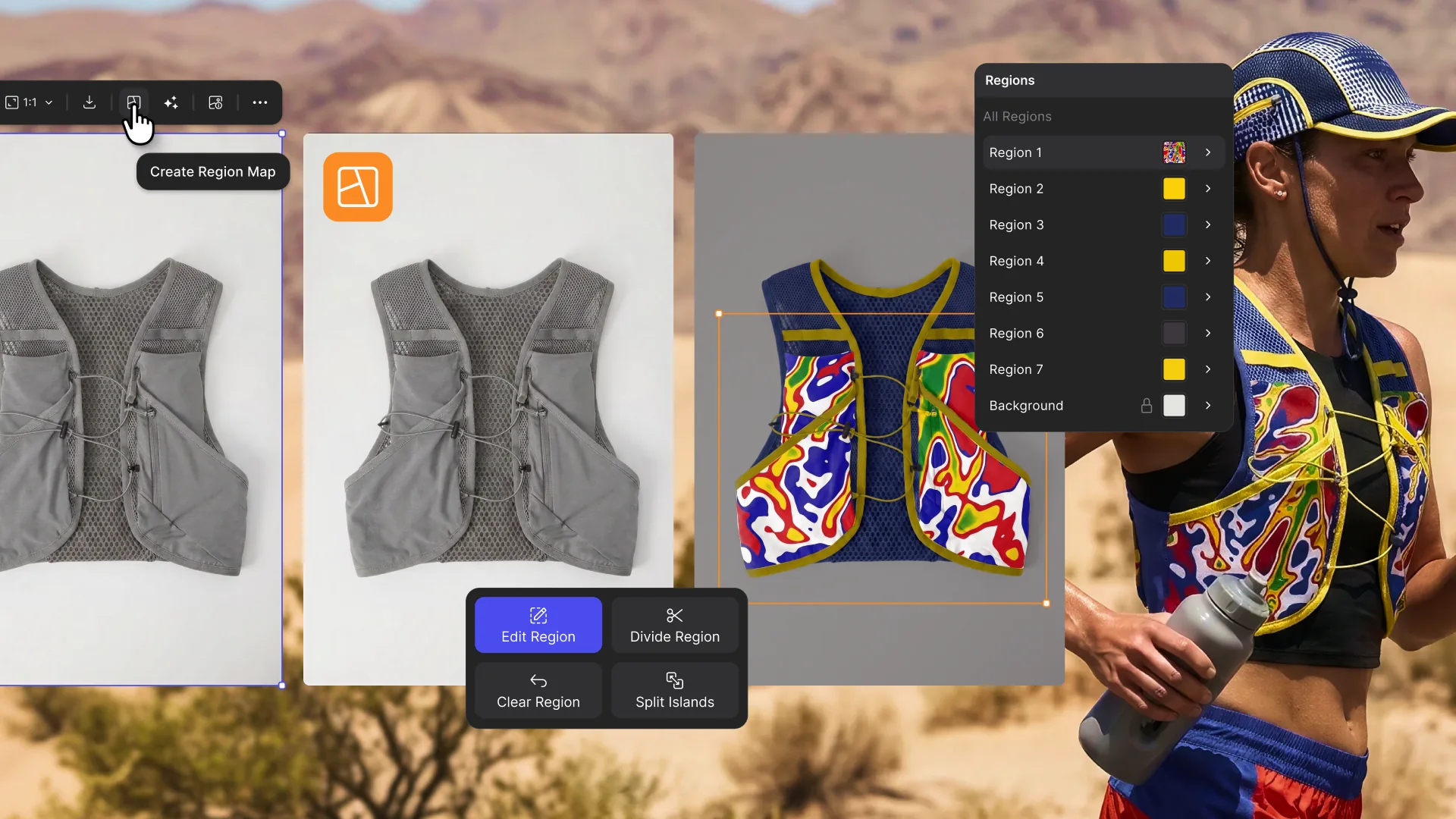
Explore color and material variations part-by-part without leaving Vizcom.


Frequently asked questions
Yes of course! Our starter plan is completely free, no credit card required. This is a great plan to explore vizcom with.
We accept all major credit and debit cards.
Admins (paid) – can edit files, manage workspace settings, billing, teams, and invite members. Editors (paid) – can edit files but not manage settings, billing, or teams. Viewers (free) – can only view files in read-only mode.
Team billing is handled centrally by the Admin. All paid seats, whether Admins or Editors, are included in a single invoice under the same billing cycle, while Viewers remain free and do not affect the cost.
Yes, you can. An Admin can update the plan in the billing settings, and the switch will take effect on the next billing cycle at the annual rate.
Yes, you own everything you create in Vizcom. For free users, while Vizcom may use generated images to improve its services, it does not claim ownership of your designs, concepts, or original ideas—you keep full rights to them. For paid users, your images and designs remain entirely private and are only used to deliver the service. Every design, concept, and image you create or upload is fully yours and kept confidential.
Vizcom does not use your data to train AI models if you’re on a paid plan. Everything you create stays private and is only used to provide the service. Free users may have their generated images included to help improve Vizcom’s services, but even then, Vizcom does not claim ownership of your designs, concepts, or original ideas—you retain full rights.