
What Is Design Lock? When to Stop Changing & Move Forward
Design lock is the formal milestone where specifications are finalized using progressive, hierarchical freeze strategies rather than locking everything at once. Effective implementation requires mapping freeze hierarchies, setting clear readiness gates, building time buffers, and implementing design chill phases before full freeze.

You're staring at a design that's good enough, wondering if one more iteration will make it great or just different. That moment sound familiar? That's the design lock decision staring you in the face. It's one of the hardest calls you'll make, because locking your design means committing to manufacturing.
Manufacturing commitment, particularly at scale, requires expensive tooling and production setup that becomes increasingly difficult and costly to change. Get the timing wrong by locking too early without validating manufacturability, and you risk wasting engineering capacity on preventable fixes. Lock too late and you miss market windows or incur costs from delayed product launches.
Understanding when to make that call, and how to implement it without creating chaos downstream, separates projects that ship on time from ones that spiral into expensive delays.
What Is Design Lock?
Design lock, also called design freeze, is the formal milestone where design specifications are finalized, and changes become controlled or prohibited. Effective design lock uses progressive, hierarchical freeze strategies rather than locking everything at once.
Most design process documentation gets design lock wrong by treating it as a single point in time. According to Design Society research, different systems, parts, features, and parameters need to freeze at different times.
Think about what happens when you lock a design. Different elements freeze at different times:
- Structural components and interfaces freeze first, because downstream teams need stable specifications to build against
- Manufacturing processes and tooling requirements freeze next, since tooling represents a large capital investment and long lead times
- Aesthetic elements and non-critical features can freeze last, giving you maximum flexibility where it matters least to manufacturing
Freezing different product elements at different times based on their downstream impact prevents two potential problems. Premature complete freezes can force expensive late-stage changes. Delayed partial freezes generally create manufacturing chaos.
Why Progressive Design Lock Matters More Than You Think
Progressive design lock matters because getting the timing wrong costs you money and time you may not be able to recover.
Here's what happens when timing goes wrong:
- Lock too late: You miss market windows while burning budget on endless iterations
- Lock too early: You waste engineering capacity fixing problems that proper validation would have caught
- The "just one more iteration" impulse gets dangerous when you're trading real deadlines for marginal improvements
According to PwC's automotive analysis, a single program launch delay costs an automotive OEM approximately $200 million over 12 months. For product designers working on footwear, apparel, industrial design, or consumer electronics, the scale differs but the principle holds.
Delayed design lock triggers cascading schedule impacts that push back production ramp, delay market launch, and create ripple effects across manufacturing, supply chain, and go-to-market planning.
Freezing too early creates different problems. When you lock a design before it's ready, your engineering team spends significant time managing post-freeze changes instead of advancing new development. According to ScienceDirect research, Engineering Change Orders (ECOs) consume between one-third and one-half of total engineering capacity across the product development lifecycle. For design managers overseeing teams, this means your rendering artists and product designers are fixing preventable mistakes rather than exploring new concepts.
The pressure you feel to lock designs comes from real economics, not arbitrary deadlines. Manufacturing preparation requires minimum lead times that can't be compressed without substantial cost increases. Tooling represents an irreversible investment, whether you're producing injection-molded footwear components, stamped metal parts for industrial products, or fabric patterns for apparel.
Supply chain commitments need stability to optimize production timelines. These constraints are real, and they matter across every industry that makes physical products.
How to Implement Design Lock Without Breaking Your Process
Effective design lock follows a sequence that validates each component before freezing it, then builds in buffers and controls to catch problems before they become expensive. It locks foundational elements first while keeping dependent features flexible, then adds formal controls as you approach full freeze.
Map Your Freeze Hierarchy First
Start by identifying which components need to lock early and which can remain flexible. Structural components and interfaces that other systems depend on should freeze first, because downstream teams need stable specifications to build against. Manufacturing processes and tooling requirements freeze next, since tooling represents massive capital investment and long lead times.
Aesthetic elements and non-critical features can freeze last, giving you maximum flexibility where it matters least to manufacturing.
Document this hierarchy before you start locking anything. Create a visual map showing dependencies between components. For each element, ask whether it defines an interface that other parts build against. Consider whether it requires custom tooling with long lead times. Determine whether it's purely aesthetic with minimal manufacturing impact. Your answers determine the freeze order.
Set Clear Readiness Gates
Before any component freezes, validate three things:
- Design readiness: Complete technical documentation that manufacturing can execute from, including detailed drawings, specifications, material callouts, and assembly instructions that leave no room for interpretation
- Manufacturing readiness: Confirmed processes and verified supplier capability, not just quotes and promises
- Technology readiness: Proven design functionality through prototyping and testing that verifies the design actually works as intended
Don't freeze anything until all three checks pass. Skipping validation to meet schedule pressure creates expensive problems downstream.
Create a checklist for each gate. For design readiness, verify that all technical drawings are complete and approved. Confirm you've specified every material, finish, and tolerance. Test whether someone can build this without asking you questions.
For manufacturing readiness, get supplier confirmation that they can meet specifications. Obtain material samples that match your requirements. Validate that the manufacturing process produces acceptable parts.
For technology readiness, build and test working prototypes. Verify they meet performance requirements. Identify and resolve failure modes. When you're exploring multiple design directions using Vizcom's sketch-to-render workflow, you can visualize and iterate on more options more quickly than traditional manual methods.
Build in Time Buffers
Between your final design freeze and production start, leave three to six months for tooling fabrication, manufacturing setup, and validation testing. This buffer absorbs the inevitable surprises that appear when you transition from prototype to production.
If your product has complex tooling like injection molds for footwear components or stamped dies for metal parts, extend this buffer. Products facing regulatory requirements also need longer buffers. If you're using rapid prototyping methods and simplified manufacturing, you can compress it.
Scale the buffer based on your product's complexity and your manufacturing partner's capabilities. A simple product with a proven manufacturing partner needs less buffer than a complex product with a new supplier. Factor in lead times for custom tooling, which can range from eight to sixteen weeks depending on complexity.
Implement Design Chill Before Full Freeze
Before locking a design completely, implement a "design chill" phase where any modification requires formal approval but isn't prohibited. During this phase, put formal controls on changes to issued design documents while allowing controlled evolution. This tests your change management process while you still have flexibility to adjust if something breaks.
Use design chill to validate that your documentation is complete and that downstream teams can execute without constant clarification requests. If you're getting frequent questions or change requests during design chill, your documentation isn't ready for full freeze.
Extend the chill phase until the questions stop and teams can work independently from your specifications.
Get Cross-Functional Sign-Off
Your design freeze decision needs explicit approval from engineering, manufacturing, supply chain, and finance. Design team consensus isn't enough.
Create a checklist of what each team needs to validate before they approve:
- Engineering: Confirm the design meets technical requirements and can be manufactured
- Manufacturing: Verify they have the processes and capability to produce at the required volumes and quality levels
- Supply chain: Confirm material availability and lead times
- Finance: Validate that costs align with budget targets
Don't proceed until every team confirms they can execute based on the frozen specifications. A single team's objection might reveal a critical gap that would be expensive to fix after freeze.
Make these approval meetings substantive reviews, not rubber-stamp exercises. The teams signing off are committing to deliver based on these specifications, so they need time to thoroughly review.
What Happens When Design Lock Goes Wrong
The Boeing 787 Dreamliner provides the clearest lessons in design lock failure because the documentation is comprehensive. According to peer-reviewed research by Yao Zhao, between October 2007 and December 2010, the program experienced seven documented major delays.
The most critical failures included:
- Parts shortages are affecting assembly schedules
- Wrongly installed fasteners discovered during final assembly
- Defects at wing-body joints involving multiple suppliers
- Interface mismatches that appeared only during final assembly
These delays stemmed from inadequate supplier coordination and integration verification during the system-level design freeze. Boeing's distributed supply chain created interface mismatches that appeared only during final assembly.
The fundamental failure was inadequate supplier coordination and integration verification during a system-level design freeze. Boeing's distributed supply chain created interface mismatches that appeared only during final assembly. The program's risk-sharing partnership structure inadvertently created perverse incentives that encouraged delays rather than penalizing them, preventing the systematic coordination necessary to catch integration issues before final assembly.
The lesson from aerospace development failures is that verified supplier readiness matters more than schedule pressure. Design freeze requires demonstrated capability to meet specifications, not merely contractual commitment. Interfaces between modules must be frozen and verified before component design locks.
Following aerospace industry standards like DoD Manufacturing Readiness and Critical Design Review frameworks, any post-freeze change must trigger testing of how parts work together, not just component validation.
When to Actually Lock Your Design
So when do you pull the trigger? When these four conditions align:
- Your technical documentation is complete. All technical drawings are complete and formally approved, meaning downstream teams can execute without making assumptions. The design can be built without further changes or clarification requests.
- Your user testing patterns are converging. Subsequent testing produces similar insights rather than new discoveries. The design has reached a proven state where additional iteration yields diminishing returns.
- Your manufacturing partners have verified capability. Specified materials are available from qualified suppliers. Lead times align with project schedules. Quality standards can be consistently met at required volumes. Manufacturing partners who lack clear specifications often need two to four weeks of rework for samples due to unclear inputs, mismatched construction methods, or wrong materials.
- The cost-benefit analysis favors moving forward. According to a widely cited 1991 study by John D. O'Malley, requirements and design decisions made before design freeze account for approximately 86% of total expected program costs. The expected improvement from additional iteration cycles no longer justifies the resource investment and timeline delay. Your team could deliver greater value by redirecting effort toward production preparation, tooling validation, or manufacturing readiness activities.
Design freeze is an economic decision point where the marginal return on additional design cycles no longer exceeds the cost of timeline compression and downstream production preparation.
Moving Forward With Confidence
Design lock is a formal transition point from design iteration to controlled execution. The designs that ship successfully complete validation, secure cross-functional approval, and move forward with disciplined change management.
According to McKinsey research analyzing public company performance from 2013 to 2018, companies that fully embraced the business value of design achieved a total shareholder return (TSR) 56% higher than industry peers. Design discipline, including knowing when to lock decisions and move to execution, contributes measurably to business outcomes.
The perfect design that never ships helps nobody. But the good design that reaches customers, gets used, and informs your next iteration? That's how you improve as a designer.
Tools that accelerate iteration change how confidently you can approach design lock decisions. When you can explore 50 to 100 variations in the time traditional rendering allowed for five to ten, you reach validation faster.
You test more thoroughly. You catch problems earlier. This means you can lock designs with more confidence, knowing you've explored the space completely rather than settling because time ran out.
See how faster iteration changes your design lock decisions. Try Vizcom free and explore 50 variations in the time you'd normally spend on five.
Explore
Explore more blog posts & resources to get inspired
.webp)
Hatch Duo is a design studio based in San Jose built around a simple premise: great products hatch when two forces meet, your insight and their execution. Hatch's focus sits squarely in consumer packaged goods. For their latest collaboration with Vizcom, industrial designer Alec Comido wanted to see what he could design in one hour.
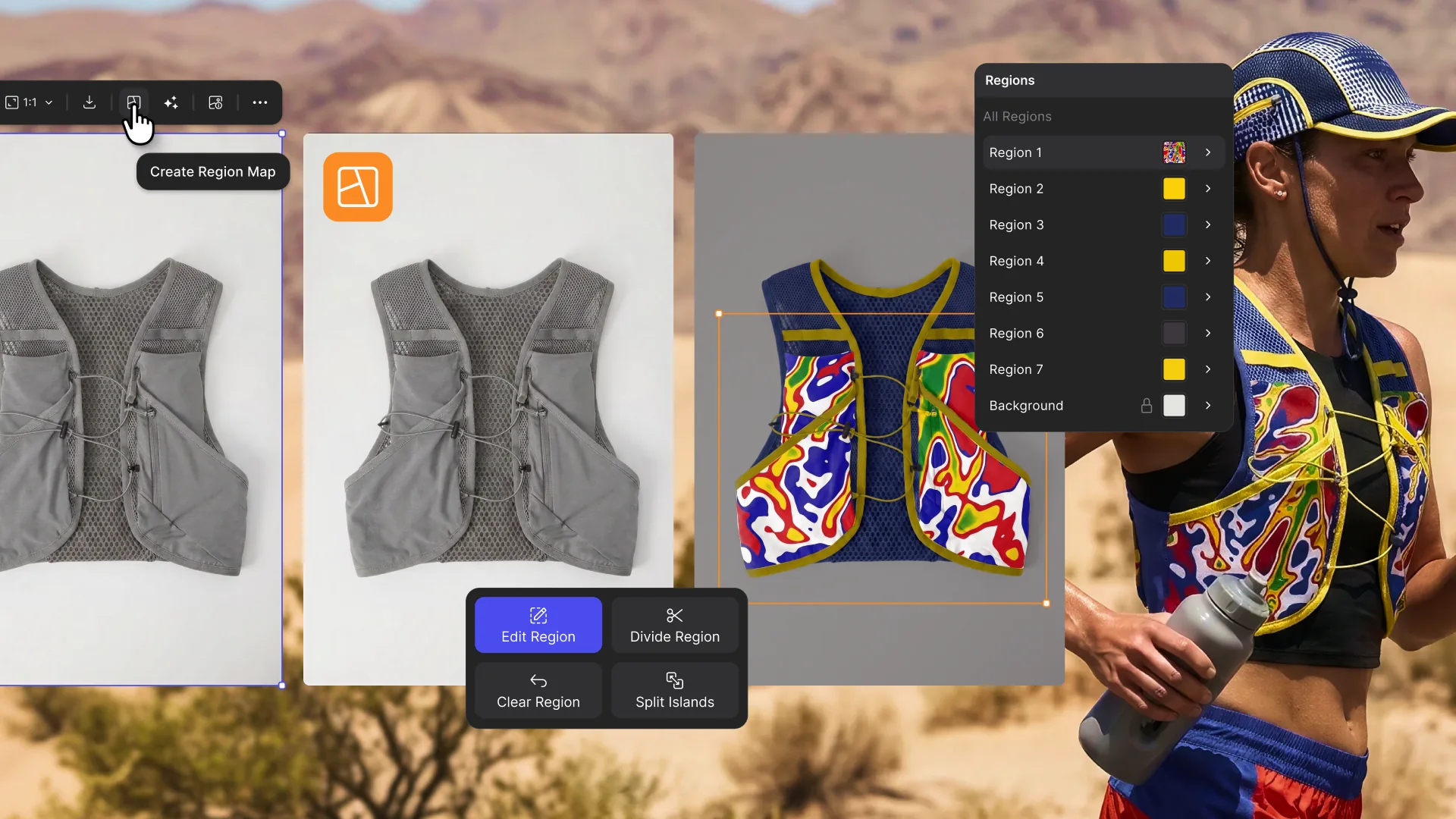
Explore color and material variations part-by-part without leaving Vizcom.


Frequently asked questions
Yes of course! Our starter plan is completely free, no credit card required. This is a great plan to explore vizcom with.
We accept all major credit and debit cards.
Admins (paid) – can edit files, manage workspace settings, billing, teams, and invite members. Editors (paid) – can edit files but not manage settings, billing, or teams. Viewers (free) – can only view files in read-only mode.
Team billing is handled centrally by the Admin. All paid seats, whether Admins or Editors, are included in a single invoice under the same billing cycle, while Viewers remain free and do not affect the cost.
Yes, you can. An Admin can update the plan in the billing settings, and the switch will take effect on the next billing cycle at the annual rate.
Yes, you own everything you create in Vizcom. For free users, while Vizcom may use generated images to improve its services, it does not claim ownership of your designs, concepts, or original ideas—you keep full rights to them. For paid users, your images and designs remain entirely private and are only used to deliver the service. Every design, concept, and image you create or upload is fully yours and kept confidential.
Vizcom does not use your data to train AI models if you’re on a paid plan. Everything you create stays private and is only used to provide the service. Free users may have their generated images included to help improve Vizcom’s services, but even then, Vizcom does not claim ownership of your designs, concepts, or original ideas—you retain full rights.