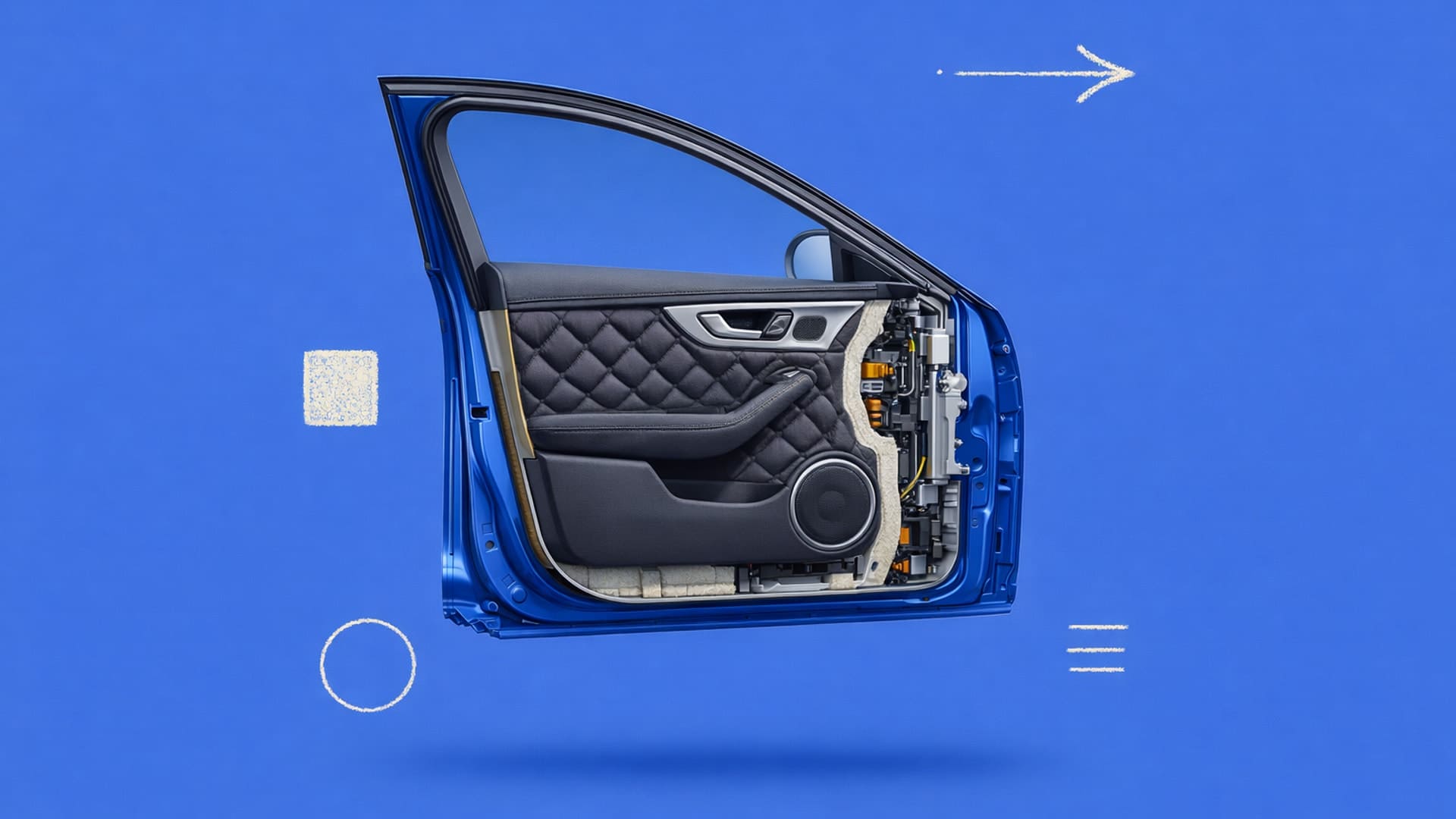
Automotive Materials: Choosing the Right Surfaces for Interior and Exterior
Choose the right automotive materials with our comprehensive guide covering CMF decisions, sustainability requirements, and digital workflows for interior and exterior design.

A single material choice kills more designs than you'd expect due to subtle mismatches. It could be a gloss level that photographs beautifully but feels cheap in person, a texture that looks consistent in your CAD renders but breaks down under showroom lighting, or a finish that works in isolation but clashes with every adjacent surface.
In this guide, we’ll cover how to choose the right automotive materials for interior and exterior design.
Why Material Choice Defines Automotive Brand Identity
Cabin experience impacts purchase decisions because buyers evaluate vehicles based on interior quality, not just performance specs. Your material choices shape brand perception before anyone test drives the car.
As Gypsy Modina, Principal Color Material Designer at Acura Design Studio, puts it: "If one thing is off, 'I like the color but I don't like the material,' they won't buy it." One misaligned element eliminates your concept from consideration.
The constraint isn't knowing what good materials look like, but seeing how they work together across your specific form language before committing to tooling. Surface curvature changes how gloss and texture read more than most flat swatches reveal. You can't evaluate materials on samples and expect to understand performance on actual forms.
What Matters When Selecting Automotive Materials
Aesthetic Performance
Lighting environment changes material perception more than material properties alone. How light hits a surface in the real world—sunrise, showroom, your customer's garage—affects perception more than the material specification itself.
Three variables determine gloss perception:
- Gloss level: The surface's reflective properties
- Surface curvature: How the form affects light distribution
- Lightness: The material's inherent color value
Change one variable, and the entire material reads differently. This is why testing materials in context matters more than isolated evaluation.
You need to see how finishes behave across curves and reflections before making tooling decisions. Render the same sketch with different material directions: brushed aluminum, soft-touch plastics, and technical fabrics. Comparative visualization reveals how materials behave in context rather than as isolated swatches, helping you eliminate directions that don't work before ordering physical samples.
Sketch-to-render workflows help you figure out early whether a proposed finish reads right across different lighting conditions. You eliminate directions that don't work visually, then move promising options into physical weathering tests.
This doesn't replace testing required by automotive performance standards, but speeds up filtering so you spend time testing materials that have already cleared aesthetic evaluation.
Durability Requirements
Beautiful materials that fail durability tests don't ship. Here are the key standards that govern automotive material performance:
Manufacturing Constraints
Your material choices constrain manufacturing options from day one. Deep grain textures force steeper draft angles:
- Smooth surfaces: Minimum 1.5-degree draft angles
- Textured surfaces: 4 to 8 degrees required
- Result: Geometric constraints you didn't anticipate
Paint compatibility represents another critical connection point. SAE research identifies paint appearance as one of the most important properties in automotive applications, affected by both the painting process and substrate surface characteristics. Your material selection and paint system selection aren't independent decisions.
Sustainability Mandates
EU regulations mandate a minimum 25% recycled content in automotive plastics within 6 years, with legally binding requirements for digital product passports and design-for-recycling mandates.
You need to see whether bio-based textiles or recycled composites support your design intent before committing to supplier partnerships and tooling investment. Visual prototyping reduces the risk of discovering aesthetic issues after locking in material specifications.
Exterior Materials: Where Form Meets Function
Metals and Coatings
Metal behaves differently than paint or plastic. The color you see comes from the light source, not the surface itself. This matters because metallic surfaces require different design approaches than non-metallic finishes.
A finish that looks perfect on a planar swatch might create unintended visual artifacts when wrapped around complex surface transitions. Visualizing how brushed aluminum or chrome treatments read across body surfaces before ordering physical samples prevents costly tooling corrections.
Plastics and Composites
Impact resistance matters particularly for lower-body components and wheel arch cladding. Color stability determines whether black plastic trim stays black or fades to gray after UV exposure.
Commonly used automotive plastics each bring different characteristics:
- ABS: Good impact resistance, easy to process
- PA (Nylon): High strength, chemical resistance
- PC: Excellent clarity, high impact strength
- PET: Good chemical resistance, recyclable
- PS: Cost-effective, rigid
- PBT: Dimensional stability, heat resistance
- PP: Most common, excellent chemical resistance
Your material selection directly affects long-term brand perception. These durability issues emerge years after purchase and influence customer satisfaction with vehicle quality.
Glass and Transparent Surfaces
When you're speccing glass, you're juggling clarity, strength, and thermal performance. Modern glass specifications increasingly address privacy tinting, heads-up display compatibility, and acoustic damping.
Exterior Trim
Traditional chrome persists in some segments while other manufacturers pursue blacked-out finishes or satin coatings. Compare trim treatments in context rather than relying solely on mechanical drawings or isolated samples. Sketch a side profile and test gloss black versus brushed aluminum pillars, seeing how each choice affects overall form language and visual weight distribution before moving to detailed CAD checks.
Interior Materials: Building Tactile Brand Experience
Soft-Touch Surfaces
Visual texture creates tactile expectations before anyone touches your dashboard.
Render multiple versions of a cabin sketch testing different grain directions, stitching patterns, and softness cues to see which material story reads clearly before developing physical CMF samples.
Textiles and Upholstery
Pattern visualization is important for textiles because weave structure, pattern repeat, and color interaction create different perceptual outcomes than solid materials.
Sketch-to-render workflows help you evaluate whether your proposed textile pattern enhances the interior architecture by showing how the pattern reads across multiple lighting conditions.
Decorative Accents
Production vehicles increasingly build sophisticated ambient lighting as core design elements. These systems modify how every interior material reads by changing the lighting environment.
Test variations quickly to see how wood veneer reads under different ambient lighting scenarios, or how metal inlay finishes interact with soft-touch surrounds, helping you communicate direction to stakeholders before prototype tooling begins.
How Digital Tools Fit the CMF Workflow
Sketch-to-render workflows speed up CMF exploration by letting you see more material variations before narrowing to physical prototypes. You can also test how materials read across different environments — e.g., desert sun, rainy urban streets, or garage lighting — without waiting for physical samples to arrive at each location.
Whether you're working solo or coordinating with a team, the ability to upload a sketch and test different material treatments in seconds rather than days changes when filtering decisions happen. Solo designers move faster without waiting on renders, while teams can explore material directions in parallel without queuing for shared rendering resources.
Tools like Vizcom support multimodal input for this type of exploration, letting designers and their teams upload sketches, reference images, or text prompts describing material qualities. You evaluate material consistency across interior and exterior surfaces visually, identifying potential conflicts before physical samples arrive. Features like Custom Palettes let you train the AI on your specific brand's material language, so every variation reflects your established design vocabulary rather than generic outputs.
Ready to speed up your CMF exploration? Try Vizcom and see how sketch-first AI rendering gives you the control traditional workflows can't match.
Explore
Explore more blog posts & resources to get inspired
.webp)
Hatch Duo is a design studio based in San Jose built around a simple premise: great products hatch when two forces meet, your insight and their execution. Hatch's focus sits squarely in consumer packaged goods. For their latest collaboration with Vizcom, industrial designer Alec Comido wanted to see what he could design in one hour.
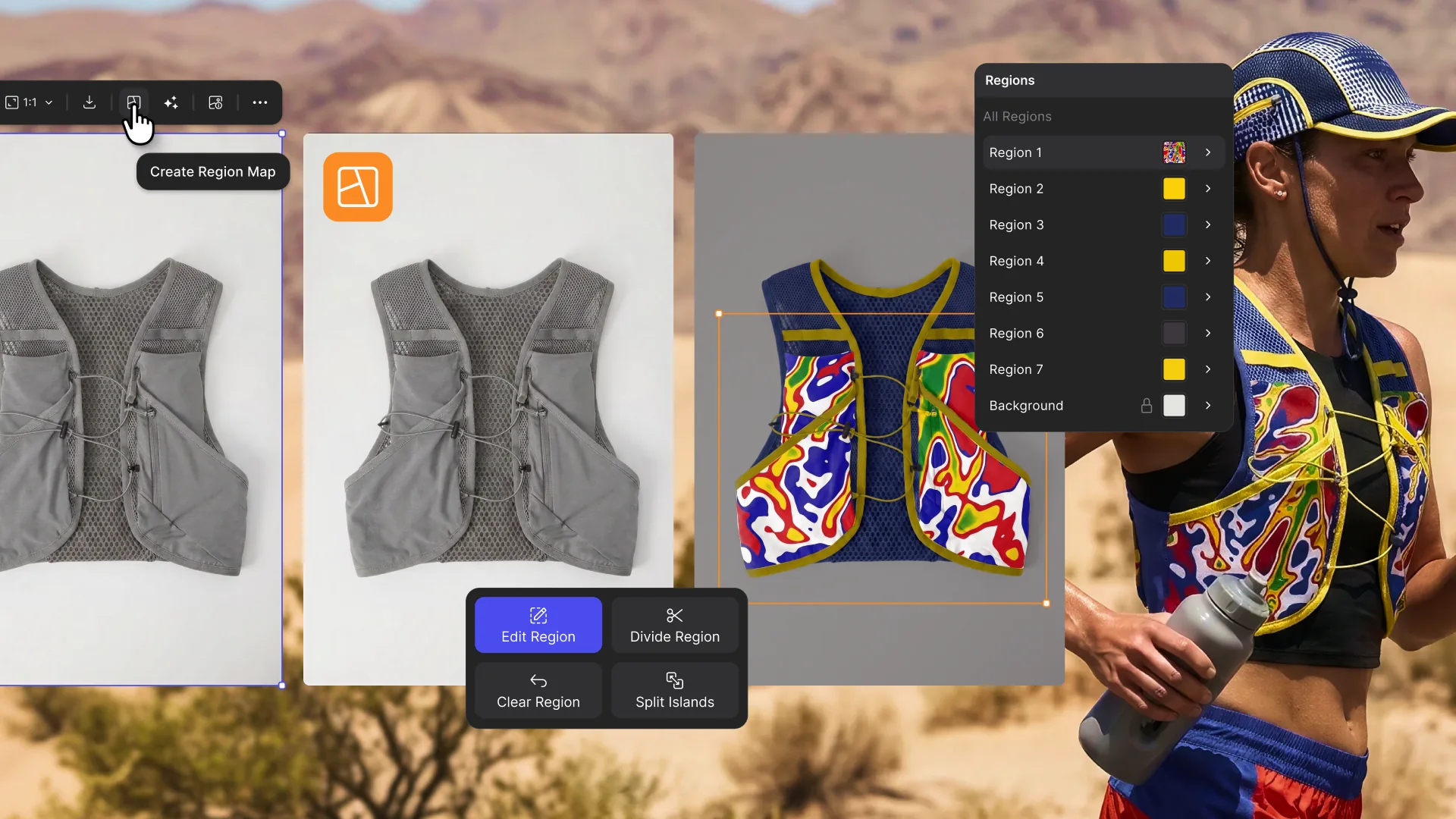
Explore color and material variations part-by-part without leaving Vizcom.


Frequently asked questions
Yes of course! Our starter plan is completely free, no credit card required. This is a great plan to explore vizcom with.
We accept all major credit and debit cards.
Admins (paid) – can edit files, manage workspace settings, billing, teams, and invite members. Editors (paid) – can edit files but not manage settings, billing, or teams. Viewers (free) – can only view files in read-only mode.
Team billing is handled centrally by the Admin. All paid seats, whether Admins or Editors, are included in a single invoice under the same billing cycle, while Viewers remain free and do not affect the cost.
Yes, you can. An Admin can update the plan in the billing settings, and the switch will take effect on the next billing cycle at the annual rate.
Yes, you own everything you create in Vizcom. For free users, while Vizcom may use generated images to improve its services, it does not claim ownership of your designs, concepts, or original ideas—you keep full rights to them. For paid users, your images and designs remain entirely private and are only used to deliver the service. Every design, concept, and image you create or upload is fully yours and kept confidential.
Vizcom does not use your data to train AI models if you’re on a paid plan. Everything you create stays private and is only used to provide the service. Free users may have their generated images included to help improve Vizcom’s services, but even then, Vizcom does not claim ownership of your designs, concepts, or original ideas—you retain full rights.