Inside MAJE TD: Three Finalist Transportation Design Projects
When Rishav Kumar set out to create MAJE TD, his vision was clear: give transportation design students and professionals the tools, guidance, and intensity needed to create portfolio-defining work. The four-week workshop doesn't just teach design: it challenges participants to think critically about brief selection, how to integrate AI into their workflow, and craft presentations that resonate with industry leaders. Rishav, a Level II Interior Designer at KIA America with experience at Polestar and Canoo, started his career in automotive design through competitions and intensive workshops hosted by industry leaders. Now, as the founder of MAJE TD, he’s bringing his journey full circle by creating those same opportunities for students.

When Rishav Kumar set out to create MAJE TD, his vision was clear: give transportation design students and professionals the tools, guidance, and intensity needed to create portfolio-defining work. The four-week workshop doesn't just teach design: it challenges participants to think critically about brief selection, how to integrate AI into their workflow, and craft presentations that resonate with industry leaders.
Rishav, a Level II Interior Designer at KIA America with experience at Polestar and Canoo, started his career in automotive design through competitions and intensive workshops hosted by industry leaders. Now, as the founder of MAJE TD, he’s bringing his journey full circle by creating those same opportunities for students.
Sign up for the upcoming MAJE TD cohort.
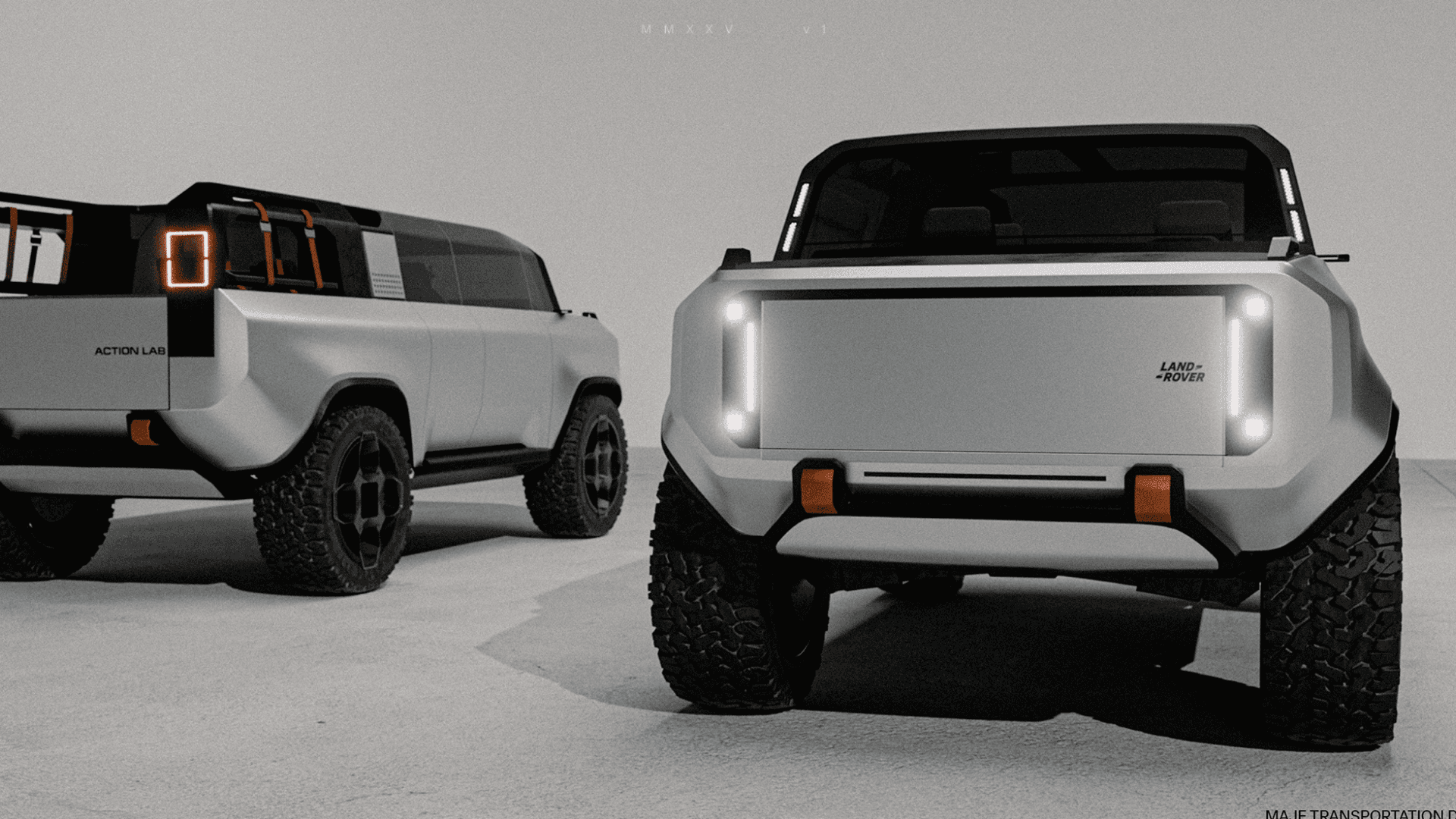
Land Rover Action Lab by Kunal Manish Maniar
For Kunal Manish Maniar, an IAAD Turin graduate now based in Italy, the craft of designing cars has been a lifelong passion. He believes that design is “the art of shaping motion,” a philosophy embodied in his Land Rover Action Lab, which contrasts a highly technical, exposed frame system with a clean, almost monolithic form.
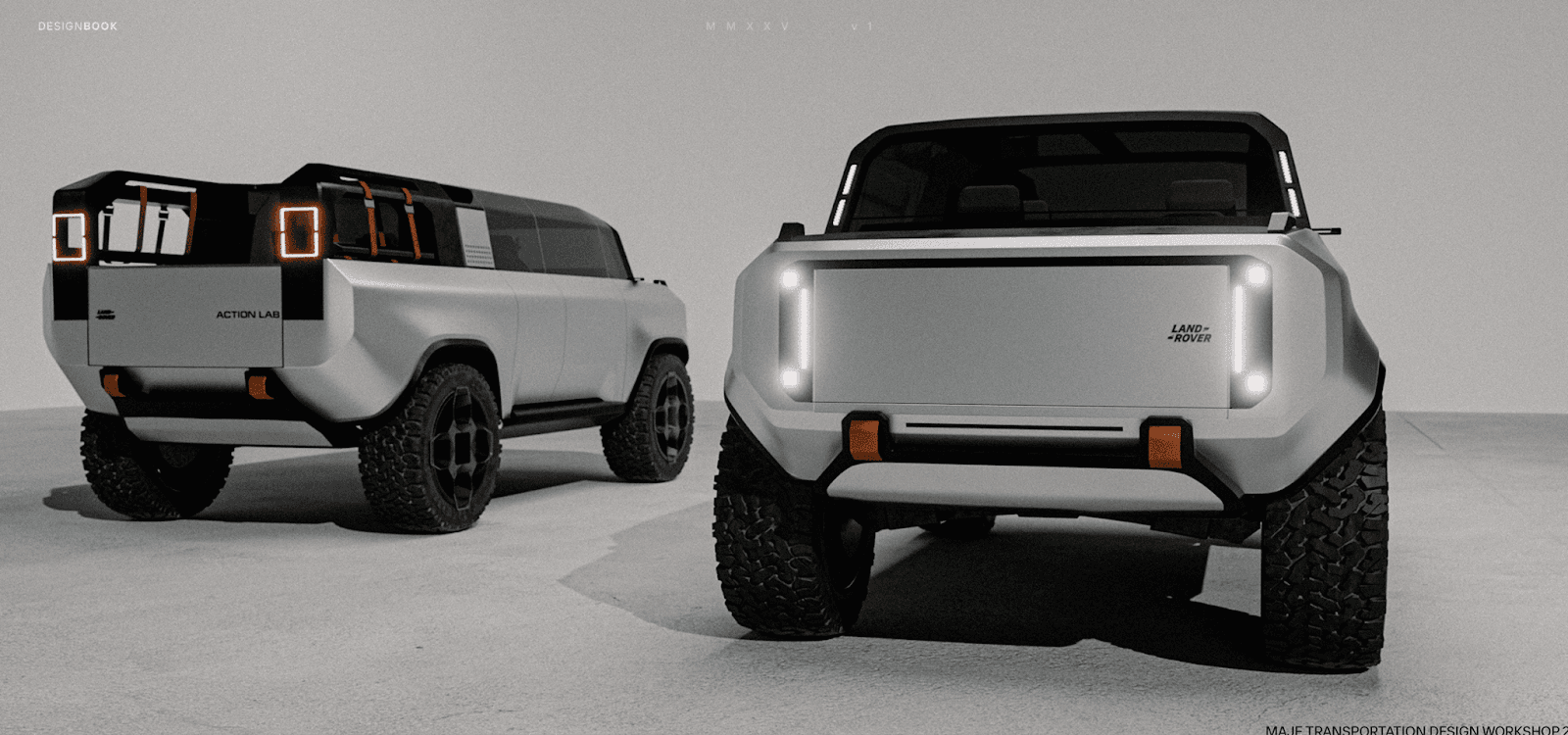
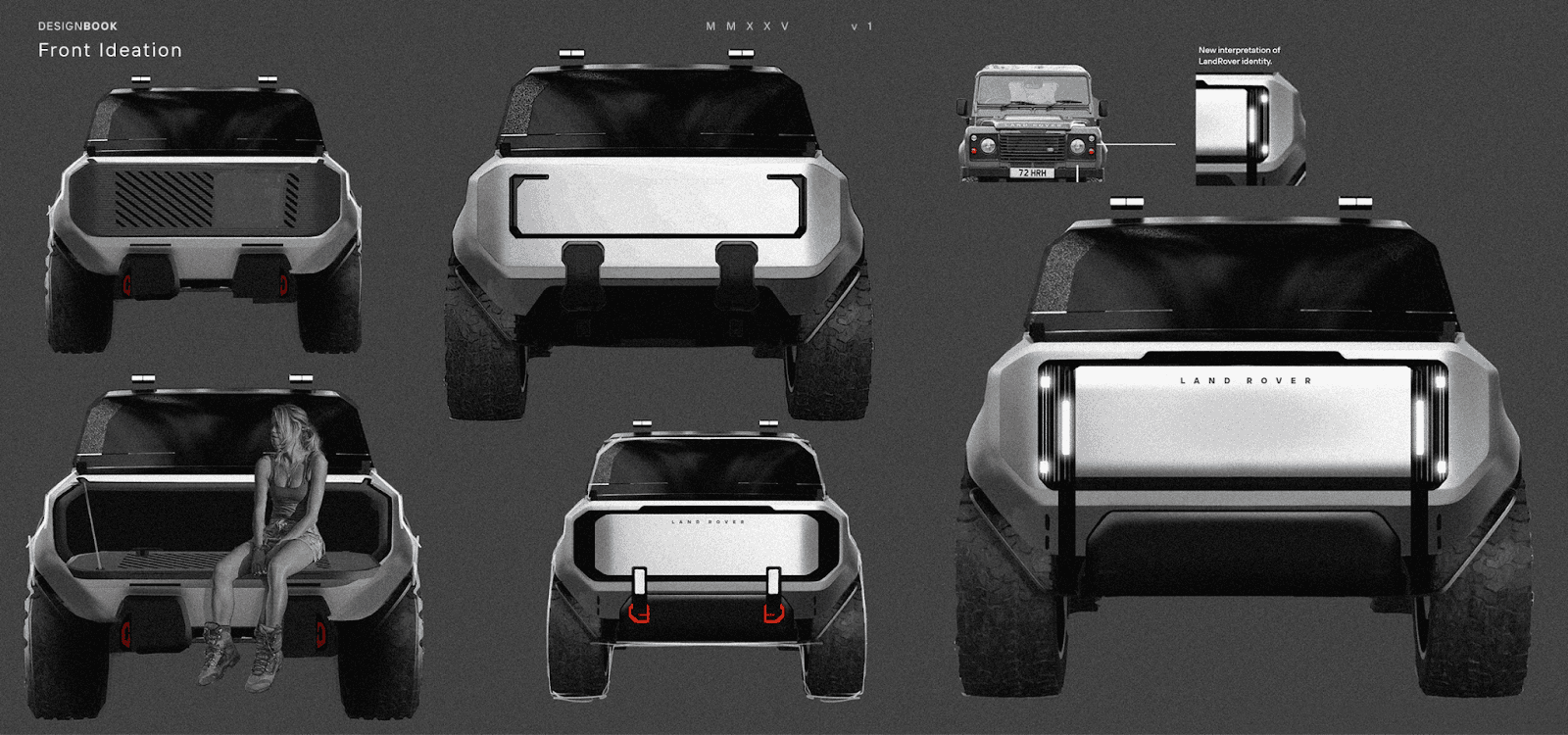
The concept targets extreme off-road enthusiasts living active lifestyles, offering modularity through a versatile mounting frame. Here, function dictates form in the best possible way. Shovels, traction boards, fuel canisters, and bikes find their home on the working backbone of the vehicle, while the cabin remains simple.
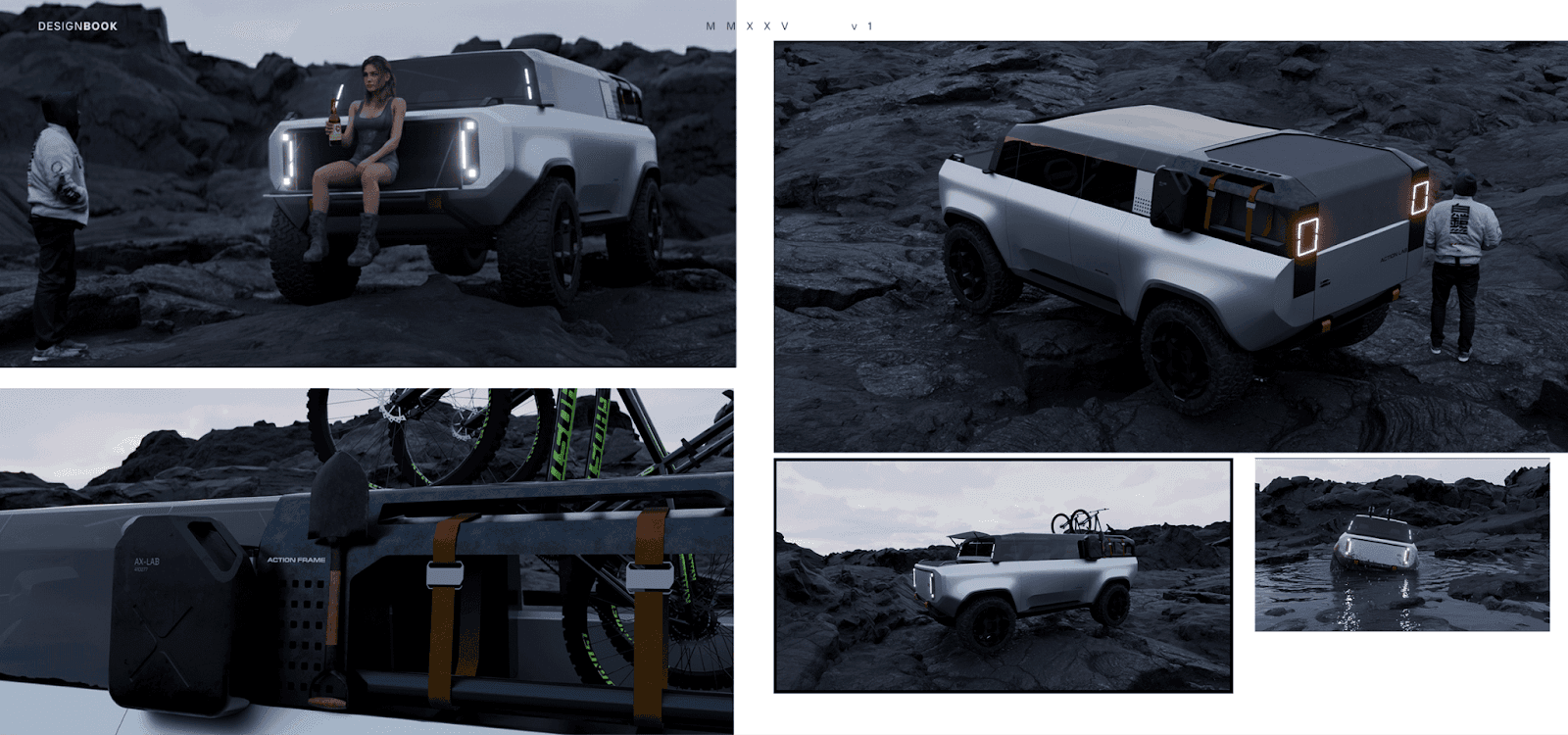
"What really shaped the project was the contrast between a highly technical frame and a clean, almost monolithic cabin," Kunal explains. "The frame is the working backbone, it's the place where the real action begins."
Drawing from Land Rover's exploration heritage, the Action Lab carries that go-anywhere spirit. During development, Kunal used Vizcom to rapidly explore multiple design proposals, iterating on forms and materials in real time to refine the overall direction.
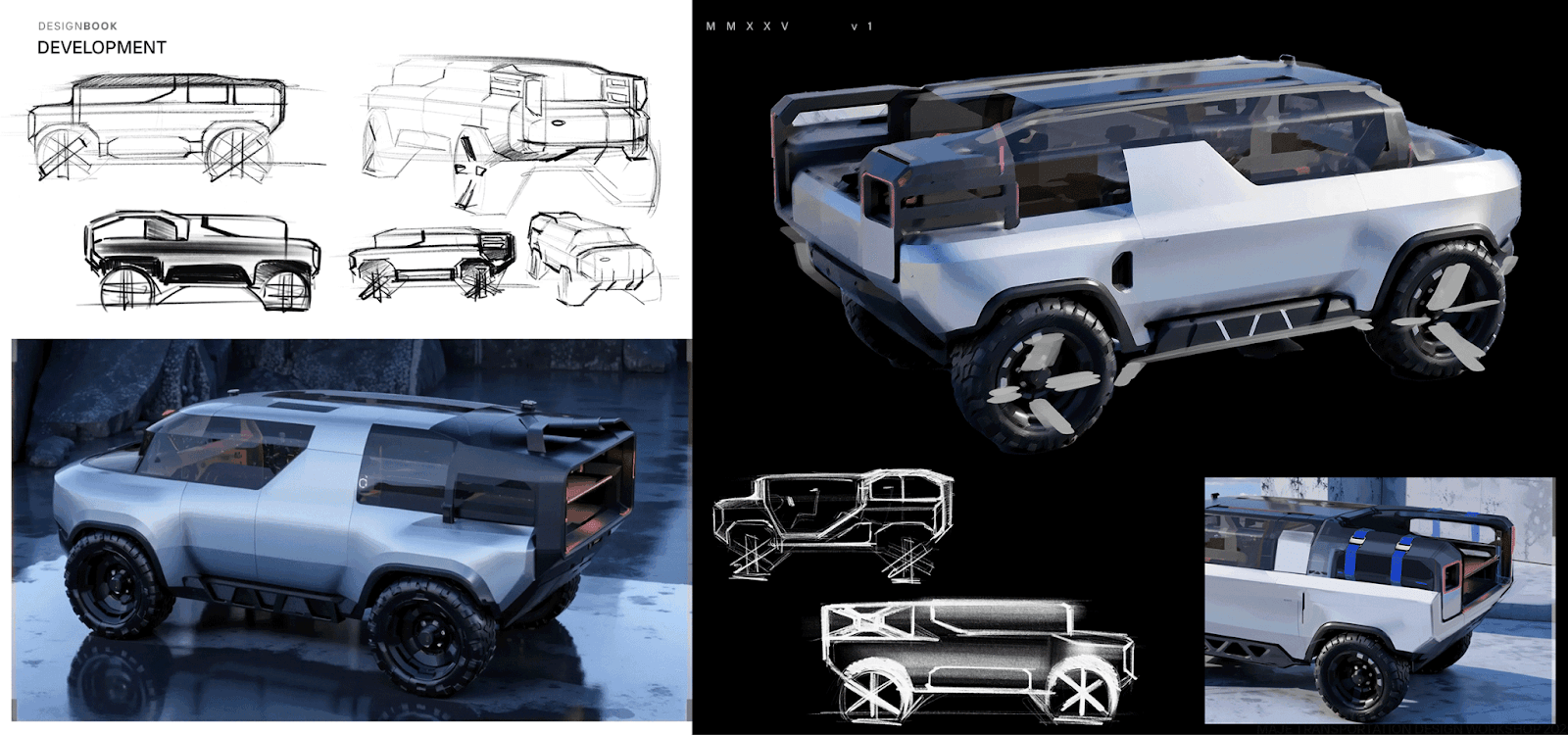
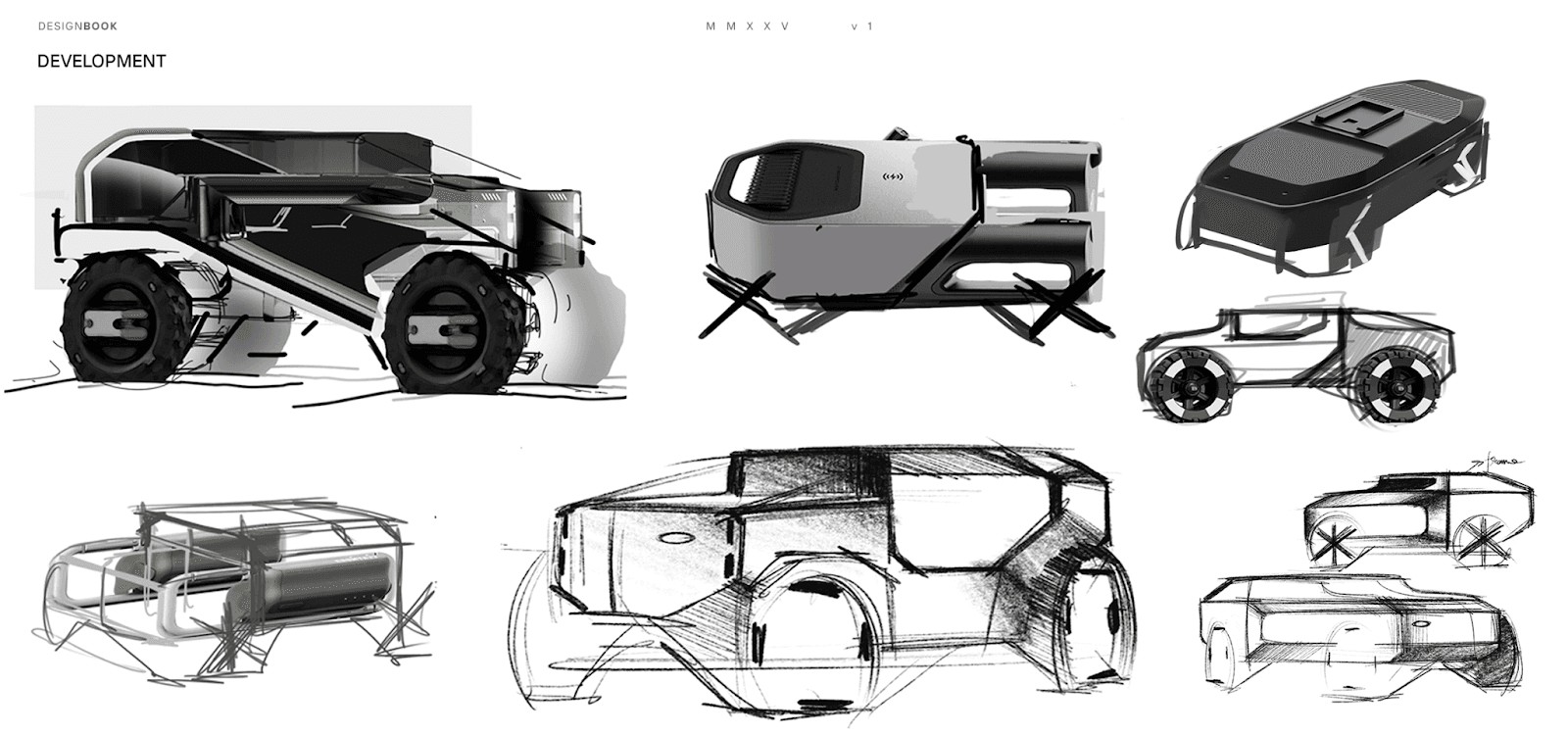
Once the concept matured, he imported his Blender models into Vizcom to create a series of polished animation shots, illustrating key use-case scenarios with cinematic clarity. By combining ideation, iteration, and final animation in Vizcom, Kunal was able to translate his vision of adventure into visualizations that are both compelling and highly communicative, capturing the vehicle’s spirit in motion.
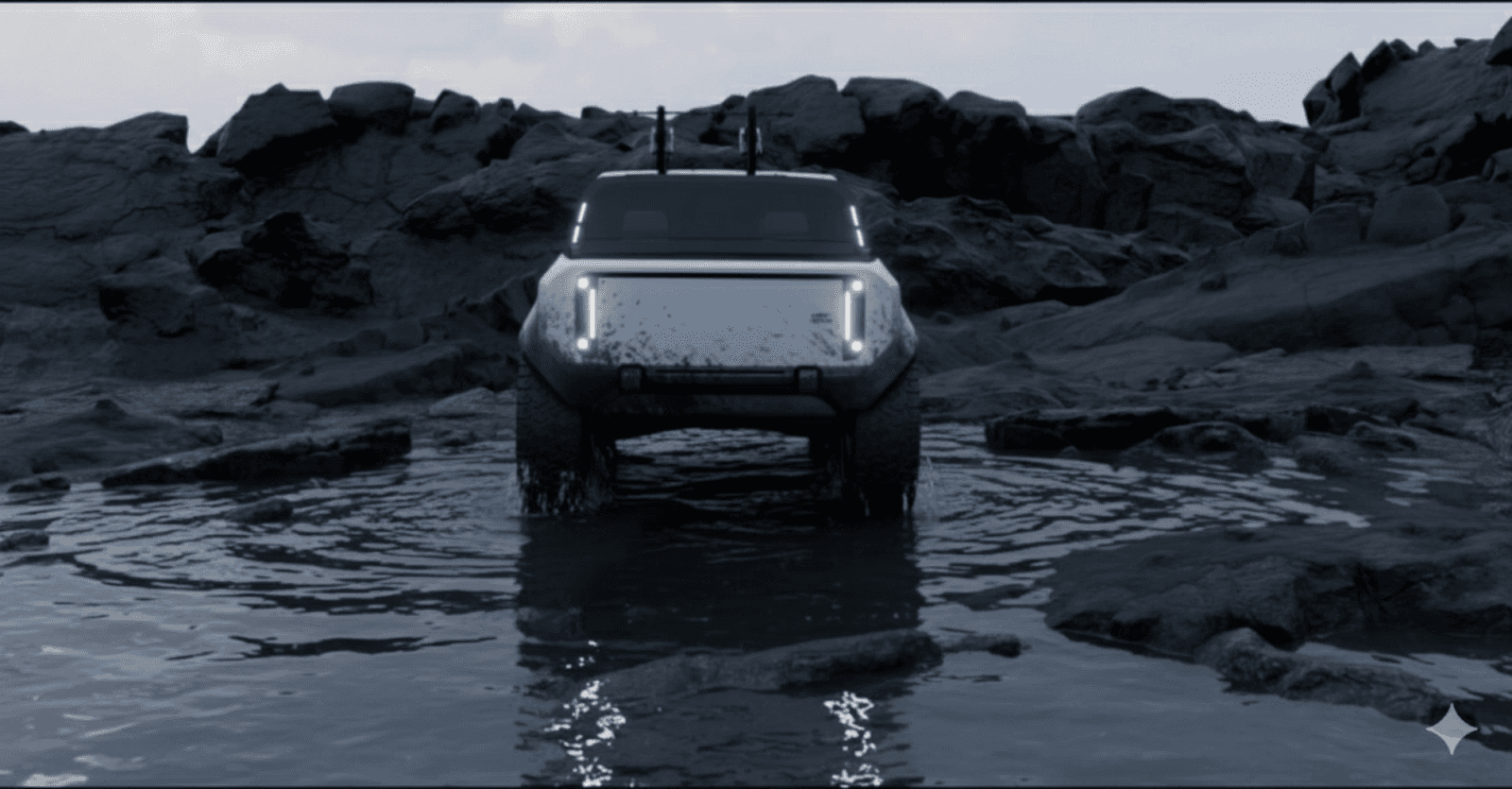
Chevrolet Trion by Yebeen (Terrie) Kim
Yebeen (Terrie) Kim is a Transportation Design student at the College for Creative Studies. Passionate about automotive and architectural design, she draws inspiration from new environments, objects, and moments encountered through reading and travel.
Her Chevrolet Trion concept is an off-road SUV, designed for extended stays in national parks and rural areas where convenience and infrastructure is limited.

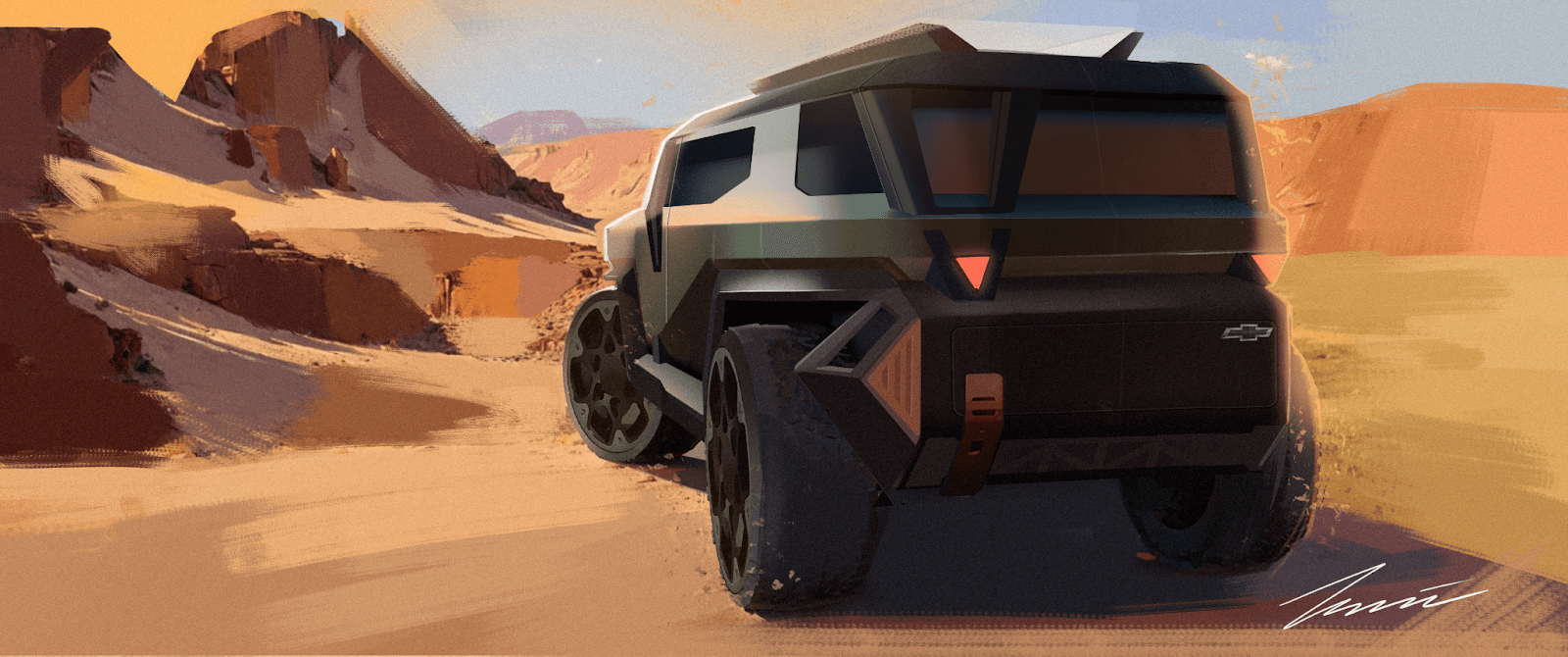
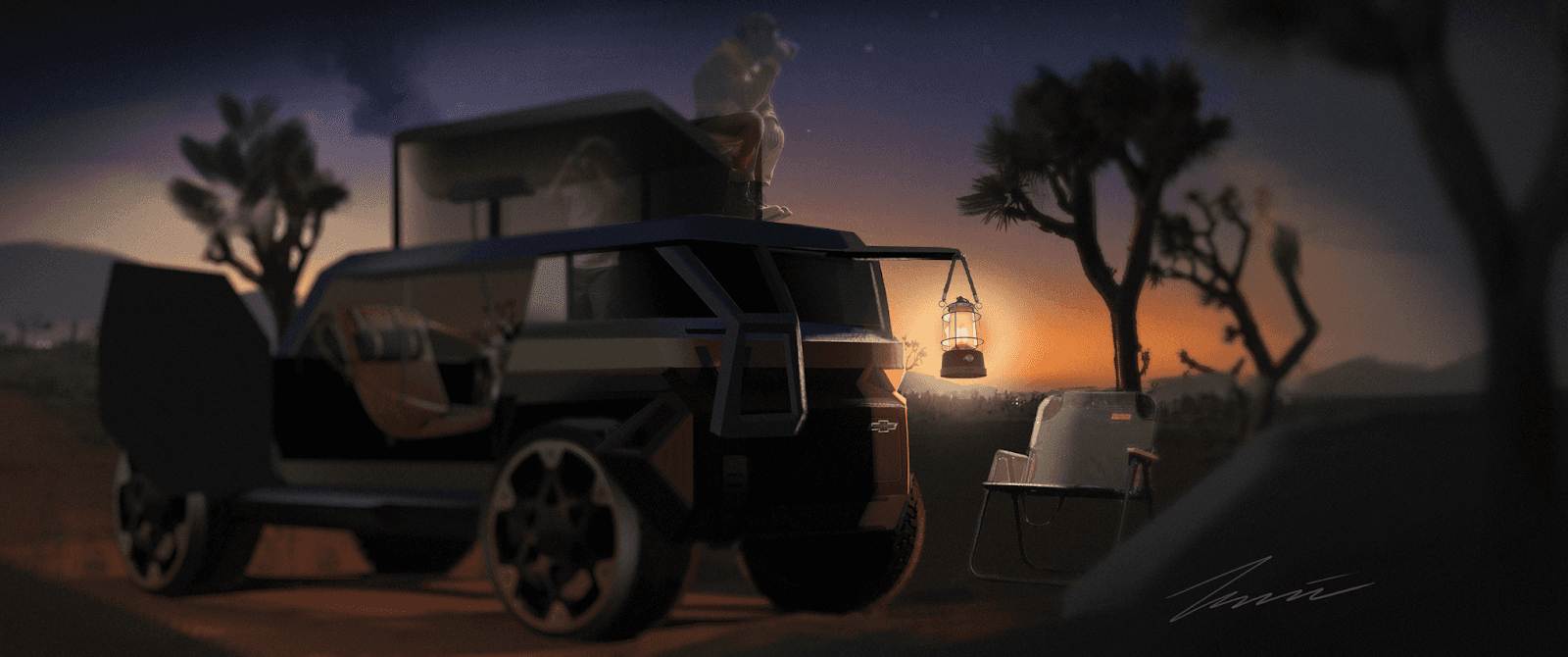
The design balances a sense of safety and protection through a mechanical, triangular structure, reinterpreted through a contemporary lens. Inspired by the medieval hunter’s pot, the roof features an expandable chimney element, while the functional separation between the driving and cooking zones informs an intentionally asymmetrical design language.
Yebeen used Vizcom strategically during the initial ideation and design phase, generating variations on her triangular theme that accelerated exploration and informed critical design decisions.
"Vizcom helped generate a wide range of design ideas, it allowed me to quickly explore multiple design directions based on a single theme"
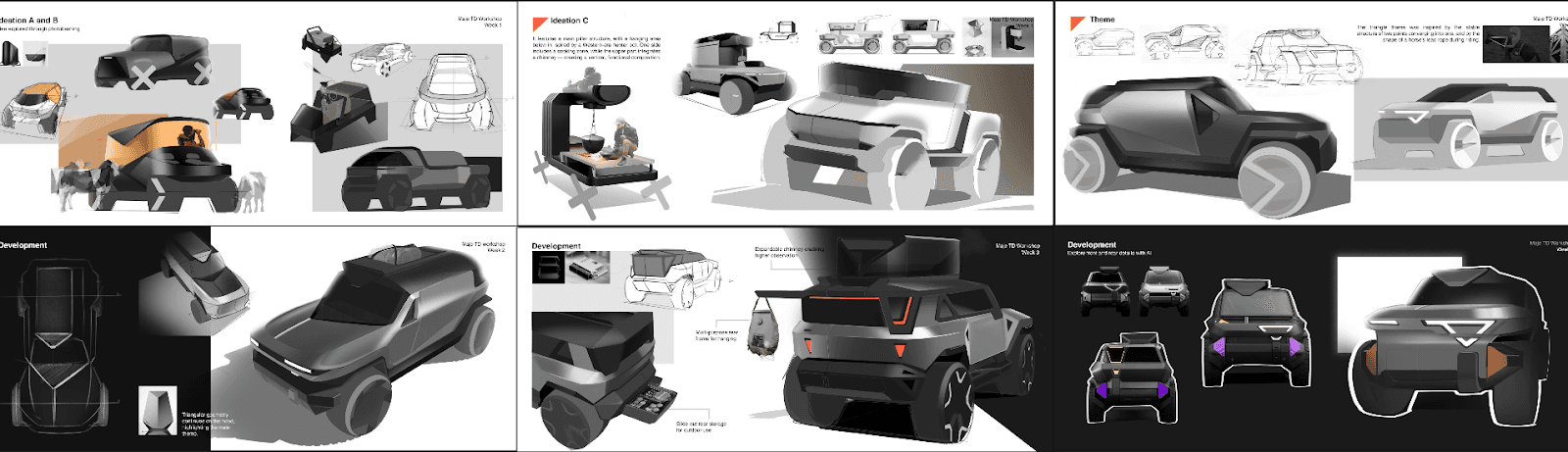
The tool supported rapid iteration during the compressed four-week timeline, and Yebeen plans to continue developing the concept through expanded ideation and deeper 3D modeling.
Citroën Concept Crux by Ramya Manoharan
Ramya Manoharan, a recent Transportation Design graduate from the College for Creative Studies, focuses on creating meaningful, human-centered solutions that keep lifestyle and utility in mind. She is particularly drawn to automotive interior design, where interaction and experience take center stage.
Her Citroën Concept Crux is a playful, utility-driven van interior designed for rock climbers and urban explorers. Every surface in the interior is designed with a clear post-climb use case in mind, prioritizing comfort, recovery, and intuitive interaction.
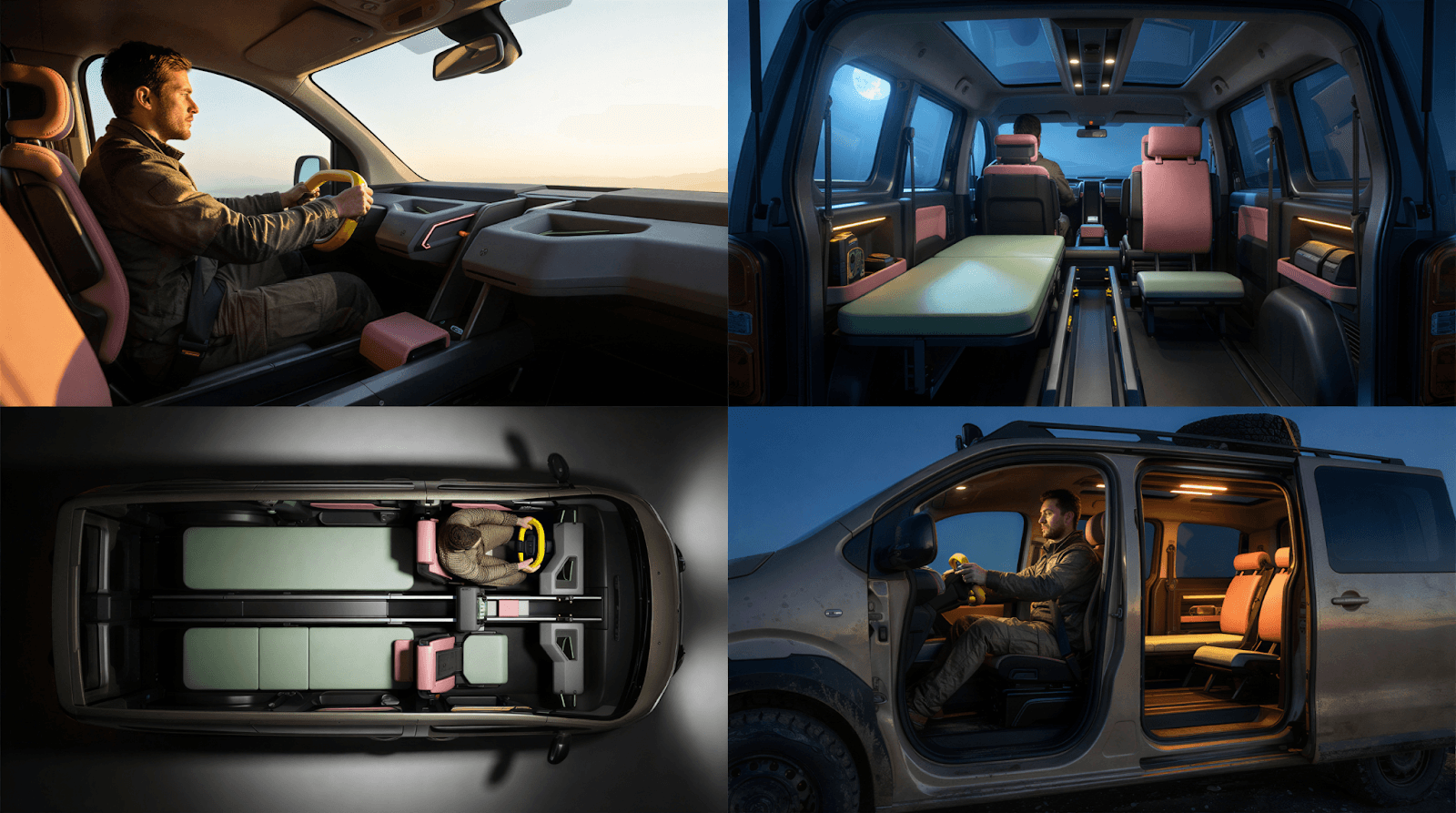


The steering interface exemplifies this approach. Soft, pressure-mapped textures are positioned to align with finger and palm contact zones, offering subtle relief after prolonged gripping during climbs. It’s a detail-oriented solution that reflects an understanding of the user’s body, not just their functional needs.
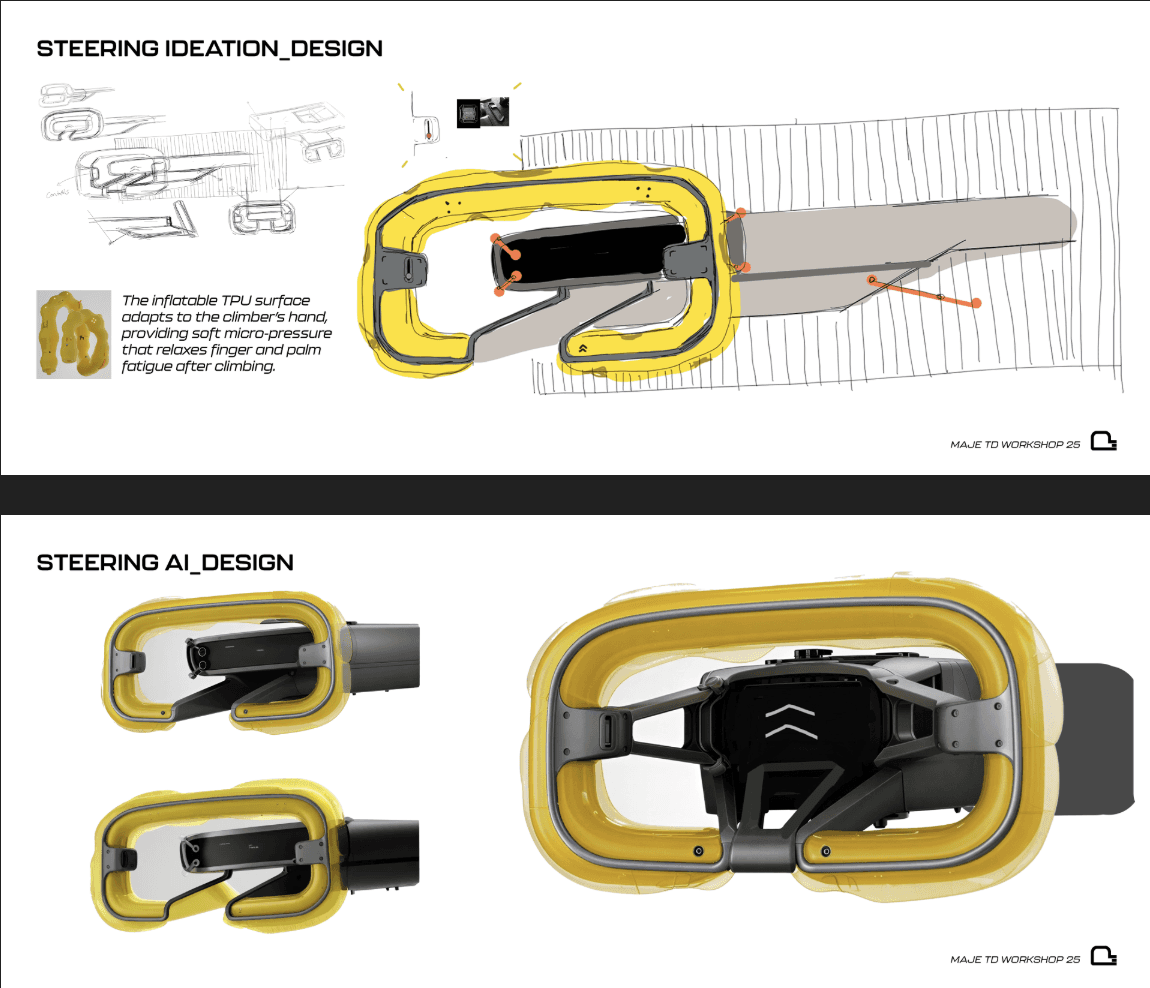
Ramya integrated Vizcom primarily during steering wheel development and final visualization, using it to quickly translate hand sketches into refined forms during ideation. Vizcom also supported final renders and animations, enhancing surface quality, lighting, and material expression to clearly communicate design intent.
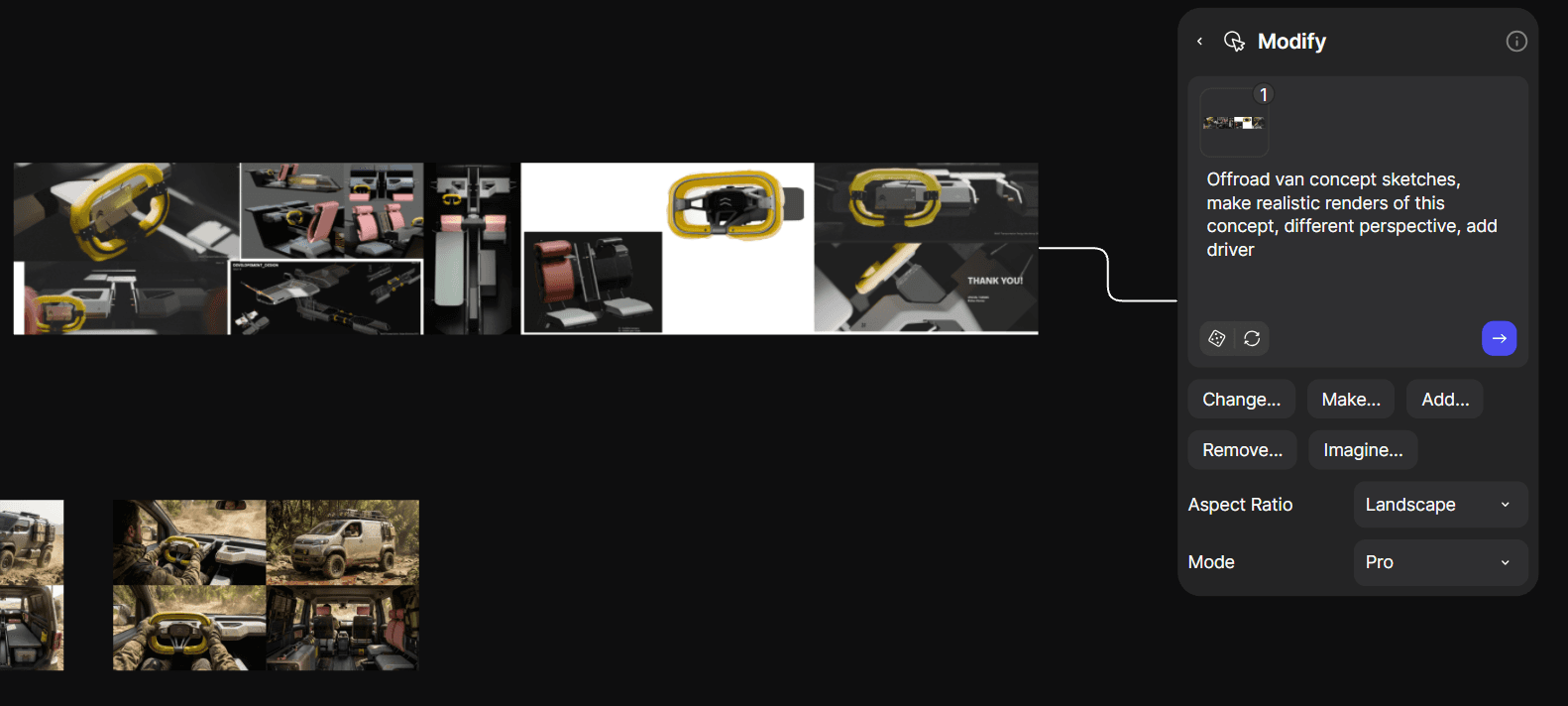
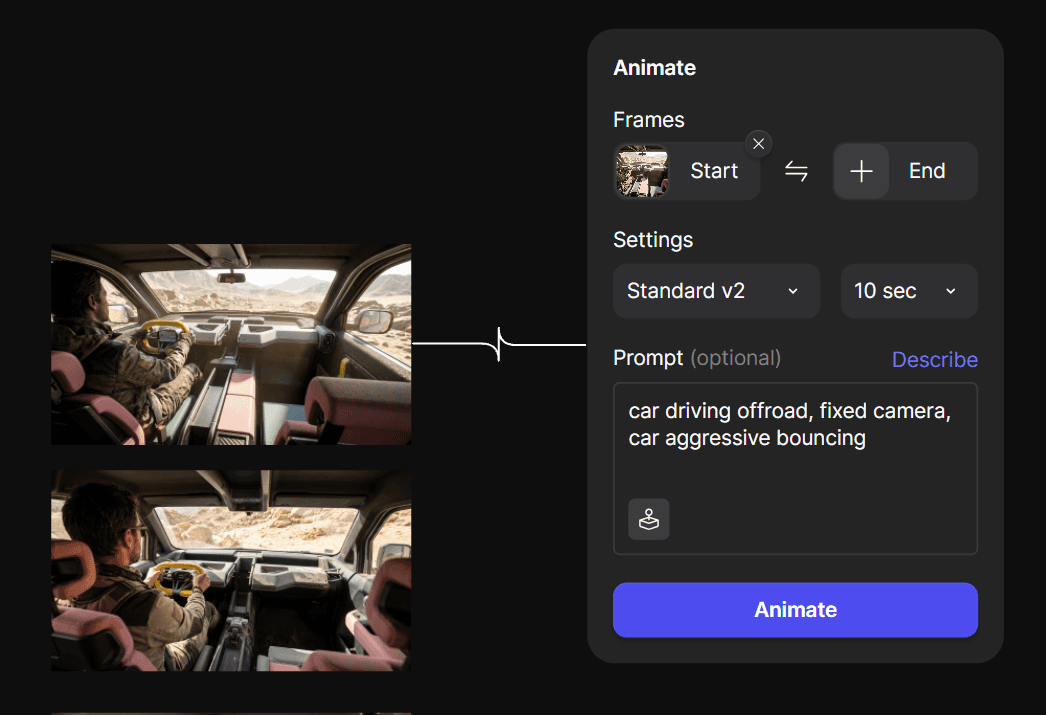
“Vizcom offered a fun and intuitive way to explore forms and materials quickly.”
Through Concept Crux, Ramya demonstrates how thoughtful detailing can transform a vehicle interior into a responsive, human-centered environment.
Turning ideas into portfolios
These three projects from this cohort highlight the creativity and skill of the workshop’s participants. With Rishav’s four-week intensive format, the students were given a framework to design for real-world challenges, balancing vision with execution and creativity with constraint. For these designers, the workshop resulted in portfolio-defining projects, valuable expert feedback, and the confidence to think like working professionals.
Join the next MAJE TD workshop
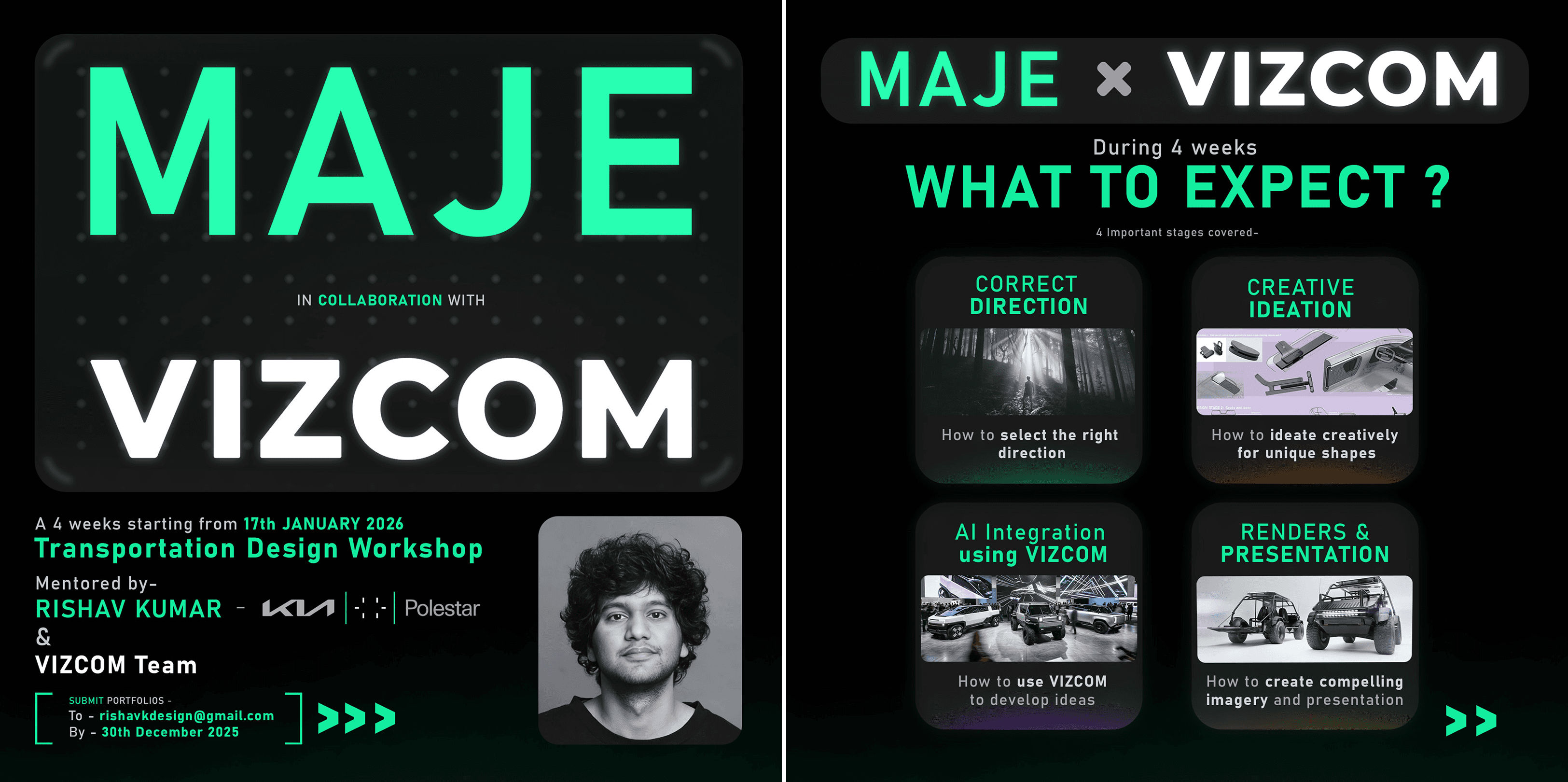
The next MAJE TD workshop begins on January 17, 2026. To apply, submit your portfolio to rishavkdesign@gmail.com by December 30, 2025. Participants will be selected based on portfolio quality.
In collaboration with Vizcom, 10 selected students or professionals will receive full access to all Vizcom features throughout the workshop, along with a live demo from the Vizcom team on effective AI-driven design workflows.
Participants will also have the opportunity to present their projects to leading industry professionals from Lucid, Polestar, and more, and walk away with a portfolio-ready project designed to help them stand out.
Explore
Explore more blog posts & resources to get inspired
.avif)
Bloom is a 3D-printed lamp series by Anshuman Kumar that draws inspiration from the organic act of blooming, blending spiral growth with digital fabrication to create a calm, wire-free light. This spotlight follows his process—from hand intent to rapid iteration in Vizcom—and how speed, serendipity, and making helped refine the design from screen to object.
Add-ons and the new Premium Usage Dashboard give you more control over how and when you create in Vizcom, removing hard limits and making premium usage flexible. Top up actions when you need them, track everything in one clear view, and keep your creative flow moving without interruption.
.avif)
Industrial designer Jara Freund turned a familiar frustration—books constantly toppling over and shelves drowning in clutter—into the PlyForm Shelf, a modular system that pairs functional clarity with Bauhaus-inspired personality. This spotlight explores her process, from early sketches to rapid iteration in Vizcom, and how digital tools helped carry the idea from concept to physical reality.
When Rishav Kumar set out to create MAJE TD, his vision was clear: give transportation design students and professionals the tools, guidance, and intensity needed to create portfolio-defining work. The four-week workshop doesn't just teach design: it challenges participants to think critically about brief selection, how to integrate AI into their workflow, and craft presentations that resonate with industry leaders. Rishav, a Level II Interior Designer at KIA America with experience at Polestar and Canoo, started his career in automotive design through competitions and intensive workshops hosted by industry leaders. Now, as the founder of MAJE TD, he’s bringing his journey full circle by creating those same opportunities for students.
Frequently asked questions
Lorem ipsum dolor sit amet, consectetur adipiscing elit sed do eiusmod tempor incididunt ut labore.
Yes of course! Our starter plan is completely free, no credit card required. This is a great plan to explore vizcom with.
We accept all major credit and debit cards.
Admins (paid) – can edit files, manage workspace settings, billing, teams, and invite members. Editors (paid) – can edit files but not manage settings, billing, or teams. Viewers (free) – can only view files in read-only mode.
Team billing is handled centrally by the Admin. All paid seats, whether Admins or Editors, are included in a single invoice under the same billing cycle, while Viewers remain free and do not affect the cost.
Yes, you can. An Admin can update the plan in the billing settings, and the switch will take effect on the next billing cycle at the annual rate.
Yes, you own everything you create in Vizcom. For free users, while Vizcom may use generated images to improve its services, it does not claim ownership of your designs, concepts, or original ideas—you keep full rights to them. For paid users, your images and designs remain entirely private and are only used to deliver the service. Every design, concept, and image you create or upload is fully yours and kept confidential.
Vizcom does not use your data to train AI models if you’re on a paid plan. Everything you create stays private and is only used to provide the service. Free users may have their generated images included to help improve Vizcom’s services, but even then, Vizcom does not claim ownership of your designs, concepts, or original ideas—you retain full rights.